

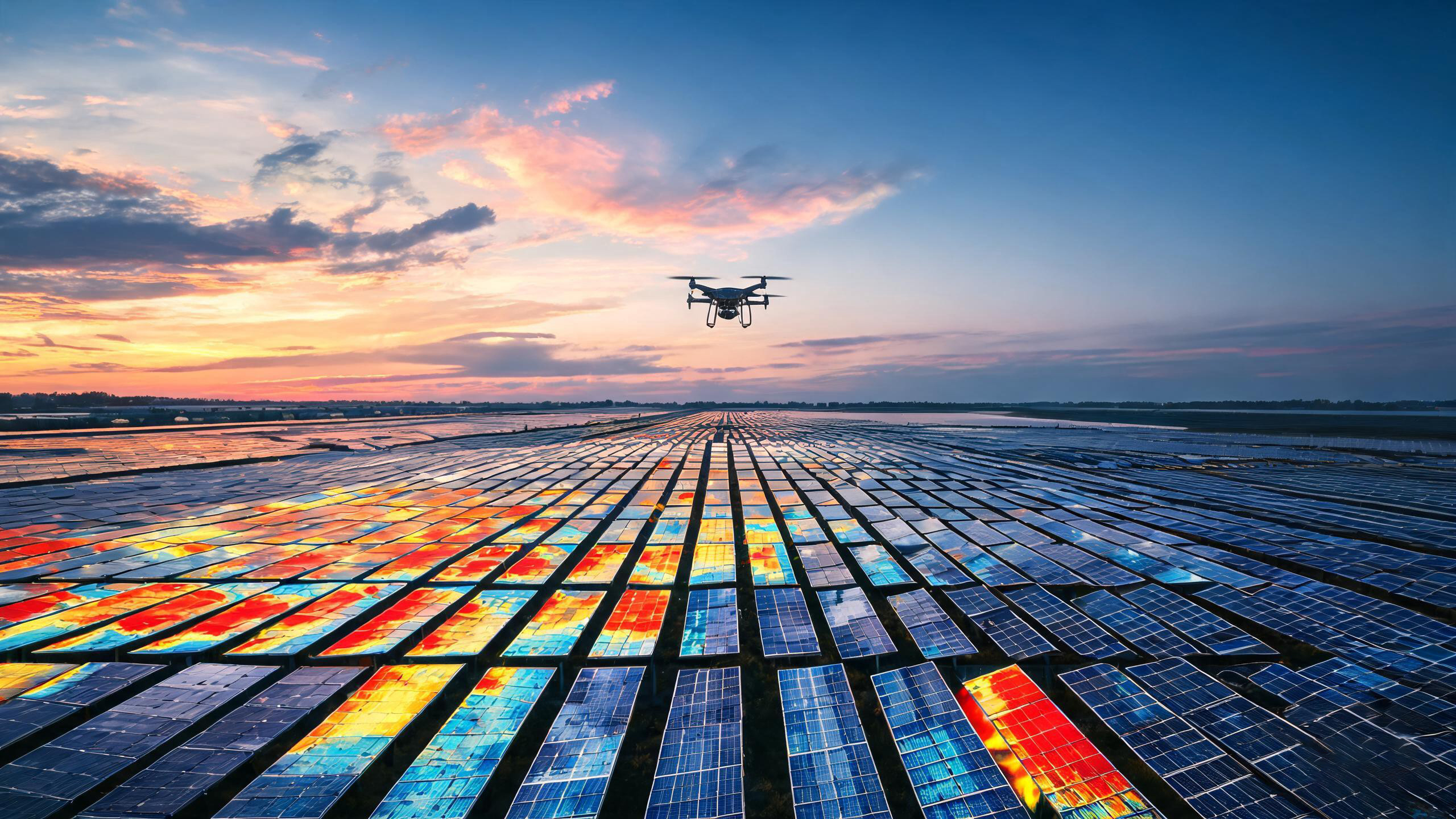
As the global installed capacity of solar photovoltaic (PV) systems continues to grow, maintenance has become a critical concern for operators. PV panels are exposed to outdoor environments year-round, making them vulnerable to several types of faults that degrade performance and create safety hazards. Thermal imaging for solar panel inspection offers a fast, non-contact diagnostic method for identifying these issues before they escalate into costly failures.
Unlike traditional inspection methods that require panel disconnection or laboratory analysis, thermal cameras detect infrared radiation emitted by panels in real time. This allows maintenance teams to visualize temperature anomalies, pinpoint fault locations, and make informed decisions about cleaning, repair, or replacement — all without interrupting power generation.
Common Faults in Photovoltaic Systems
PV panels operate under continuous environmental stress from sunlight, wind, rain, and temperature cycling. Over time, this stress leads to several types of faults that degrade performance and increase safety risks.
Hot Spot Effect
When a section of a solar panel is shaded by debris, dust, or bird droppings, the affected cells stop generating power and instead become a load, consuming electricity from adjacent cells. This causes localized overheating — known as the hot spot effect — which can reach temperatures high enough to cause permanent cell damage or even fire. Hot spots are among the most common and dangerous faults in large-scale solar installations.
Micro-Cracks
Micro-cracks are tiny fractures within the silicon cells of a PV module, often invisible to the naked eye. They typically form during manufacturing, transportation, or installation, and can propagate over time due to thermal cycling and wind stress. While a single micro-crack may cause only marginal power loss, accumulated cracking across multiple cells can reduce a panel's output by 5-20%.
Junction Box Failures
The junction box on the back of a solar panel houses the bypass diodes and electrical connections. Poor contact, moisture ingress, or aging components can cause excessive resistance and localized heating. Left undetected, junction box failures can interrupt current flow or create short circuits, affecting the entire string of panels.
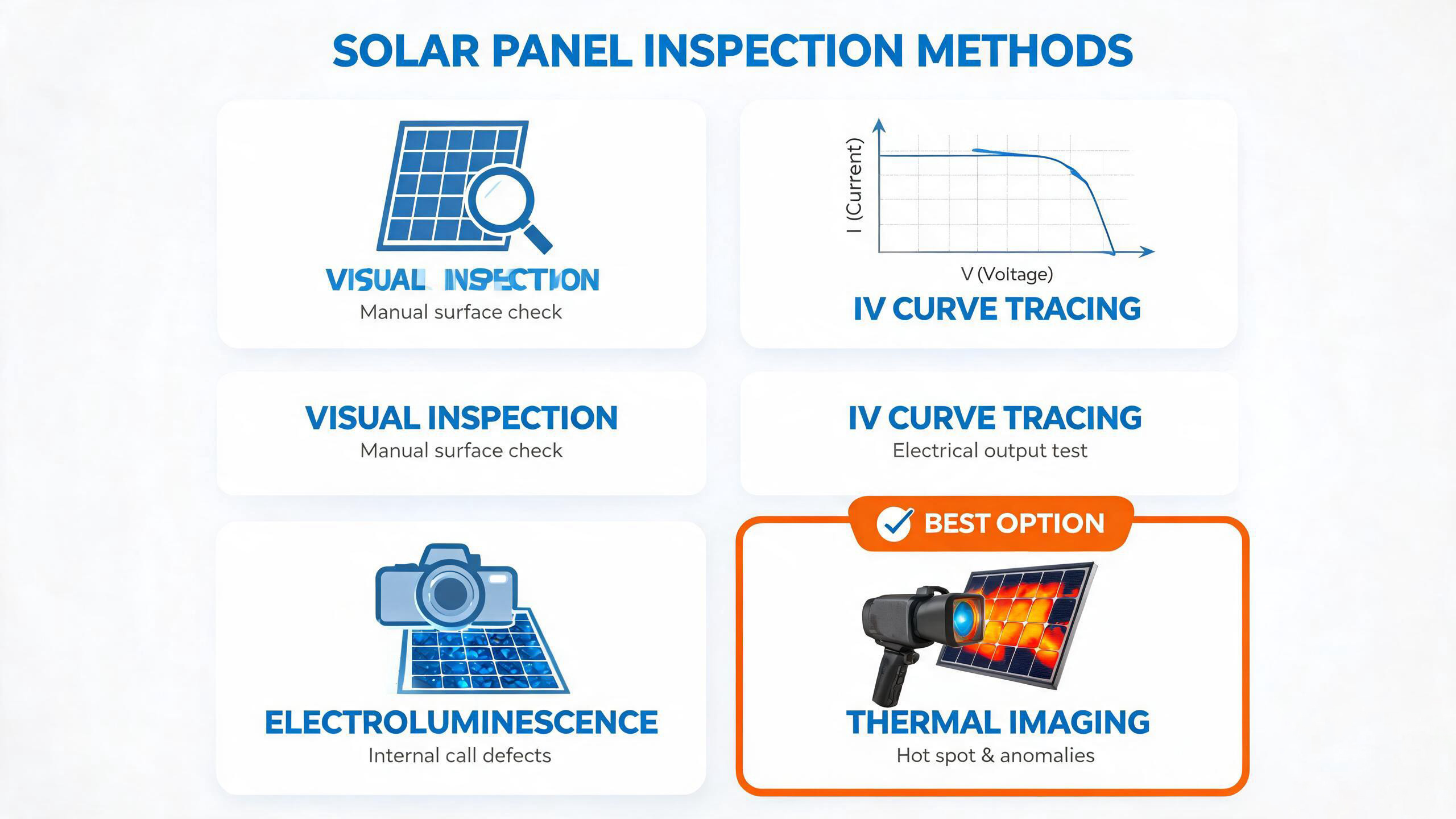
Each of these faults follows a predictable pattern: the problem starts small, grows worse over time, and costs more to fix the longer it goes undetected. Traditional inspection methods — visual checks, IV curve tracing, and electroluminescence imaging — are either too slow, too invasive, or require panel disconnection. This is where infrared thermal imaging for photovoltaic fault detection offers a practical alternative.
Why Thermal Imaging Is the Right Tool for PV Inspection
All objects above absolute zero emit infrared radiation. A thermal imaging core module captures this radiation and converts it into a visible temperature map. When a PV panel has a fault — a hot spot, a micro-crack, or a failing junction box — the affected area shows a temperature difference compared to its surroundings. The thermal camera renders this difference as a clear color contrast on the image.
For example, a healthy solar cell operates at a uniform temperature under sunlight. A cell with a micro-crack will show a slightly elevated temperature along the crack line because the crack increases electrical resistance. A hot spot appears as a bright, concentrated heat zone. A failing junction box glows as a distinct hotspot on the back of the panel.
The advantages of thermal inspection over traditional methods are clear:
| Method | Speed | Contact Required | Detects Hidden Faults |
|---|---|---|---|
| Visual inspection | Slow | No | No |
| IV curve tracing | Medium | Yes | Partially |
| Electroluminescence | Slow | Yes | Yes |
| Thermal imaging | Fast | No | Yes |
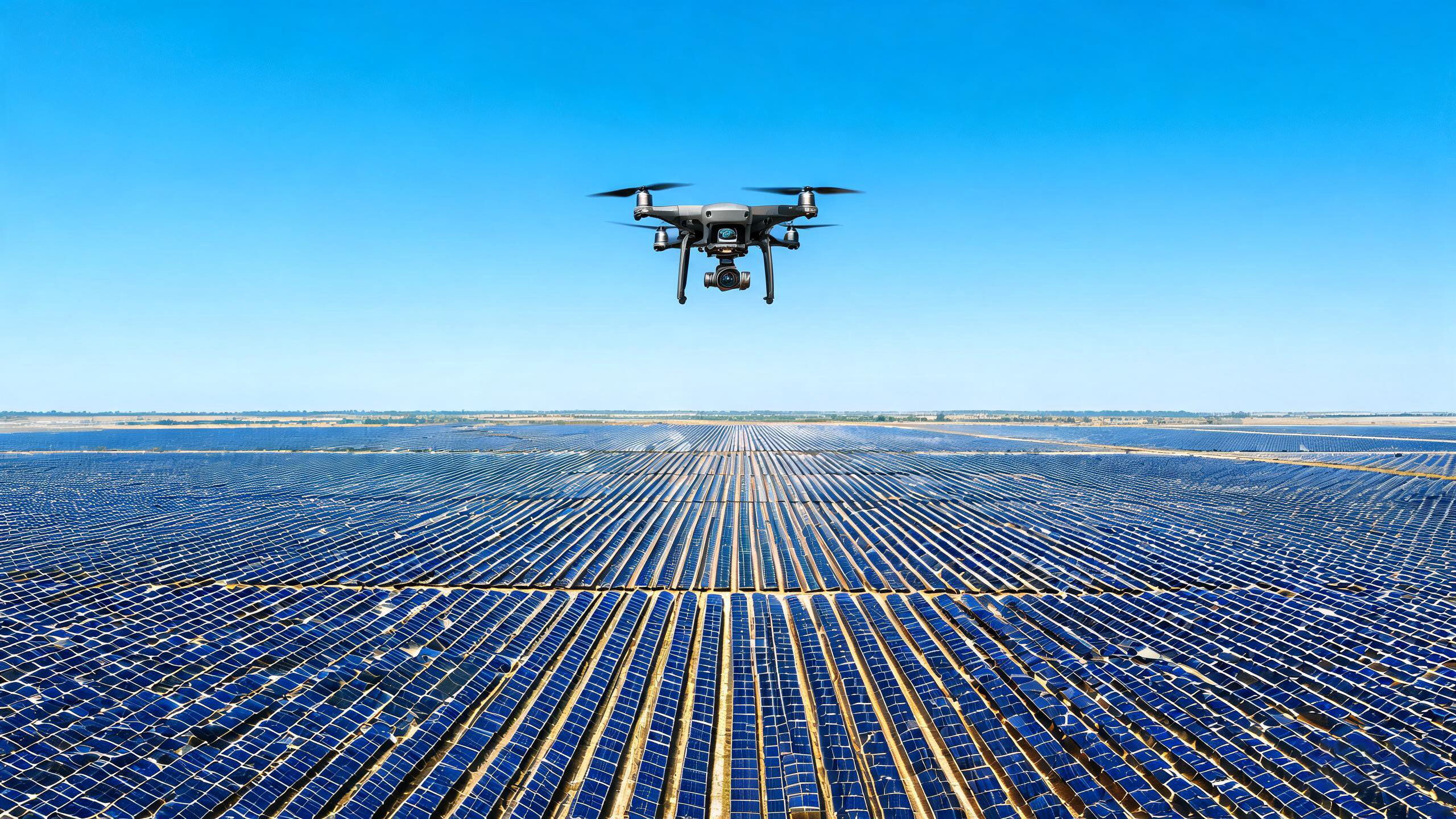
Thermal inspection stands out in three key ways. First, it is non-contact — scans can be performed from a distance using handheld devices, drones, or fixed-mount cameras without disconnecting panels. Second, it is fast — a drone equipped with a thermal imaging camera can survey several megawatts of panels in a single flight. Third, it provides immediate, visual results — maintenance teams can identify and prioritize fault locations on-site without waiting for lab analysis.
Four Key Applications of Thermal Imaging in Solar Panel Inspection
Hot Spot Detection
Hot spots are the most visible fault on a thermal image. A healthy panel shows a uniform temperature gradient, while a hot spot appears as a concentrated bright area — typically 10°C to 40°C hotter than the surrounding cells. A thermal imaging drone can scan an entire solar farm in a single pass, flagging every panel with hot spot anomalies. The operator can then decide whether the cause is a simple obstruction (dirt, bird droppings) that can be cleaned, or a damaged cell that requires panel replacement.
Micro-Crack Identification
Micro-cracks are subtler than hot spots. They create temperature differences of only 1°C to 3°C along the crack line, which means the thermal imaging system needs sufficient thermal sensitivity (low NETD) to detect them. A thermal imaging core module with NETD below 30mK can reliably capture these small temperature variations. The thermal image shows the crack as a thin, slightly warmer line, allowing maintenance teams to mark affected panels for closer inspection or replacement before the crack propagates further.
Junction Box Fault Detection
A failing junction box generates heat at the connection points on the rear of the panel. Thermal imaging can detect this overheating from the front side in many cases, as the heat conducts through the panel structure. Regular junction box thermal scans help prevent total connection failures that can take an entire string offline. This is especially valuable for solar farm monitoring where hundreds of junction boxes must be tracked.
Large-Area Scanning
Perhaps the most transformative application is the ability to inspect large areas quickly. A drone-mounted thermal camera can survey a 50 MW solar farm in under two hours — a task that would take a ground crew weeks. Fixed-mount systems go further: permanently installed thermal cameras at strategic positions can perform continuous monitoring, catching faults as they develop rather than during scheduled inspections. This shift from periodic to continuous monitoring represents a major operational improvement for PV plant operators.
Real-World Case Studies
Case 1: Large-Scale Solar Farm Hot Spot Detection
A 100 MW solar farm in the southwestern United States adopted drone-based thermal inspection as part of its quarterly maintenance program. During the first scan, the thermal imaging system identified 340 panels with hot spot anomalies across the site. The operations team cross-referenced thermal data with drone visual imagery and found that 60% of the hot spots were caused by accumulated dust and debris, which were resolved by targeted cleaning. The remaining 40% showed signs of cell degradation and were scheduled for replacement.
The result: after remediation, the farm's overall energy yield increased by approximately 3.2%, recovering an estimated $180,000 in lost annual revenue. The inspection process itself took two days — compared to the three weeks previously required for manual panel-by-panel testing.
Case 2: Distributed Rooftop PV Micro-Crack Detection
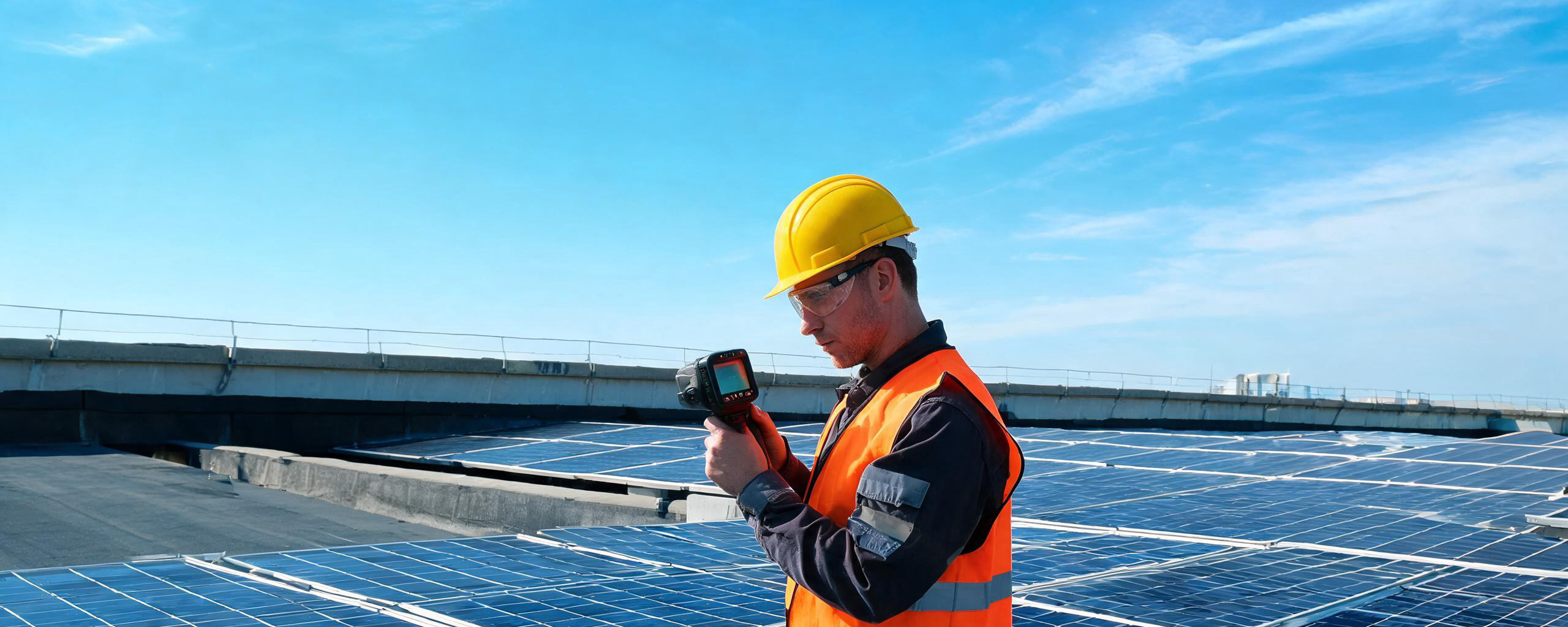
A commercial rooftop solar operator in Germany integrated thermal imaging into its annual maintenance routine for over 200 distributed PV installations. Using a handheld thermal camera equipped with a 640x512 resolution infrared thermal imaging module, inspectors identified micro-crack patterns in 12% of inspected panels that had passed visual inspection. By replacing affected panels early, the operator avoided an estimated 8-15% cumulative power loss that would have developed over the following two years.
The operator now uses thermal imaging as a standard inspection step before accepting new installations from contractors, catching manufacturing and shipping damage before panels are commissioned.

What to Look for in a Thermal Imaging Core Module for Solar Inspection
The performance of a solar panel inspection system depends heavily on the quality of the thermal imaging core at its center. Whether you are building a drone-mounted solution, a handheld inspection device, or a fixed monitoring system, these are the key parameters to evaluate.
Resolution
Resolution determines how much detail you can see in a thermal image. For solar panel inspection, 384×288 resolution is a practical baseline for handheld devices — it provides enough detail to identify hot spots and major junction box faults from a few meters away. For drone-based or fixed-mount applications where the camera is farther from the panels, 640×512 resolution provides sharper detail and the ability to detect micro-cracks at longer distances.
| Resolution | Use Case | Detection Capability |
|---|---|---|
| 384×288 | Handheld inspection | Hot spots, junction box faults |
| 640×512 | Drone / fixed-mount | Above + micro-cracks, early-stage defects |
NETD (Thermal Sensitivity)
NETD (Noise Equivalent Temperature Difference) measures how small a temperature difference the sensor can detect. For PV inspection, where micro-cracks may produce only 1-3°C temperature differences, a lower NETD value is critical. Look for a thermal imaging module with NETD below 30mK. Modules with NETD above 50mK may miss subtle micro-crack signatures and early-stage junction box degradation.
Frame Rate
A higher frame rate (50Hz or above) produces smoother video during drone flyovers and handheld sweeps. This matters because the camera is often in motion during solar farm inspections. A 50Hz frame rate ensures that thermal images remain sharp even when the camera is moving, reducing motion blur and improving diagnostic accuracy.
Operating Temperature Range
Solar panels operate in direct sunlight, which means ambient temperatures can exceed 50°C on the panel surface. The thermal imaging core must maintain stable performance across a wide temperature range. Industrial-grade modules rated for -20°C to 60°C (or wider) are recommended for outdoor PV inspection applications.
Lens Options
For drone-mounted inspection, a wide-angle lens (e.g., 13mm to 19mm focal length) covers more panels per frame. For handheld ground inspection, a narrower lens (e.g., 25mm to 35mm) provides more detail on individual panels. Some thermal imaging core modules support interchangeable lenses, giving system integrators flexibility to adapt to different inspection scenarios.
Integration Considerations
For OEMs and system integrators, the core module should offer a clean digital interface (USB, GigE, or MIPI), compact dimensions for easy integration into handheld devices or drone payloads, and an SDK for custom software development. Modules with onboard image processing — such as automatic gain control and temperature measurement — reduce the software development effort required to build a complete inspection system.
Frequently Asked Questions
Thermal imaging is effective for faults that produce a temperature difference, including hot spots, micro-cracks, junction box failures, and bypass diode failures. It cannot detect faults that do not generate heat, such as purely cosmetic blemishes or panel degradation that affects all cells equally.
For handheld inspection, 384×288 provides good results. For drone-mounted or fixed-mount inspection at longer distances, 640×512 is recommended for sharper detail and the ability to detect micro-cracks.
Yes. Handheld thermal cameras work well for rooftop installations. Inspectors walk along the roof edge or access the roof surface to scan each panel row. Drone-based inspection is also used for larger commercial rooftops where ground access is difficult.
Quarterly inspection is recommended for large-scale solar farms. High-risk installations in dusty environments or with known aging equipment may benefit from monthly inspections. Fixed-mount continuous monitoring systems can detect faults as they develop.
Yes. Clear-sky conditions with irradiance above 600 W/m² are ideal. Cloud cover, rain, and early morning conditions reduce the temperature contrast between normal and faulty cells. Wind can also cool panel surfaces and mask subtle temperature differences.
Ready to Build Your Solar Inspection Solution?
Explore Owlshine's range of thermal imaging core modules designed for industrial and outdoor applications.
Browse Thermal Imaging Core Modules