
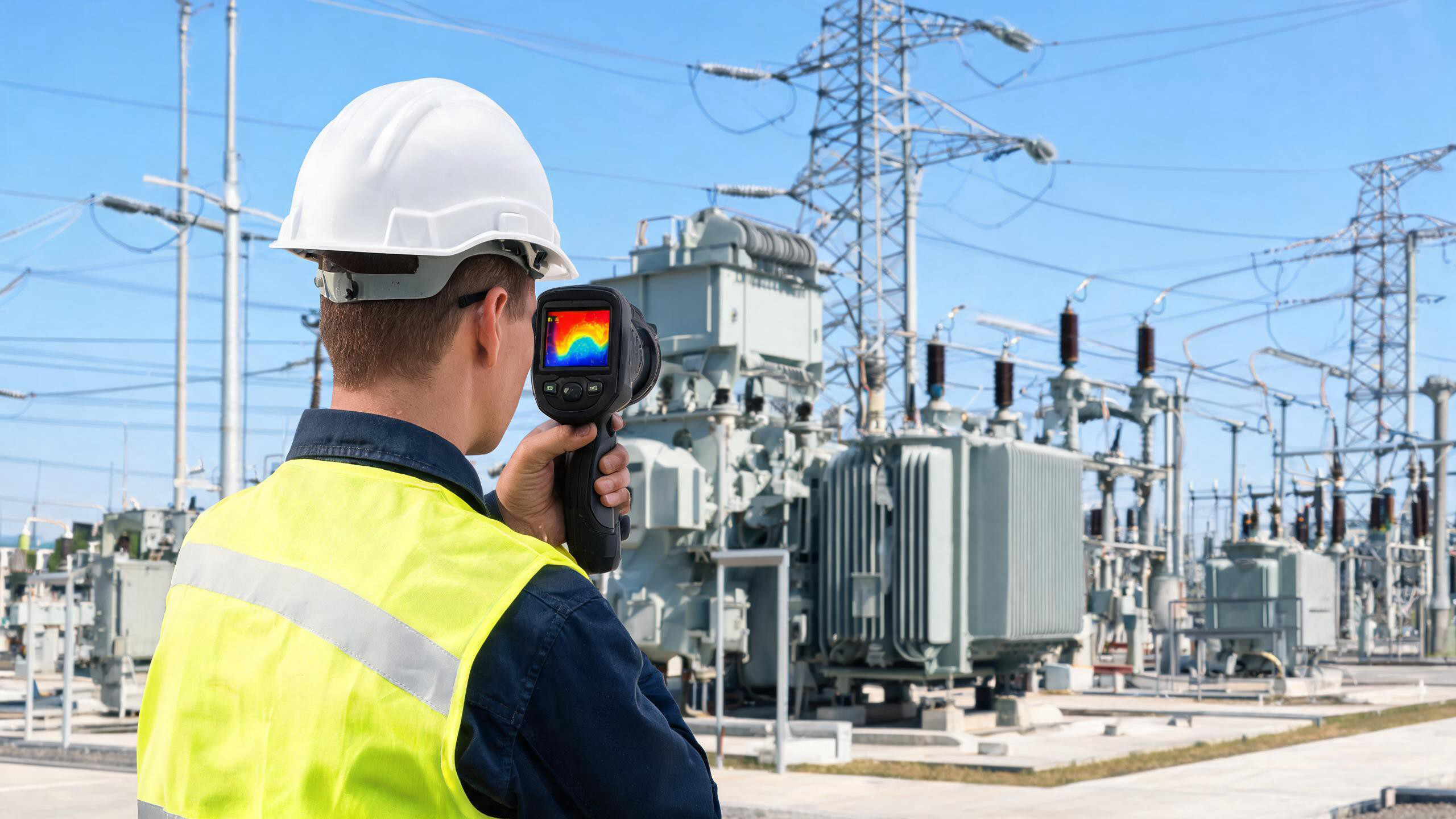
Electrical power grids form the backbone of modern infrastructure, and their stable operation directly impacts economic activity, public safety, and daily life. As electricity demand grows and grid networks expand, the challenge of detecting and preventing faults becomes increasingly complex. Thermal imaging for electrical inspection offers a non-contact, highly effective method for identifying temperature anomalies across critical grid components before they escalate into costly failures.
Unlike traditional inspection methods that often require physical contact or service interruption, thermal cameras detect infrared radiation emitted by electrical equipment. This allows maintenance teams to visualize heat distribution in real time, pinpointing issues such as loose connections, overloaded circuits, and insulation degradation. For utilities and grid operators, this translates into improved reliability, reduced downtime, and lower maintenance costs.
The Challenge: Why Power Grids Need Better Fault Detection
Power grid equipment operates under continuous electrical and thermal stress. Over time, this stress leads to wear, corrosion, and material fatigue. Traditional inspection approaches face several limitations:
- Scheduled shutdowns are expensive. Taking transformers or switchgear offline for manual inspection disrupts service and results in revenue loss.
- Visual inspection misses internal problems. Many electrical faults generate heat long before they produce visible signs of damage.
- Underground cables are difficult to access. Buried distribution lines cannot be inspected easily without excavation or specialized equipment.
- Reactive maintenance is costly. Waiting for equipment to fail before acting often results in secondary damage and emergency repair expenses.
According to industry estimates, unplanned power outages cost utilities billions of dollars annually in repair costs, regulatory penalties, and customer compensation. A proactive approach to fault detection is not merely preferable, it is economically essential.
How Thermal Imaging Solves Grid Inspection Challenges
Thermal imaging cameras detect the infrared energy that all objects emit based on their temperature. In electrical systems, abnormal temperatures almost always indicate a problem. A loose busbar connection, for example, exhibits higher resistance, which generates excess heat that a thermal camera captures instantly.
The key advantages of industrial thermal cameras for grid inspection include:
- Non-contact measurement. Inspectors can scan energized equipment from a safe distance without de-energizing circuits.
- Real-time visualization. Temperature differences appear instantly as color-coded thermal images, making anomalies easy to spot.
- Early fault detection. Thermal cameras reveal problems in their infancy, often weeks or months before failure occurs.
- Documentation and traceability. Thermal images provide timestamped visual records for compliance reporting and trend analysis.
Key Applications of Thermal Imaging in Power Grid Maintenance
Transformer Inspection
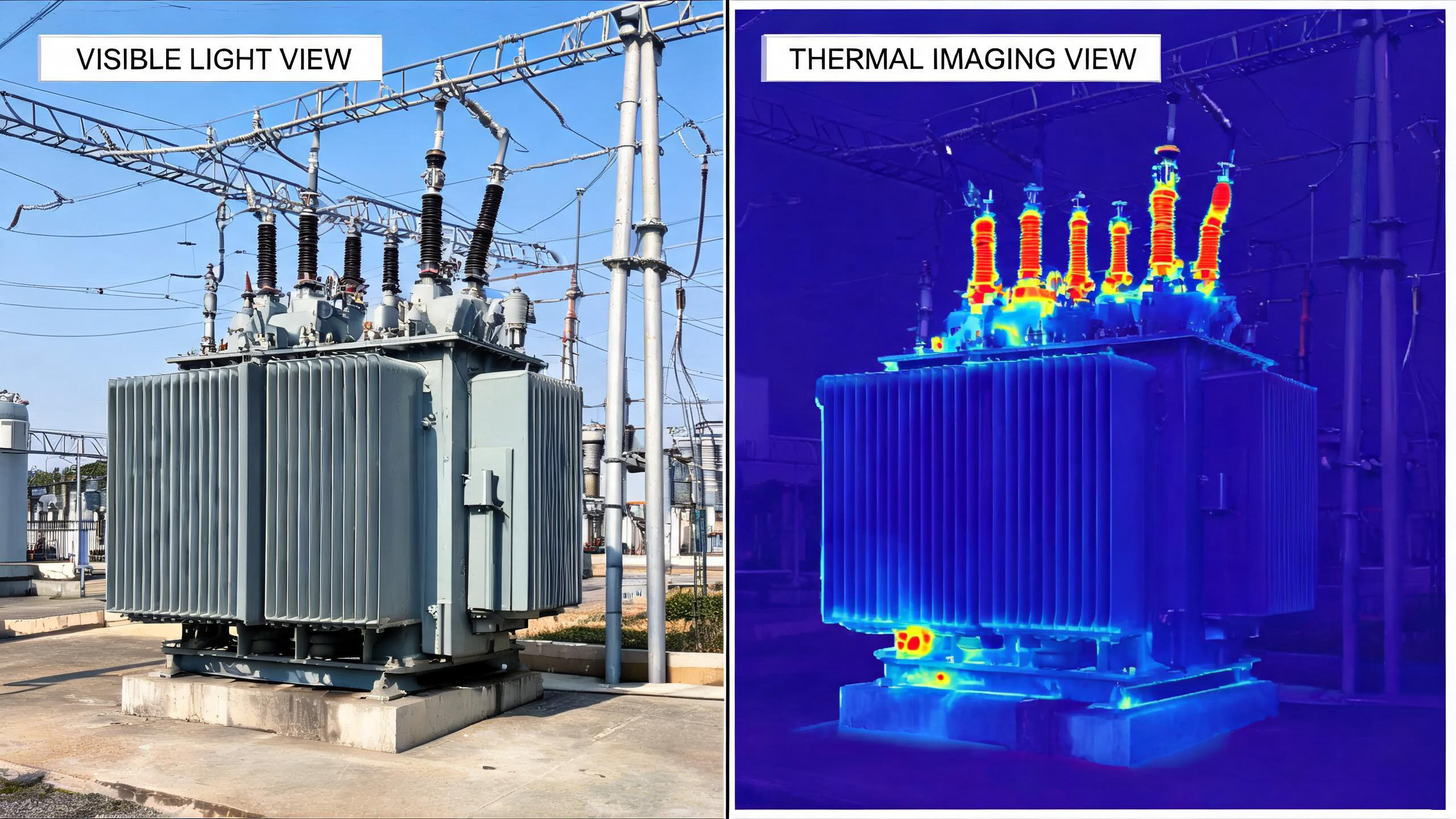
Transformers are among the most critical and expensive components in any substation. Their internal windings, core, and external connections all generate heat during normal operation, but abnormal temperature patterns signal trouble.
Thermal imaging identifies overheating in transformer bushings, tap changers, and cooling systems. A hotspot on a bushing may indicate poor contact or internal arcing, while uneven temperature distribution across cooling fins can reveal blockages or pump failures. Regular thermal camera for substation inspection routines help utilities address these issues during planned maintenance windows rather than in emergency situations.
Cable Line Monitoring
Underground and overhead cable lines present unique inspection challenges. Cable joints, terminations, and splices are common failure points where resistance increases and heat builds up. Over time, insulation degradation can lead to short circuits or ground faults.
With thermal imaging, inspectors can scan cable routes along trenches, trays, and aerial paths to locate temperature anomalies. Infrared thermography for power line inspection is particularly effective for identifying overloaded phases, unbalanced loads, and deteriorating splices before they cause outages.
Switchgear and Connection Point Testing
High-voltage switchgear, circuit breakers, and disconnectors contain numerous contacts and connection points. Oxidation, vibration, and thermal cycling gradually degrade these connections, increasing contact resistance and generating heat.
Thermal cameras allow inspectors to scan entire switchgear assemblies quickly, identifying hot spots on busbars, breaker contacts, and cable lugs. This method is far faster than manual torque verification or resistance testing and can be performed while equipment remains in service.
Advanced Prevention Strategies with Thermal Imaging
Scheduled Thermal Inspections
Routine thermal surveys form the foundation of a predictive maintenance program. By establishing baseline thermal signatures for each piece of equipment, maintenance teams can detect deviations during subsequent inspections. A transformer that normally operates at 45 degrees Celsius but suddenly reads 65 degrees demands immediate attention.
Scheduled inspections also help utilities comply with regulatory requirements and internal reliability standards. Thermal images serve as dated documentation that demonstrates proactive maintenance practices.
Fault Trend Analysis
Modern thermal imaging systems store historical data that supports long-term trend analysis. By comparing thermal images of the same equipment taken months or years apart, engineers can identify gradual temperature increases that indicate progressive deterioration.
This data-driven approach enables utilities to forecast equipment lifespan, budget for replacements, and schedule maintenance during optimal windows. Instead of reacting to failures, grid operators can manage asset health systematically.
Real-Time Monitoring and Alerting
When integrated with smart sensors and IoT platforms, fixed-mount thermal cameras provide continuous monitoring of critical assets. These systems automatically trigger alerts when temperatures exceed predefined thresholds, enabling rapid response to emerging faults.
Real-time thermal monitoring is especially valuable for remote substations and unmanned facilities where regular manual inspection is impractical. Automated alerts ensure that no critical temperature excursion goes unnoticed.
Innovative Use Cases in Modern Grid Management
Smart Grid Integration
In smart grid environments, thermal imaging data integrates with SCADA systems, asset management platforms, and cloud-based analytics engines. This convergence enables comprehensive lifecycle management of electrical equipment.
Machine learning algorithms can analyze thermal patterns across thousands of assets, automatically flagging anomalies and predicting failures with increasing accuracy. Utilities that adopt this integrated approach gain a measurable advantage in reliability metrics and operational efficiency.
Drone-Based Thermal Inspections
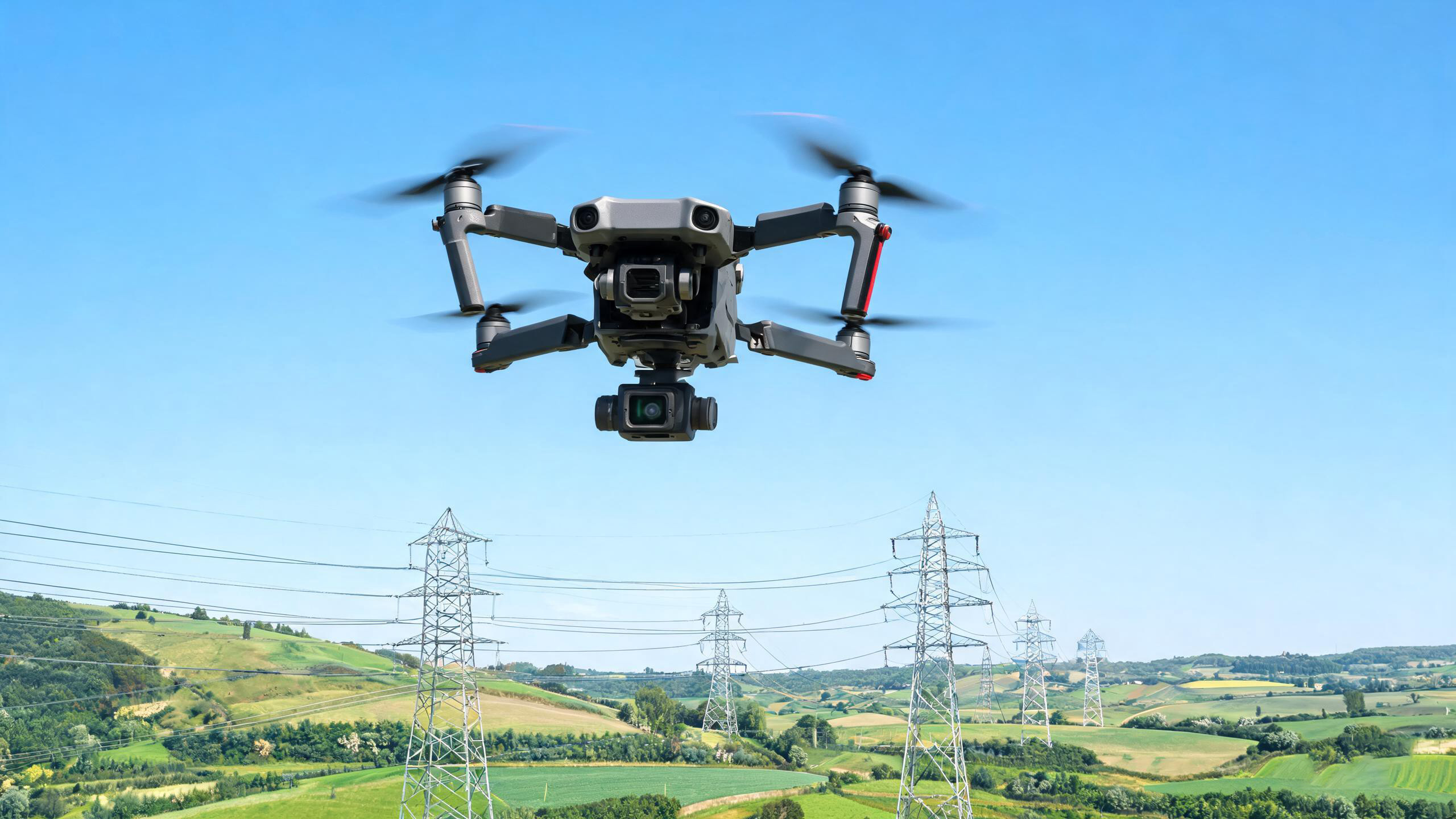
Unmanned aerial vehicles equipped with thermal cameras have transformed the inspection of transmission lines and substations. Thermal drone for electrical utility applications offers several compelling benefits:
- Access to hazardous terrain. Drones easily reach lines crossing mountains, rivers, and dense vegetation.
- Reduced personnel risk. Inspectors remain safely on the ground while the drone surveys energized equipment.
- Faster coverage. A drone can inspect kilometers of transmission line in a single flight, dramatically reducing inspection time.
- High-resolution data. Modern drone-mounted thermal cameras deliver pixel resolutions that rival handheld devices.
Choosing the Right Thermal Imaging Equipment for Grid Inspection
Selecting thermal imaging equipment for electrical grid applications requires attention to several technical parameters:
| Parameter | Typical Requirement | Why It Matters |
|---|---|---|
| Resolution | 320x240 or higher | Higher resolution reveals smaller temperature anomalies at distance. |
| Thermal Sensitivity (NETD) | <50mK | Lower NETD detects subtle temperature differences in low-contrast scenes. |
| Temperature Range | -20°C to +150°C (expandable) | Covers normal and abnormal operating temperatures of grid equipment. |
| Lens Options | Standard + telephoto | Telephoto lenses enable safe inspection of high-voltage equipment from distance. |
| Data Connectivity | Wi-Fi, Bluetooth, or Ethernet | Enables real-time image transfer to analysis platforms. |
For original equipment manufacturers developing specialized grid inspection tools, LWIR thermal imaging modules and thermal imaging core modules provide compact, integrable thermal sensing solutions. These modules allow system integrators to build custom inspection cameras tailored to specific utility requirements.
Frequently Asked Questions
What types of electrical faults can thermal imaging detect?
Thermal imaging detects temperature anomalies caused by loose connections, overloaded circuits, unbalanced loads, insulation degradation, corroded contacts, and failing cooling systems. Nearly all electrical faults generate excess heat before visible damage occurs.
How often should power grid equipment undergo thermal inspection?
Critical substation equipment typically benefits from quarterly or semi-annual thermal surveys. Transmission lines may be inspected annually or bi-annually depending on load conditions, age, and environmental exposure. High-stress environments or aging infrastructure may require more frequent monitoring.
Can thermal imaging inspect energized equipment safely?
Yes. Thermal imaging is a non-contact technology, meaning inspectors can scan energized equipment from a safe distance without physical interaction. Proper training, appropriate personal protective equipment, and adherence to safe approach distances remain essential.
What is the difference between handheld and drone-mounted thermal cameras for grid inspection?
Handheld thermal cameras excel at detailed, close-range inspection of substation equipment where precise temperature measurement is required. Drone-mounted systems are better suited for rapid coverage of transmission lines, tower structures, and large outdoor substations where ground access is limited or hazardous.
How does thermal imaging compare to traditional electrical testing methods?
Thermal imaging complements rather than replaces traditional methods. It provides immediate visual feedback over large areas without service interruption. Methods such as contact resistance testing or partial discharge analysis offer complementary data and may be used to confirm thermal findings.
Looking for thermal imaging solutions for your grid inspection program?
Owlshine offers a range of industrial thermal cameras and core modules designed for electrical utility applications.
Contact Owlshine for Industrial Solutions