

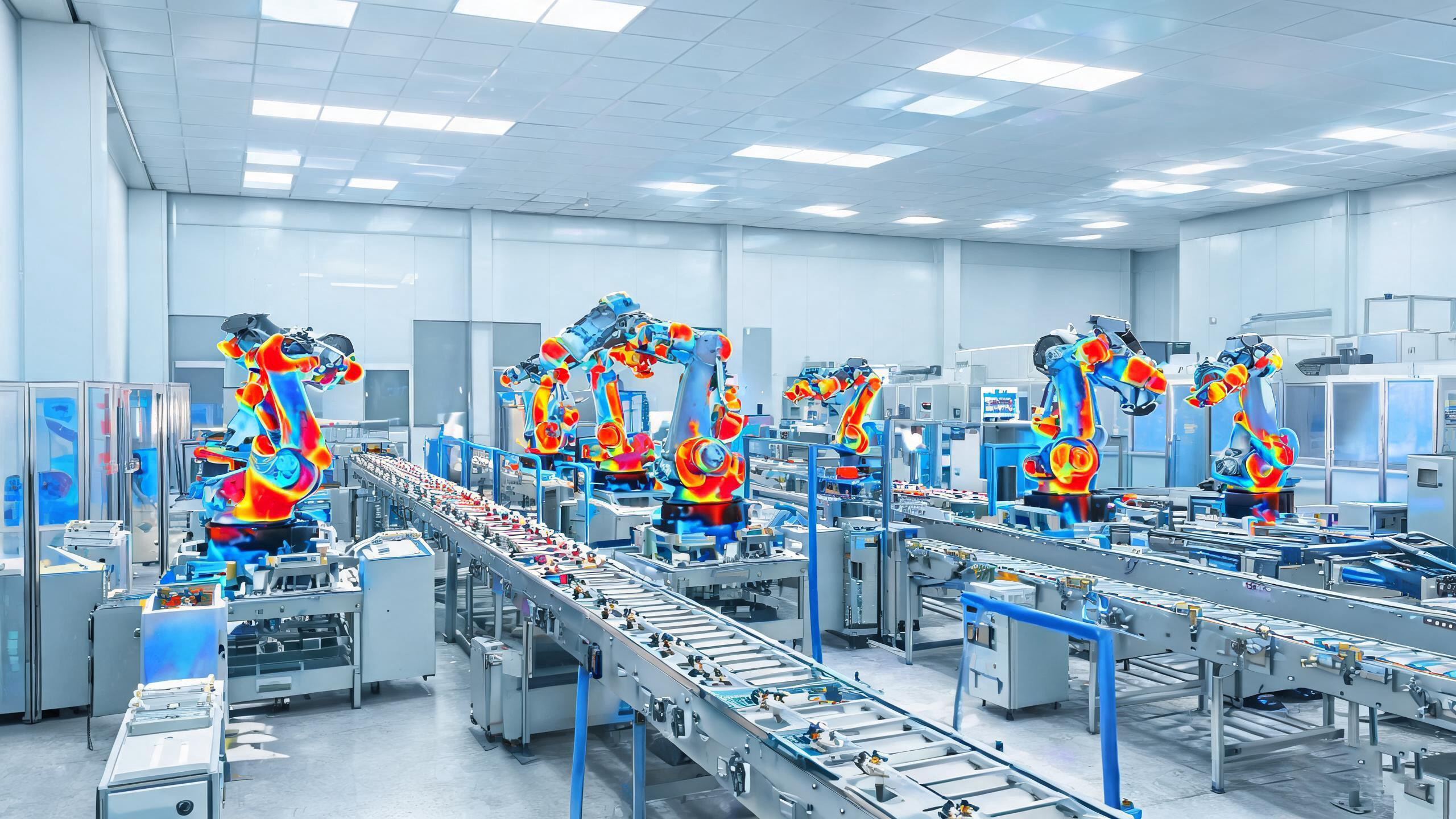
In semiconductor packaging, electronics assembly, and metal processing applications, machine vision systems need to identify not only the physical position and appearance of components but also their thermal state. Overheating can indicate defects, excessive friction, or electrical failures. Thermal imaging cameras capture infrared radiation emitted by objects and convert it into visual heat maps, enabling machines to "see" temperature variations that are invisible to standard cameras.
Why Machine Vision Needs Thermal Imaging
Traditional machine vision systems use CCD or CMOS sensors that detect visible light reflected from objects. While effective for shape recognition, surface inspection, and barcode reading, these systems cannot provide thermal data. In many industrial processes, temperature is a direct indicator of product quality, equipment health, or process stability.
For example, in semiconductor manufacturing, bond wires and solder joints must be inspected for both physical integrity and thermal performance. A connection that looks perfect in visible light may exhibit abnormal heat dissipation, signaling a potential failure. Similarly, in automotive manufacturing, brake discs, engine components, and battery packs require thermal validation during and after assembly.
By integrating thermal imaging modules into machine vision systems, manufacturers gain the ability to perform non-destructive, non-contact temperature measurement at production-line speeds. This integration enables early detection of thermal anomalies before they lead to product failure or equipment damage.
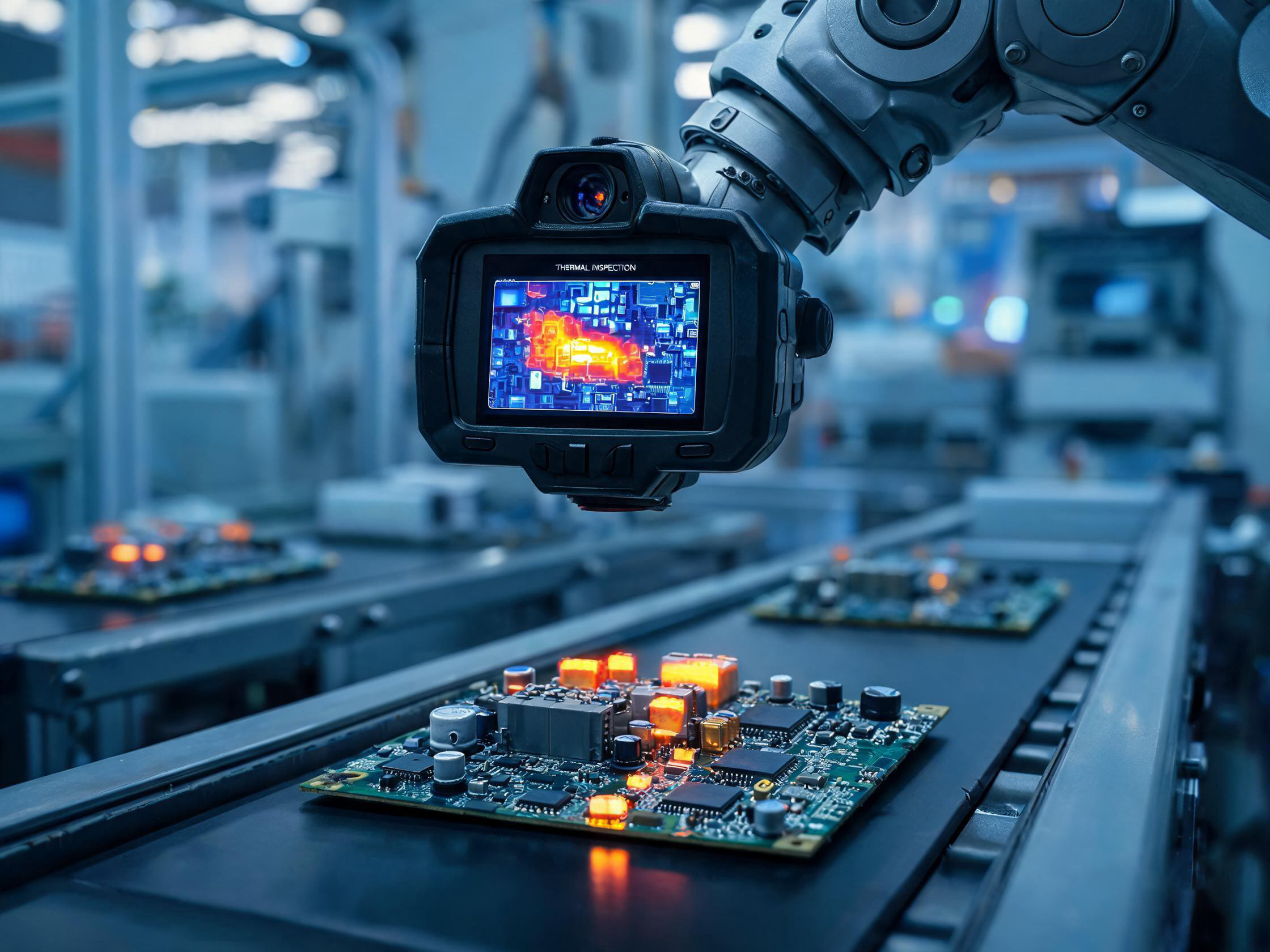 A robotic-mounted thermal camera performs inline inspection of electronic circuit boards.
Seven Core Advantages of Thermal Imaging in Machine Vision
1. High-Precision Temperature Measurement
Modern uncooled infrared detectors can achieve temperature measurement accuracy of +/-2 degrees Celsius or better, depending on calibration and environmental conditions. This level of precision provides machine vision systems with quantitative thermal data rather than merely qualitative images. In applications such as PCB inspection, medical device manufacturing, and food packaging, precise temperature measurement ensures compliance with strict quality standards.
2. Advanced Image Processing Capabilities
Thermal imaging modules incorporate specialized image processing algorithms designed for infrared data. These algorithms perform non-uniformity correction (NUC), bad pixel replacement, and digital detail enhancement to produce clear, analyzable thermal images. When combined with AI-driven analytics, thermal image processing enables automatic classification of heat patterns, predictive maintenance alerts, and real-time process feedback.
3. Fast Response Speed for Real-Time Monitoring
Uncooled microbolometer detectors operate at frame rates of 30Hz, 60Hz, or higher, enabling real-time thermal monitoring on high-speed production lines. This rapid response allows machine vision systems to detect transient thermal events, such as brief overheating during welding or rapid cooling in injection molding, that might be missed by slower measurement methods.
4. Multi-Scene Environmental Adaptability
Unlike visible-light cameras that depend on adequate illumination and can be affected by glare, shadows, or dust, thermal imaging operates passively by detecting infrared radiation. This makes it effective in low-light conditions, through light smoke or haze, and in environments with reflective or dark surfaces that challenge conventional vision systems. Manufacturing facilities with varying lighting conditions benefit from this inherent robustness.
5. Long-Term Stability and Reliability
Uncooled thermal imaging modules contain no moving parts and require no cryogenic cooling, resulting in high mean-time-between-failures (MTBF) ratings. Industrial-grade thermal cameras are designed to operate continuously in harsh environments with wide temperature ranges, vibration, and electromagnetic interference. This reliability is essential for 24/7 automated production where downtime is costly.
6. Intelligent Algorithms and Analytical Models
Contemporary thermal imaging systems integrate machine learning models trained on large datasets of thermal patterns. These models can recognize normal versus abnormal thermal signatures, predict equipment degradation, and optimize process parameters. For instance, in steel rolling mills, AI-enhanced thermal imaging can predict surface defects based on cooling patterns before they become visible.
7. System Integration and Compatibility
Thermal imaging modules are available with standardized interfaces such as GigE Vision, USB3 Vision, MIPI CSI, and analog video outputs, enabling straightforward integration with existing machine vision frameworks. Software development kits (SDKs) support popular platforms including Halcon, LabVIEW, and OpenCV, reducing development time and allowing engineers to add thermal capabilities to established inspection systems.
Typical Applications in Industrial Automation
Thermal imaging has found practical use across diverse manufacturing sectors. In electronics assembly, it verifies solder joint quality and detects component overheating. In plastic injection molding, it monitors mold temperature distribution to prevent warping and shrinkage defects. In metal processing, it tracks workpiece temperature during forging and heat treatment. In battery manufacturing, it identifies cell imbalance and hot spots during formation and testing.
The food and pharmaceutical industries also benefit from thermal machine vision. In food packaging, thermal imaging confirms seal integrity and detects contamination. In pharmaceutical production, it verifies blister pack sealing and monitors lyophilization processes. These applications demonstrate that thermal imaging is not limited to heavy industry but extends to any sector where temperature affects product quality.
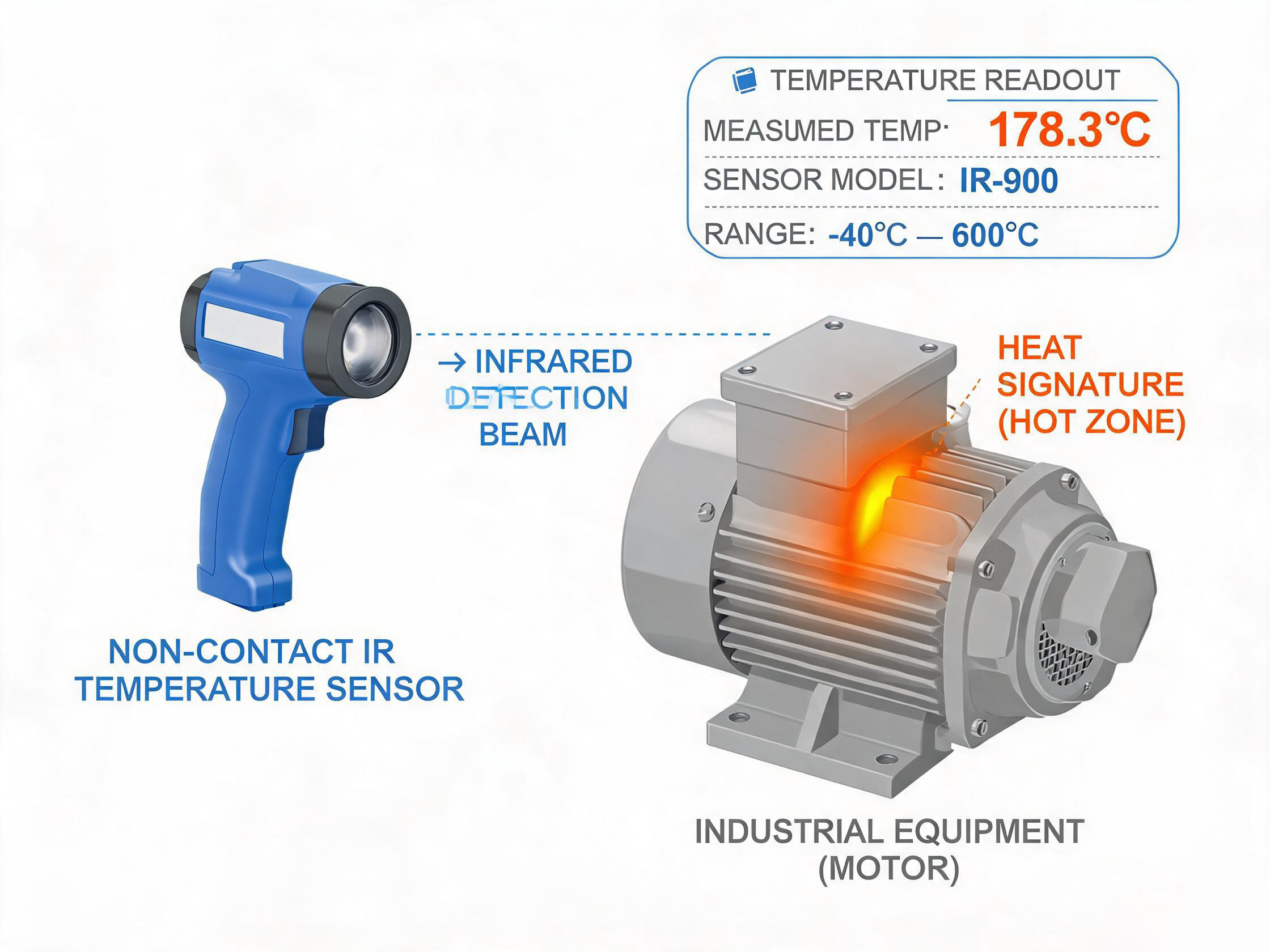 Non-contact infrared sensors enable precise temperature monitoring without physical contact with moving equipment.
Choosing the Right Thermal Imaging Module
When selecting a thermal imaging module for machine vision integration, several technical parameters require evaluation. Resolution determines the level of spatial detail: 640x512 pixels is common for industrial applications, while higher resolutions such as 1280x1024 provide finer detail for small-component inspection. Pixel pitch, typically 12 or 17 micrometers, affects the module size and optical compatibility.
Thermal sensitivity, measured in millikelvins (mK), indicates the smallest temperature difference the detector can resolve. Lower values mean better sensitivity. A module with 40mK sensitivity can distinguish finer thermal gradients than one with 60mK, which matters for subtle defect detection. Lens selection depends on the field of view and working distance required for the specific application.
Power consumption, physical dimensions, and weight are critical for robotic and drone-mounted applications. Compact thermal cores with low power draw enable integration into mobile platforms and space-constrained installations. Communication interfaces must match the existing vision system architecture to ensure seamless data transfer.
Integration Considerations
Successful integration of thermal imaging into machine vision requires attention to several practical factors. Calibration is essential for accurate temperature measurement; most modules include factory calibration, but field calibration against known temperature references improves accuracy in specific environments. Emissivity settings must be adjusted based on the material being inspected, as different surfaces emit infrared radiation at different efficiencies.
Ambient temperature fluctuations, air currents, and nearby heat sources can affect measurement accuracy. Shielding, protective enclosures, and software-based atmospheric correction help mitigate these influences. Synchronization between thermal and visible-light cameras, when used in dual-spectrum systems, requires precise alignment and timing to ensure that both sensors capture the same scene simultaneously.
FAQ
What is the difference between thermal imaging and regular machine vision?
Regular machine vision uses visible-light cameras to capture images based on reflected light, enabling shape recognition, color inspection, and surface defect detection. Thermal imaging detects infrared radiation emitted by objects, providing temperature data and heat distribution maps. The two technologies complement each other: visible vision identifies physical characteristics, while thermal vision reveals thermal states.
Can thermal imaging see through walls or glass?
No, thermal imaging cannot see through solid walls. It detects surface temperatures of objects in direct line of sight. Standard glass blocks infrared radiation, so thermal cameras cannot see through glass windows. Specialized infrared-transparent materials such as germanium or zinc selenide are used for protective windows in thermal imaging applications.
What temperature range can industrial thermal cameras measure?
Most uncooled industrial thermal cameras measure temperatures from -40 degrees Celsius to +550 degrees Celsius. Extended-range models can measure up to +1500 degrees Celsius for high-temperature industrial processes such as glass manufacturing and metallurgy. The appropriate range depends on the specific application requirements.
How does emissivity affect thermal measurement accuracy?
Emissivity is a material property that describes how efficiently a surface emits infrared radiation compared to a perfect blackbody. Highly reflective surfaces such as polished metals have low emissivity and may reflect infrared radiation from nearby sources, causing measurement errors. Matte, oxidized, or painted surfaces typically have higher emissivity and provide more accurate readings. Modern thermal imaging software allows users to set emissivity values and apply correction algorithms.
Is thermal imaging safe for continuous operation near workers?
Yes, thermal imaging is completely passive and safe. Unlike X-ray or active laser scanning, thermal cameras detect only naturally emitted infrared radiation without emitting any energy into the environment. They pose no health risk to operators and can operate continuously in occupied workspaces without safety concerns.