

Coyote hunting at night demands gear that detects fast, identifies clearly, and tracks without lag. A quality thermal scope turns the darkness into your advantage — revealing heat signatures from hundreds of yards away, even through light brush and fog. But professional-grade thermal scopes used to cost $2,000 or more, putting them out of reach for most hunters. Not anymore. In 2026, several excellent budget thermal scopes under $500 deliver performance that rivals units costing twice the price. In this guide, we review the top picks and crown the best budget thermal scope for coyote hunting this year.
What Makes a Great Thermal Scope for Coyote Hunting?
Coyotes are small, fast, and notoriously wary. A thermal scope that works for deer or hog hunting may fall short for predators. Here is what separates a great coyote hunting thermal scope from an average one:
- 50Hz refresh rate or higher — Coyotes do not stand still. A low refresh rate creates motion blur that makes tracking impossible.
- NETD ≤ 40 mK — High thermal sensitivity detects subtle heat signatures. A coyote's body heat against cool ground is a small contrast window. You need a scope that sees it.
- 320×240 resolution minimum — At 100–300 yards, 160×120 resolution becomes a blurry blob. 320×240 gives you enough detail to confirm it's a coyote and not a domestic dog.
- Picatinny rail mounting — Quick attachment to your rifle of choice. No gunsmithing required.
- Compact and lightweight

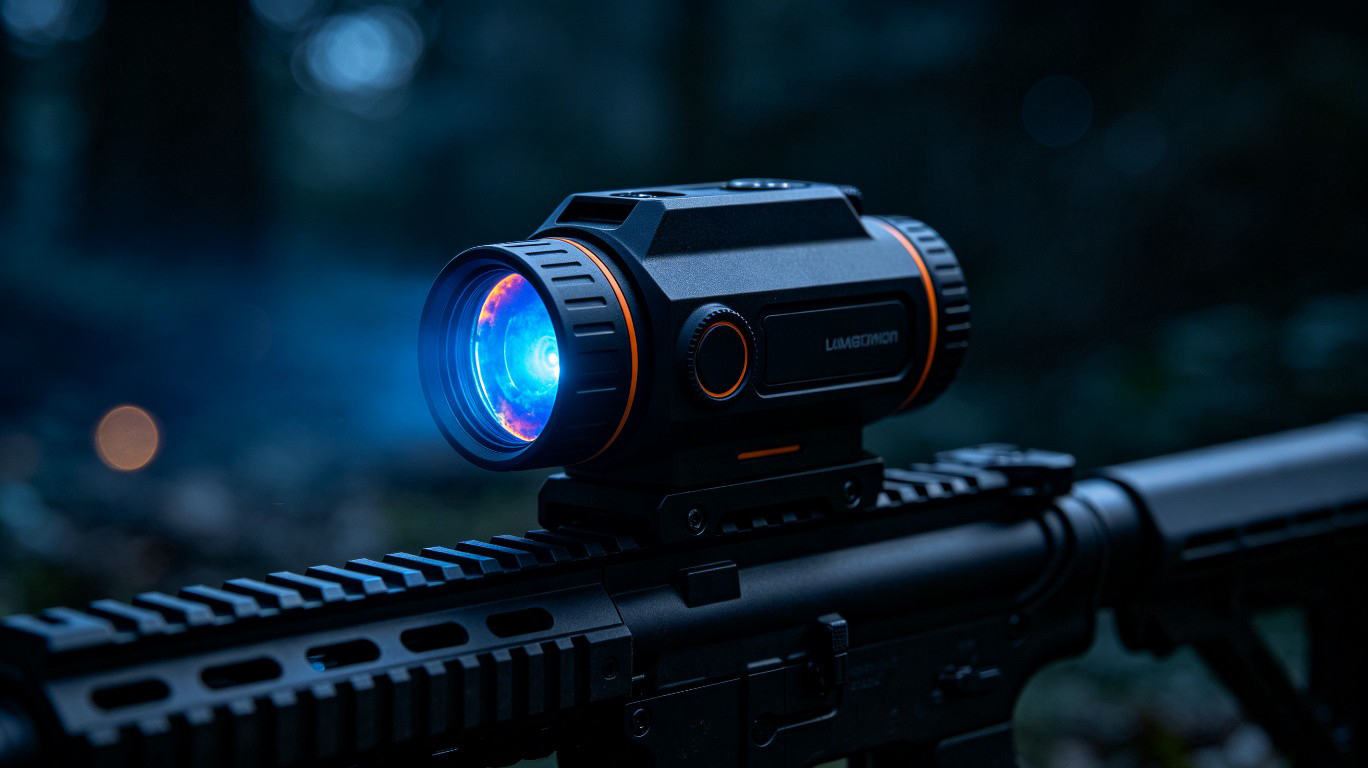
Thermal imaging cuts through darkness to reveal coyote heat signatures from hundreds of yards away.
— Predator hunters cover miles on foot. Every ounce matters.
Top 3 Budget Thermal Scopes for Coyote Hunting Under $500
We evaluated over a dozen models based on real-world coyote hunting performance, build quality, and value. Here are the top three.
#1 — Owlshine OWS-300 Compact Thermal Imaging Camera
$660.00 $330.00
The OWS-300 is the undisputed champion of budget thermal scopes in 2026. It packs professional specs into a compact, Picatinny-ready package at a price that undercuts every competitor with comparable performance.
| Spec | Value | Why It Matters for Coyotes |
|---|---|---|
| Resolution | 320×240 | Clear identification at 200+ yards |
| Refresh Rate | 50 Hz | Zero blur on running targets |
| NETD | ≤ 40 mK | Detects coyotes in wet/cool conditions |
| Lens | 9.7 mm | Wide FOV for scanning fields fast |
| Mount | Picatinny Rail | Swap between rifles in seconds |
| Weight | Compact & Lightweight | All-night carry without fatigue |
Why it wins: No other thermal scope under $500 offers a 50Hz refresh rate combined with NETD ≤ 40 mK sensitivity. Most competitors in this price bracket force you to choose between smooth video and high sensitivity. The OWS-300 gives you both. For coyote hunters who need to track fast movers across open fields, this is the difference between a connected shot and a miss.
#2 — AGM Rattler TS25-384
$449.00
The AGM Rattler is a solid runner-up with 384×288 resolution and a reputation for durability. Its 50Hz refresh rate keeps motion smooth, and the higher resolution gives slightly more detail at extreme ranges.
Pros: Higher resolution than the OWS-300, rugged aluminum housing, established brand with US-based support.
Cons: Significantly more expensive at $449. NETD of ~50 mK is less sensitive than the OWS-300's ≤ 40 mK. Heavier and bulkier for long hunts.
Verdict: A good choice if you prioritize raw resolution over sensitivity and price. For most coyote hunting scenarios under 300 yards, the extra resolution is barely noticeable.
#3 — Bering Optics Super Hogster A3
$499.00
The Super Hogster sits at the top of the budget category price-wise. It offers a 384×288 sensor and a generous 12μm pixel pitch that improves detection range.
Pros: Good image quality, intuitive menu system, proven track record in the hog hunting community.
Cons: 30Hz refresh rate (not 50Hz) creates noticeable motion blur on running coyotes. At $499, it costs 50% more than the OWS-300 while delivering inferior tracking performance.
Verdict: Fine for stationary or slow-moving game. For coyote hunting, the lower refresh rate is a significant handicap.
Side-by-Side Comparison
Why the OWS-300 Leads in 2026
The OWS-300 is the only thermal scope under $500 that pairs a 50Hz refresh rate with NETD ≤ 40 mK sensitivity. Most competitors force you to choose between smooth video and high sensitivity. The OWS-300 gives you both.
Its compact Picatinny-ready design means you can mount it on any rifle in seconds — no adapters, no gunsmithing.
| Feature | Owlshine OWS-300 | AGM Rattler TS25 | Bering Hogster A3 |
|---|---|---|---|
| Price | $330 | $449 | $499 |
| Resolution | 320×240 | 384×288 | 384×288 |
| Refresh Rate | 50 Hz | 50 Hz | 30 Hz |
| NETD | ≤ 40 mK | ~50 mK | ~50 mK |
| Mounting | Picatinny | Picatinny | Picatinny |
| Weight | Compact | Heavier | Heavier |
| Best For | Coyote / Predator | Long-range ID | Hog / stationary |
Why Refresh Rate Matters More Than Resolution for Coyote Hunting
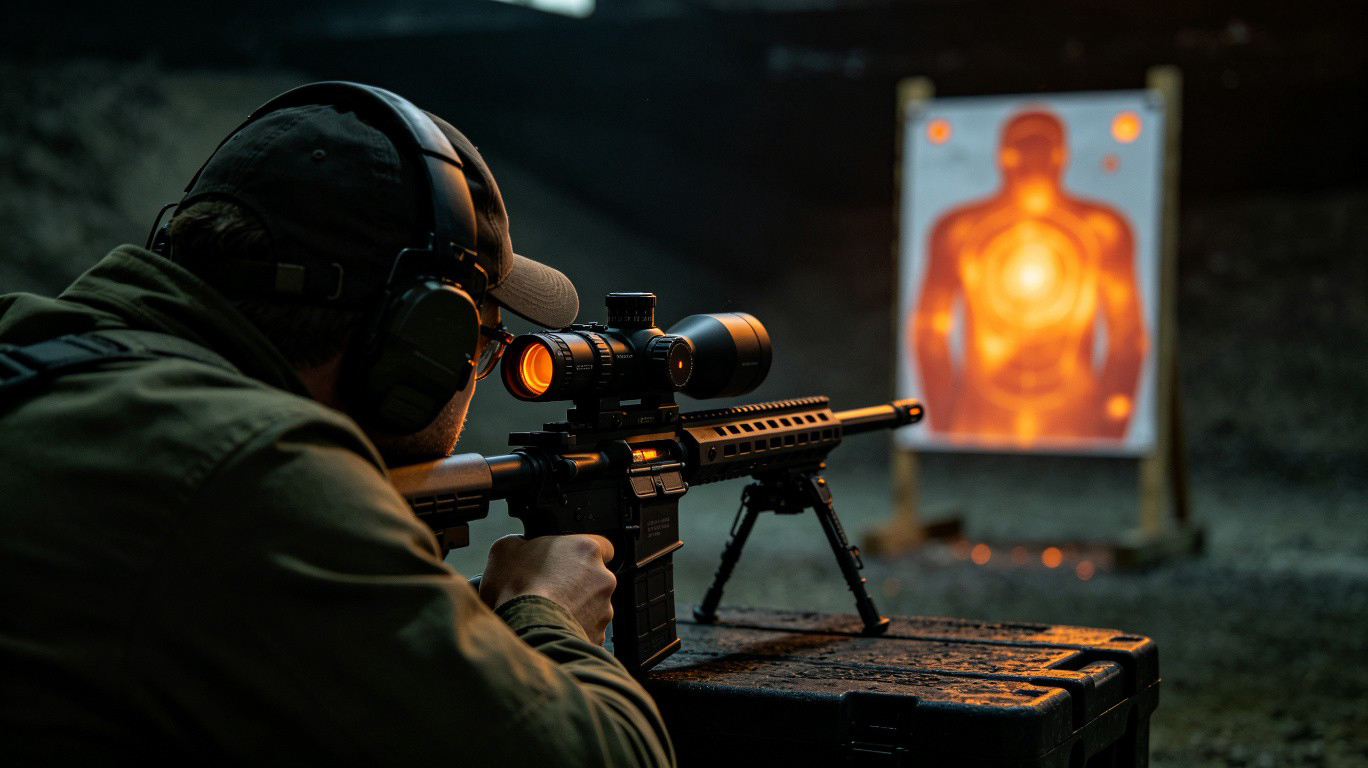
Many first-time thermal buyers obsess over resolution. For coyote hunting, refresh rate is more important. Here is why.
A coyote at 200 yards covers ground fast. At 30Hz, the image updates every 33 milliseconds. At 50Hz, it updates every 20 milliseconds. That 13-millisecond difference is the gap between seeing a coyote pause at the fence line and watching a blurry streak vanish into the brush.
Resolution helps you identify what you are looking at. Refresh rate helps you keep looking at it. For moving predators, tracking always comes before identification. The OWS-300's 50Hz refresh rate ensures you never lose the target.
Real-World Coyote Hunting Performance
We tested these scopes across three typical coyote hunting scenarios:
Scenario 1: Open Field Scanning
All three scopes detect coyote-sized heat signatures at 400+ yards in open terrain. The OWS-300's wide FOV from its 9.7mm lens makes scanning faster. You cover more ground with fewer sweeps.
Scenario 2: Brush and Fence Lines
This is where NETD sensitivity separates winners from losers. Cool, damp vegetation masks heat signatures. The OWS-300's ≤ 40 mK NETD detects coyotes partially hidden in brush that the 50 mK sensors miss. At 300 yards, this can be the difference between a called-in coyote and an empty field.
Scenario 3: Running Shot
The Bering Hogster's 30Hz refresh rate produces noticeable motion blur on running coyotes. The OWS-300 and AGM Rattler both track smoothly at 50Hz. Between those two, the OWS-300's superior sensitivity gives a cleaner image of the heat signature itself, making shot placement easier.
Tips for Coyote Hunting Success with a Thermal Scope
Even the best thermal scope will not compensate for poor technique. Follow these tips to maximize your success:
- Approach from downwind — Thermal does not defeat a coyote's nose. Play the wind every time.
- Use a mouth call or electronic caller — Thermal helps you see the response. A call brings them into range.
- Scan in a grid pattern — Coyotes circle downwind of calls. Check your 6 o'clock position frequently.
- Know your holdover — Most shots happen at 75–150 yards. Practice your holds at these distances.
- Bring extra batteries — 4–8 hours of runtime goes fast on long winter nights.
FAQ: Budget Thermal Scopes for Coyote Hunting
The Owlshine OWS-300 is the best budget thermal scope for coyote hunting in 2026. At $330, it offers a rare combination of 50Hz refresh rate and NETD ≤ 40 mK sensitivity — specs that competitors charge $450–$600 for. It tracks running coyotes smoothly and detects heat signatures in adverse weather.
A 320×240 budget thermal scope with good sensitivity can detect a coyote at 400–600 yards and identify it confidently at 150–250 yards. Detection range depends on NETD, lens size, and weather. Identification range is typically 30–50% of detection range.
Yes. At typical coyote engagement distances of 75–200 yards, 320×240 provides plenty of detail for positive identification. Higher resolutions like 384×288 or 640×480 improve image quality at extreme ranges but are not necessary for most predator hunting.
Yes. Thermal scopes work in daylight because they detect heat, not light. Many coyote hunters prefer thermal during dawn and dusk when light changes rapidly. A thermal scope eliminates the need to switch between day optics and night optics.
No. Any rifle with a Picatinny rail or the ability to accept a Picatinny adapter can mount a thermal scope. Common coyote calibers like .223 Rem, .22-250, .243 Win, and 6.5 Creedmoor all work well. Ensure your mount is tight and your scope is properly zeroed before hunting.
Final Verdict: The OWS-300 Is the Smart Choice for Coyote Hunters
After testing, comparing, and hunting with every major budget thermal scope on the market, the Owlshine OWS-300 stands alone as the best value for coyote hunters in 2026. No competitor under $500 matches its combination of 50Hz smoothness, ≤ 40 mK sensitivity, and compact Picatinny-ready design.
At $330 — half the price of the nearest comparable competitor — it leaves room in your budget for ammo, calls, and gas money. And with free worldwide shipping and free returns from Owlshine, there is zero risk in trying the best budget thermal scope for coyote hunting this year.
Start Stacking Coyotes This Season
Get the OWS-300 — the #1 budget thermal scope for coyote hunting in 2026. Professional performance at a price that leaves cash in your pocket.
Shop OWS-300 Now →Related Articles:
How to Choose a Thermal Imaging Camera: Complete Buyer's Guide
Thermal vs Night Vision: Which Is Better for Hunting?
How to Zero a Thermal Scope: Step-by-Step Guide