

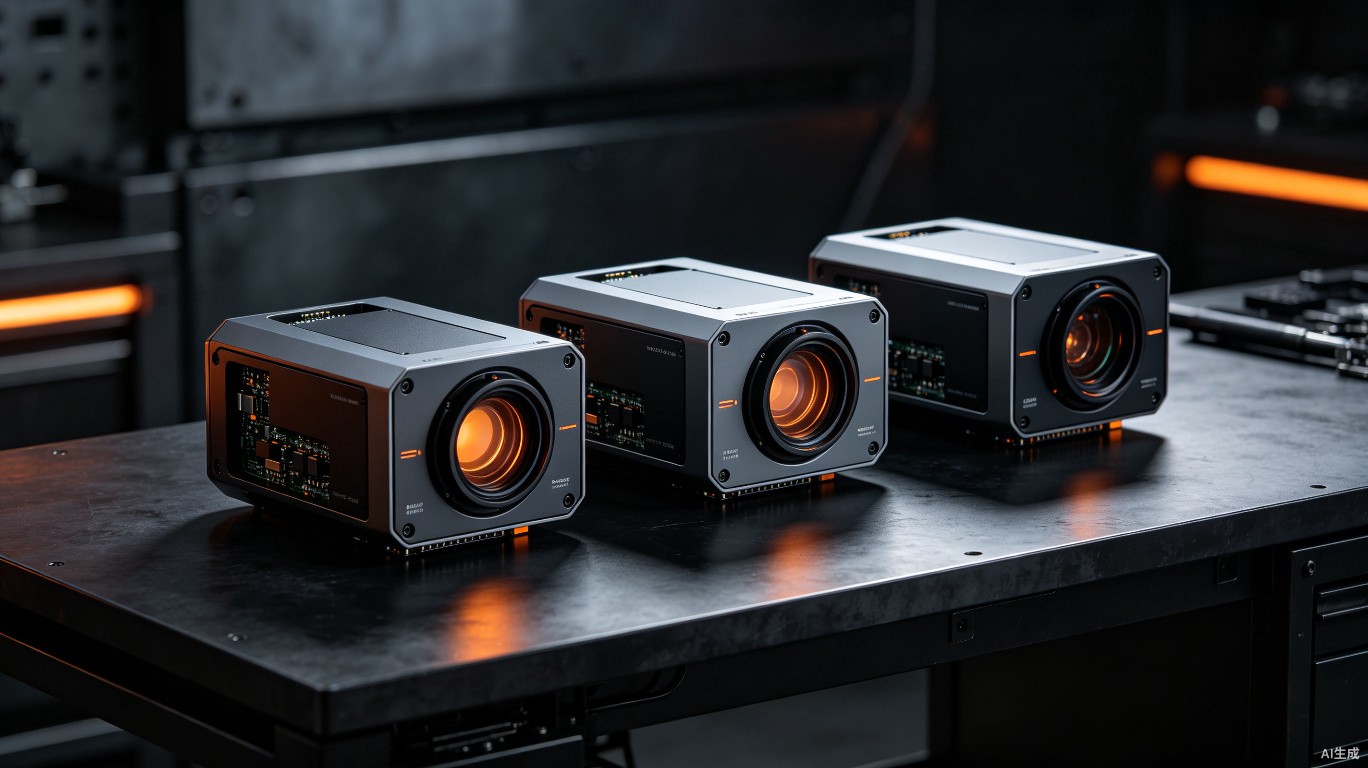
Choosing the right thermal imaging core module can make or break your OEM product. You've likely faced the same frustrating cycle: dozens of suppliers promise "the best specs," datasheets contradict each other, and sample units never quite match what was advertised. For system integrators building thermal security cameras, industrial monitoring devices, or drone payloads, the module isn't just a component — it's the heart of your entire system.
That's exactly why we built the Owlshine thermal imaging module lineup. Our uncooled LWIR (Long-Wave Infrared) modules deliver industry-leading NETD performance, flexible interface options, and genuine OEM customization — all at a price point that makes sense for production-scale deployment. Whether you need a 384x288 entry-level core or a 640x512 high-resolution engine, Owlshine provides reliable, well-documented LWIR thermal imaging modules backed by responsive engineering support.
What Makes a Great Thermal Imaging Core Module for OEM?
Not all thermal imaging modules are created equal. When you're integrating a core into a commercial product — whether it's a pan-tilt thermal camera, a handheld industrial imager, or an unmanned aerial vehicle (UAV) payload — the module you select determines everything from image clarity to power consumption to how quickly you can bring your product to market. Here are the six critical factors every OEM buyer should evaluate:
Resolution
640x512 for sharp imaging and long range; 384x288 for cost-effective deployments
NETD Sensitivity
Lower NETD (<40mK) detects smaller temperature differences for better anomaly detection
Frame Rate
30Hz / 60Hz for real-time monitoring; 9Hz only for static inspection tasks
Power Consumption
<1.5W typical — critical for battery-powered and drone-mounted systems
Interface
USB 3.0 / MIPI / LVDS — determines integration complexity and development time
Shutterless
Eliminates image freezes for continuous 24/7 monitoring and security applications
Understanding these parameters is the first step. The next step is finding a supplier that actually delivers on all of them — consistently, at scale, and with the engineering documentation your team needs.
Owlshine Thermal Imaging Module Core Specifications
When evaluating thermal imaging core modules for OEM integration, the spec sheet tells the real story. Owlshine's module family covers a wide range of performance tiers, ensuring you'll find the right fit for your application — from entry-level handheld devices to high-end security systems.
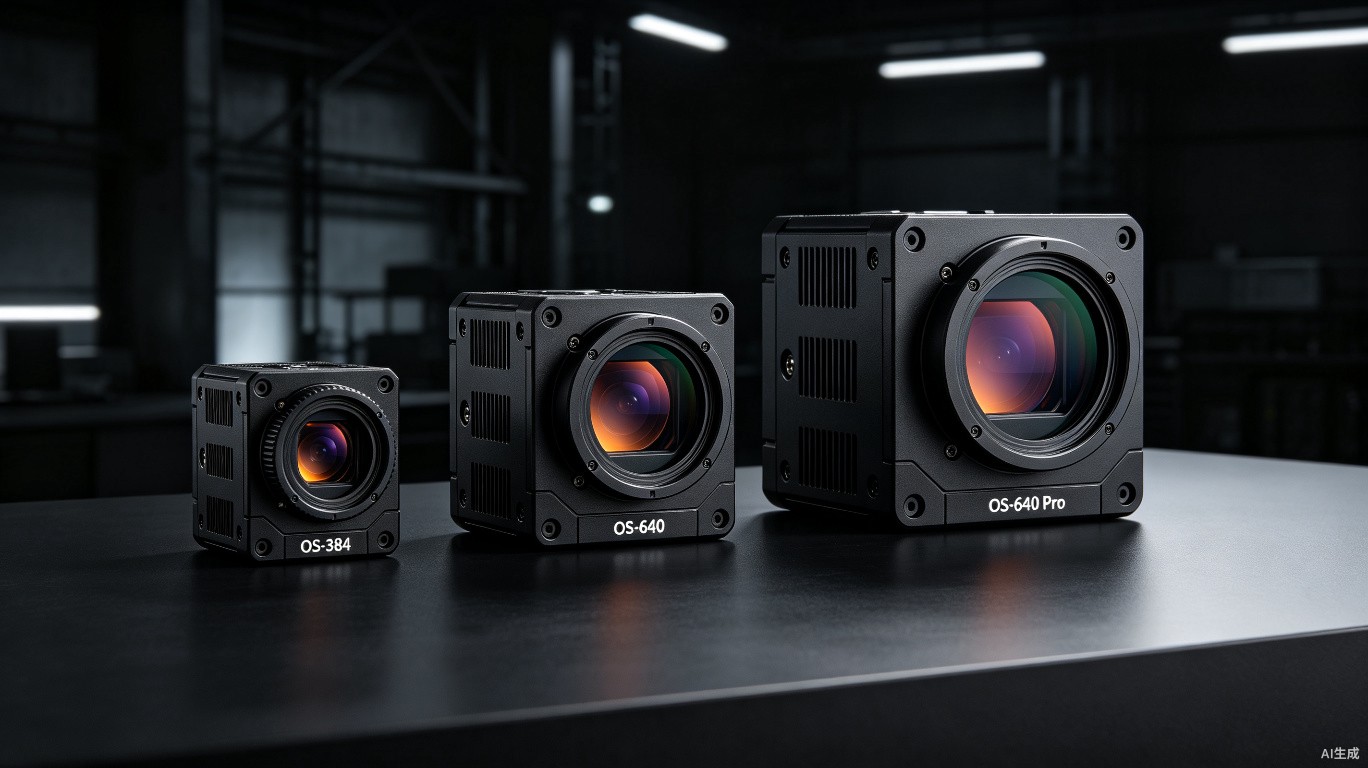
Figure 1: Owlshine OS-384, OS-640, and OS-640 Pro thermal imaging module series
| Feature | OS-384 Series (Entry) | OS-640 Series (Standard) | OS-640 Pro Series (Premium) |
|---|---|---|---|
| Resolution | 384 × 288 | 640 × 512 | 640 × 512 |
| Pixel Pitch | 17μm | 17μm | 12μm |
| NETD | <50mK | <40mK | <25mK |
| Spectral Range | 8–14μm (LWIR) | 8–14μm (LWIR) | 8–14μm (LWIR) |
| Frame Rate | 30Hz / 9Hz | 30Hz / 60Hz | 30Hz / 60Hz |
| Shutterless | Optional | Standard | Standard |
| Power Consumption | <1.2W | <1.5W | <2.0W |
| Interface | USB 3.0 / LVDS | USB 3.0 / MIPI / LVDS | USB 3.0 / MIPI / LVDS |
| Lens Options | 9 / 15 / 25mm | 9 / 15 / 25 / 35 / 50mm | 9 / 15 / 25 / 35 / 50 / 75mm |
| Operating Temp | -40°C to +60°C | -40°C to +60°C | -40°C to +60°C |
| Weight (Core Only) | <30g | <45g | <50g |
Note: Specifications may vary by lens configuration and firmware version. Contact our engineering team for customized configurations tailored to your specific application.
The OS-384 Series is our most cost-effective option — ideal for high-volume deployments where budget is a primary concern, such as consumer-grade handheld thermal imagers and basic perimeter security cameras. The OS-640 Series delivers the performance sweet spot for most commercial and industrial applications, while the OS-640 Pro Series is built for demanding scenarios that require ultra-low noise and maximum detection range.
Uncooled VOx Microbolometer Technology: Why It Matters
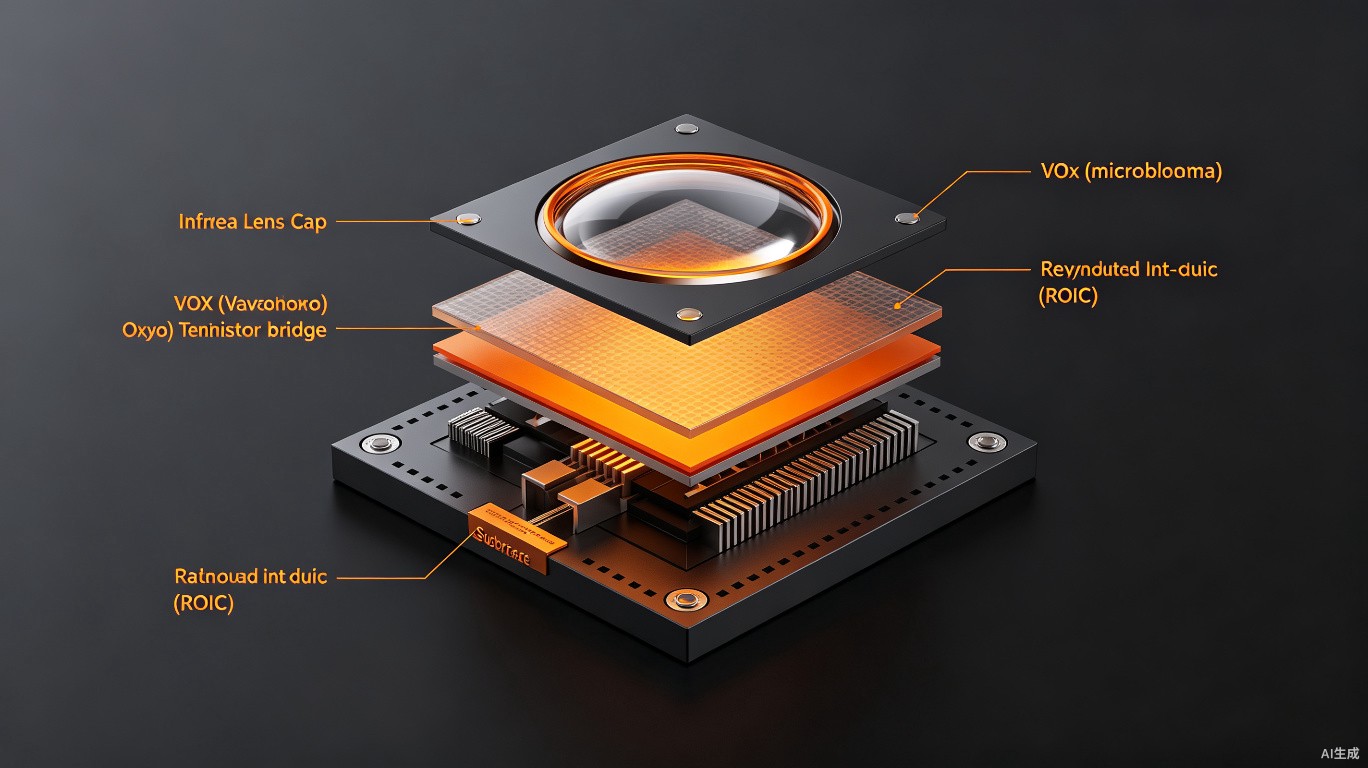
At the core of every Owlshine module sits a VOx (Vanadium Oxide) microbolometer detector — the same proven technology trusted by military, industrial, and commercial thermal imaging systems worldwide. But what exactly does this mean for your OEM project, and why does it matter?
How VOx Microbolometers Work
A microbolometer is a tiny thermal sensor that detects infrared radiation by measuring temperature changes across an array of microscopic pixels. Each pixel in a VOx detector absorbs incoming LWIR energy (8–14μm wavelength) and converts it into an electrical signal proportional to the temperature difference. The vanadium oxide material is particularly effective because its electrical resistance changes dramatically with even minute temperature shifts — which is precisely what gives VOx detectors their superior sensitivity.
Uncooled vs. Cooled: The Practical Choice for OEM
Cooled thermal detectors (typically based on Stirling engines) offer extremely high sensitivity but come with significant drawbacks: they are heavy, expensive, power-hungry, and mechanically complex. For most OEM applications — security cameras, industrial monitors, drone payloads — these trade-offs simply don't make sense.
Uncooled VOx technology, by contrast, delivers:
- Lower cost: No cryogenic cooler means significantly lower bill-of-materials
- Compact form factor: Enables integration into handheld and space-constrained devices
- Minimal power draw: Critical for battery-operated and UAV applications
- No mechanical wear: Longer product lifespan with no moving parts in the detector
- Fast startup: Ready to operate in under 3 seconds, compared to minutes for cooled systems
For the vast majority of OEM uncooled thermal imaging module applications, VOx provides the optimal balance of performance, reliability, and cost. It's the technology that makes thermal imaging accessible for products that need to ship at commercial price points.
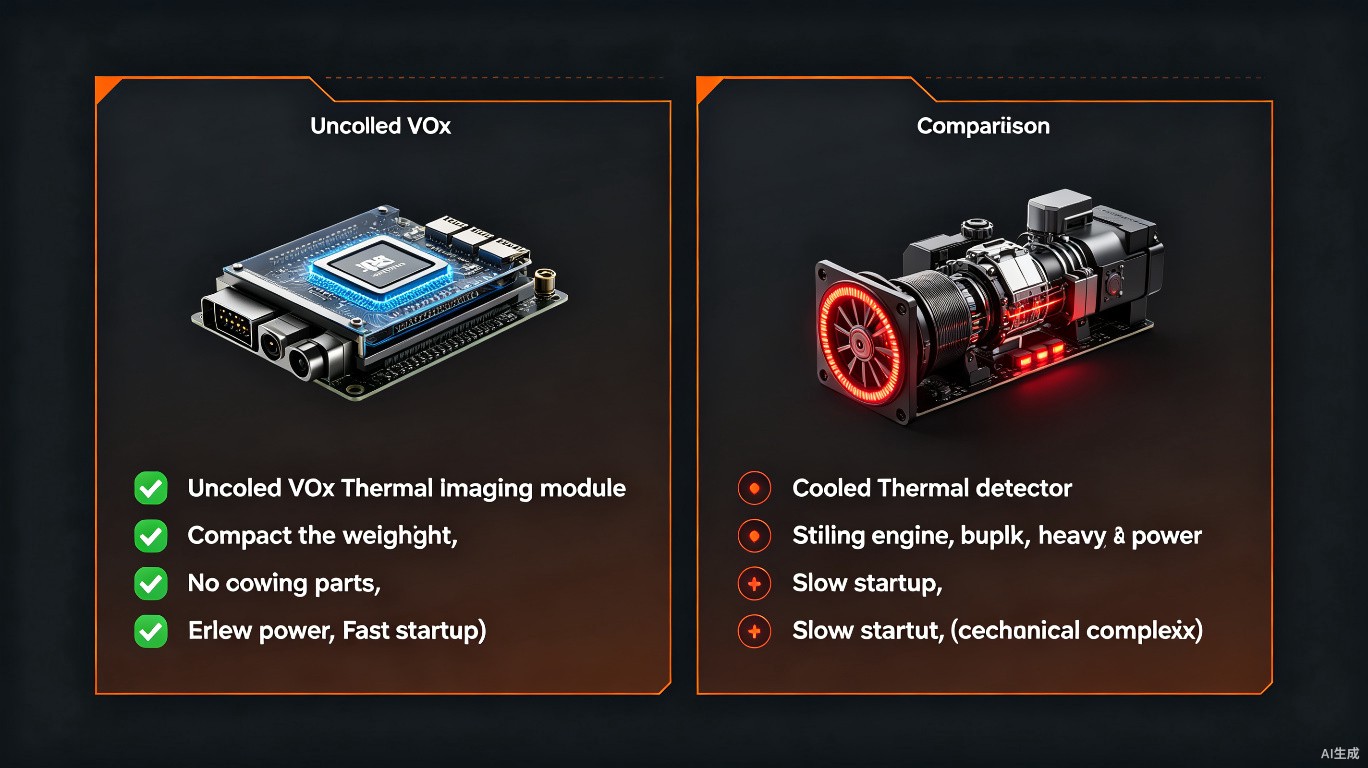
Figure 2: Uncooled VOx vs. Cooled thermal imaging — cost, weight, power, and reliability comparison
Shutterless Thermal Core: Eliminating Image Freezes
If you've ever used a thermal imaging camera and noticed a sudden image freeze — usually lasting 1-3 seconds — you've experienced the mechanical shutter calibration problem. Traditional thermal modules rely on a physical shutter blade that periodically closes to perform Non-Uniformity Correction (NUC), recalibrating each pixel to maintain image uniformity. While this process is necessary, it creates a critical issue for continuous monitoring: blind spots at the worst possible moment.
The Problem with Mechanical Shutters
- Image interruptions: The scene goes completely blank during calibration, meaning any event that occurs during that window is missed entirely
- Mechanical wear: Moving parts degrade over time, especially in harsh environments with extreme temperatures or high vibration (drones, vehicles, industrial machinery)
- Audible noise: The physical click of the shutter can be undesirable in covert security applications
- Increased size and weight: The shutter mechanism adds bulk to the module — a significant drawback for UAV payloads and miniaturized devices
How Shutterless Technology Solves This
Shutterless thermal cores from Owlshine use advanced software-based correction algorithms to maintain image uniformity without any mechanical interruption. The result is:
- Zero blind spots: Continuous, uninterrupted thermal imaging — critical for 24/7 security surveillance, predictive maintenance monitoring, and real-time target tracking
- No moving parts: Improved reliability and longer operational life, especially in high-vibration environments like drone flights and vehicle-mounted systems
- Silent operation: Ideal for sensitive security and military applications where acoustic signature matters
- Compact and lightweight: Enables integration into the smallest possible device housings
For any OEM product that requires continuous, always-on thermal imaging, a shutterless thermal core module isn't just a nice-to-have — it's a fundamental requirement. Owlshine's OS-640 and OS-640 Pro series come with shutterless operation as standard, so your product never misses a frame.
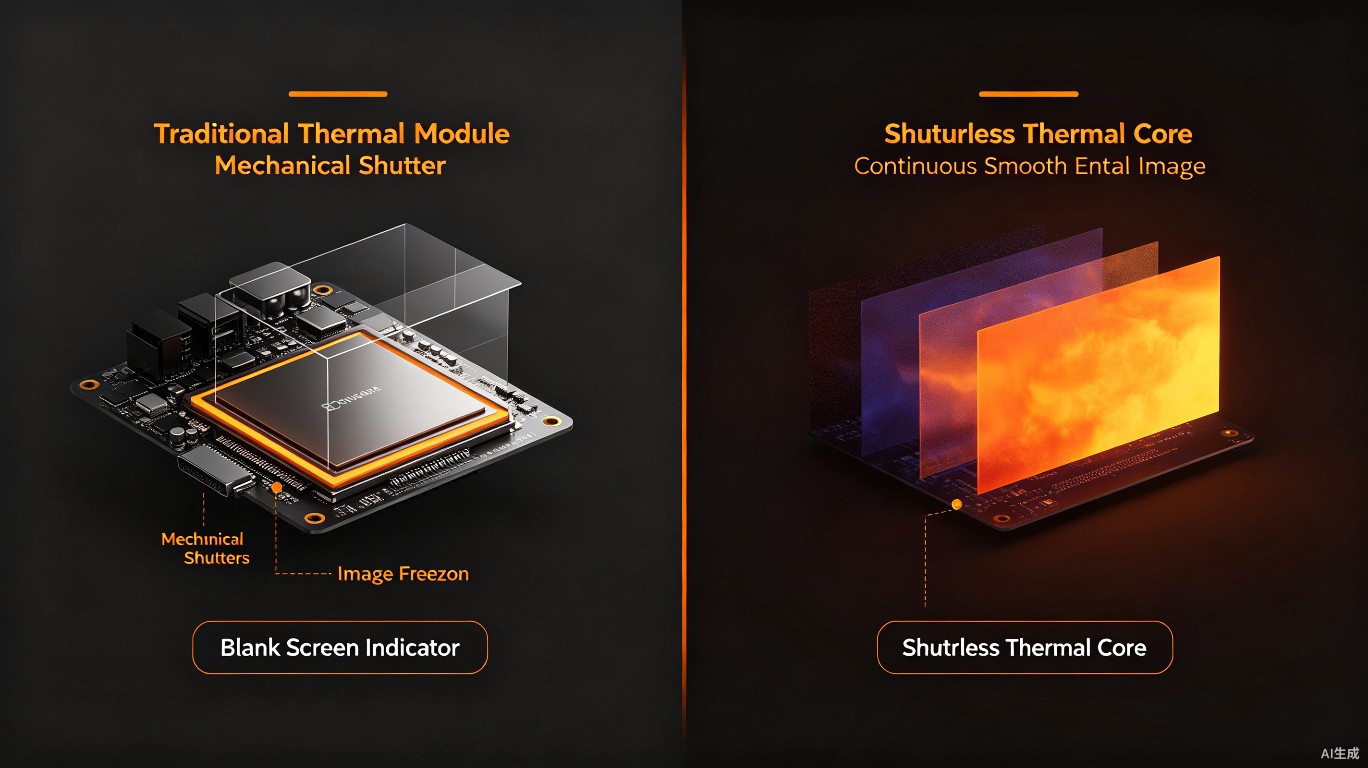
Figure 3: Shutterless thermal core eliminates image freezes during NUC calibration
Key Interface Options: USB, MIPI, LVDS for Seamless Integration
One of the most overlooked — yet most important — factors in thermal module OEM integration is the output interface. Choose the wrong interface, and you'll face weeks of extra development work, custom driver development, and unnecessary PCB redesigns. Owlshine modules offer three primary interface options, each optimized for different integration scenarios:
| Interface | Best For | Data Rate | Typical Use Case |
|---|---|---|---|
| USB 3.0 | Rapid prototyping, PC-based systems | Up to 5Gbps | Handheld imagers, testing stations, desktop software |
| MIPI CSI-2 | Embedded processors, ARM-based designs | Up to 2.5Gbps per lane | Drone payloads, AI edge devices, Jetson integration |
| LVDS | Long-distance transmission, FPGA/DSP | Customizable | Fixed-mount cameras, industrial controllers |
| PAL (Analog) | Legacy display systems | Standard video | Direct connection to analog monitors and DVRs |
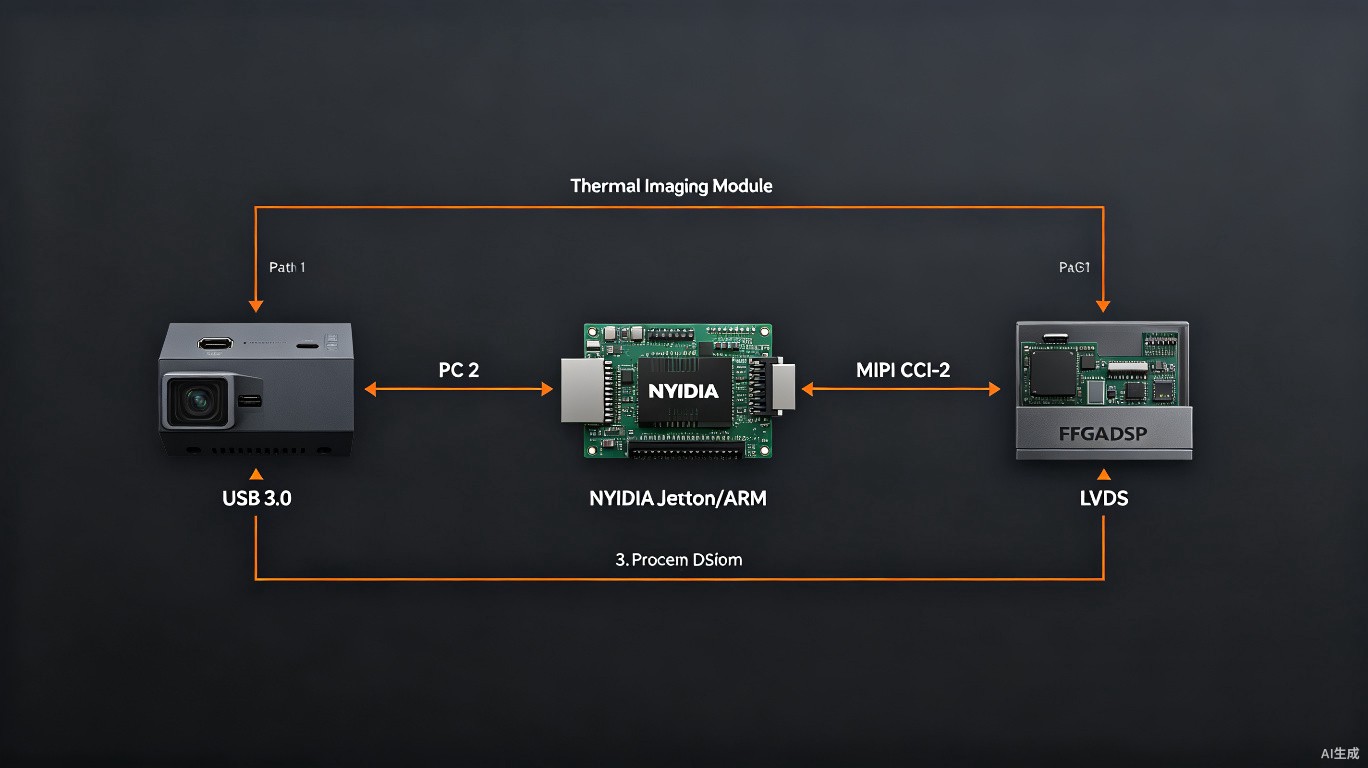
Figure 4: Three interface paths from thermal module to processing platform
USB 3.0: The Fastest Path to Prototype
For teams that need to validate a concept quickly, USB 3.0 is the clear choice. It offers plug-and-play compatibility with most development platforms, high bandwidth for streaming full-resolution thermal video, and straightforward driver support across Windows and Linux. Many of our OEM partners start with USB 3.0 for prototyping, then transition to MIPI or LVDS for production.
MIPI CSI-2: The Embedded Standard
MIPI (Mobile Industry Processor Interface) has become the de facto standard for embedded vision systems. If your product is built around an ARM processor, NVIDIA Jetson, or custom SoC, MIPI is likely the most efficient interface. It supports multi-lane configurations for higher bandwidth, has low power consumption, and integrates directly with ISP pipelines for on-device AI processing — making it ideal for thermal cameras with intelligent detection algorithms.
LVDS: For Industrial and Long-Range Deployment
LVDS (Low-Voltage Differential Signaling) excels in scenarios where the thermal module needs to be located far from the processing unit, or where the system uses FPGA or DSP-based image processing. Its noise-resistant differential signaling makes it robust in electrically harsh industrial environments — factory floors, substations, and outdoor installations.
Owlshine Engineering Tip: Not sure which interface fits your platform? Our team provides detailed integration guides, reference firmware, and direct engineering consultation to help you select and implement the right interface for your system.
Who Are Owlshine Thermal Modules Designed For?
Owlshine thermal imaging core modules are engineered for versatility — but they shine brightest in specific OEM applications where reliability, image quality, and integration flexibility truly matter.
Security & Surveillance
Pan-tilt-zoom and fixed-mount perimeter security cameras with 24/7 shutterless operation
Predictive Maintenance
Online thermal monitoring for motors, bearings, switchgear — catching anomalies before costly failures
UAV & Drone Payloads
Lightweight (<50g), low-power modules with MIPI interface for AI edge platforms
Handheld Imagers
Portable diagnostic tools for building inspection, HVAC, and electrical auditing
Firefighting & Rescue
Wide operating temp (-40°C to +60°C) and fast startup for life-critical applications
Medical Screening
High-precision NETD for accurate body temperature screening in healthcare settings
Whatever your application, Owlshine's engineering team works closely with you to ensure the module configuration, lens selection, and interface match your exact requirements.
Why Choose Owlshine as Your Thermal Module Supplier
The thermal imaging module market is crowded with suppliers, but the difference between a good partner and a frustrating one shows up in the details — sample consistency, documentation quality, response time, and the willingness to support true customization. Here's what sets Owlshine apart for OEM buyers:
Genuine OEM Customization
Unlike many module suppliers that only offer off-the-shelf SKUs, Owlshine provides genuine customization at the module level: lens selection, interface configuration, firmware tuning, housing adaptation, and mechanical design modifications. You tell us what your product needs — we engineer the thermal imaging core module to fit.
Flexible MOQ & Scalable Production
We understand that product development doesn't follow a linear path. Owlshine offers low MOQ for prototyping and pilot runs, with seamless scaling to volume production as your product grows. No minimum order barriers that prevent you from getting started.
Comprehensive Technical Documentation
Every Owlshine module ships with complete integration documentation: mechanical drawings, electrical schematics, protocol specifications, sample firmware source code, and application notes. Your engineering team spends less time figuring out the module and more time building your product.
Responsive Engineering Support
Our team of thermal imaging engineers provides direct consultation during every phase of integration — from initial feasibility assessment and module selection, through prototyping and testing, to production handoff. Questions answered within 24 hours.
Proven Quality & Reliability
Every module undergoes rigorous factory calibration, burn-in testing, and quality inspection before shipment. Our manufacturing process follows strict quality control standards to ensure consistent performance across production batches — no surprises when scaling from 100 to 10,000 units.
Ready to Integrate Owlshine Thermal Modules?
If you're evaluating thermal imaging core modules for your next OEM project, we'd love to hear about your application. Owlshine's engineering team is ready to provide sample units, detailed specifications, and a custom quote tailored to your requirements.
Request a Free Sample & QuoteOr explore our full thermal imaging module collection to compare specifications and find the right fit for your system.
Frequently Asked Questions
A: 384x288 modules offer a cost-effective solution with 110,592 pixels — ideal for applications like basic perimeter security and handheld imagers where standard detection range is sufficient. 640x512 modules deliver 327,680 pixels, providing 3x the pixel density for sharper images, longer detection ranges, and better target identification. For high-end security, drone payloads, and industrial inspection, 640x512 is the recommended choice.
A: NETD (Noise Equivalent Temperature Difference) measures the smallest temperature difference the sensor can detect. A NETD of <40mK means the module can distinguish temperature variations as small as 0.04°C — enabling clearer thermal images with less visual noise, better detail in low-contrast scenes, and more reliable anomaly detection in industrial monitoring applications.
A: If your application requires continuous, uninterrupted imaging — such as security surveillance, predictive maintenance, or real-time tracking — a shutterless thermal core is strongly recommended. Traditional shuttered modules create brief image freezes during calibration, which can cause missed events. Shutterless technology eliminates this issue entirely and removes mechanical wear from the system.
A: It depends on your processing platform and use case. USB 3.0 is ideal for rapid prototyping and PC-based systems. MIPI CSI-2 is the best choice for embedded ARM processors, NVIDIA Jetson, and AI edge devices. LVDS suits FPGA/DSP-based systems and long-distance signal transmission in industrial environments. Many OEM partners prototype with USB 3.0, then transition to MIPI or LVDS for production.
A: Yes. Owlshine offers genuine module-level customization, including lens selection, interface configuration, firmware tuning, mechanical housing adaptation, and specialized calibration profiles. Our engineering team works directly with your developers to ensure the module fits your product's exact requirements.
A: Owlshine offers flexible MOQ policies tailored to your project stage. For prototyping and pilot runs, we support low-volume orders to help you validate your design. As your product transitions to volume production, MOQ scales accordingly with competitive pricing tiers. Contact our sales team for specific MOQ details based on your selected module series and configuration.
A: Standard sample units from our existing module lineup typically ship within 5–10 business days after order confirmation. For custom-configured samples requiring specific lens, interface, or firmware modifications, lead times range from 2–4 weeks depending on complexity. Our team provides a clear timeline upfront so you can plan your development schedule accordingly.
Closing Words
At Owlshine, we believe that great thermal imaging shouldn't be reserved for premium-priced systems. By combining proven VOx microbolometer technology with flexible OEM customization, responsive engineering support, and competitive pricing, we're helping manufacturers around the world bring high-quality thermal vision to more products and more industries. When you're ready to take your next thermal project from concept to production, Owlshine is here to make it happen — reliably, quickly, and on your terms.