

How Does Thermal Imaging Actually Work?
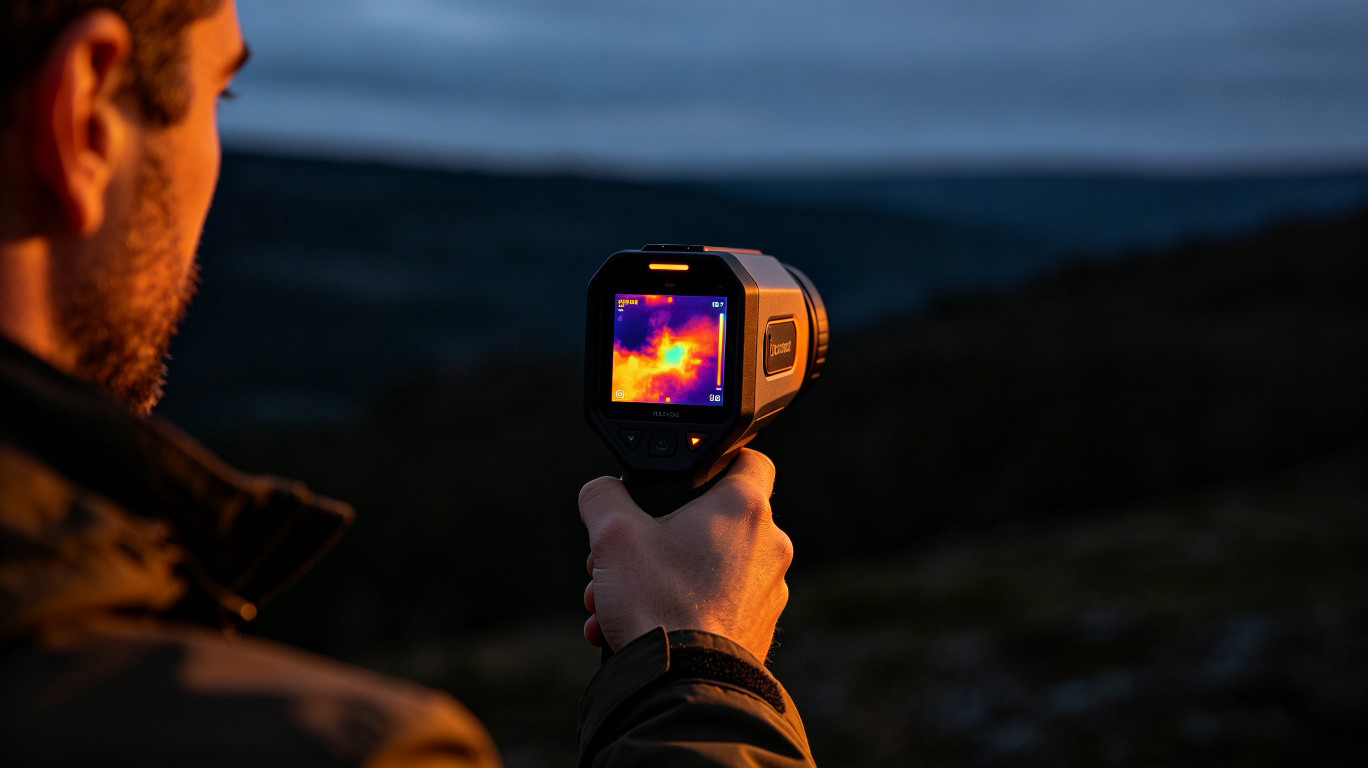
Imagine standing in a pitch-black room. No light, no windows, nothing. Your eyes see nothing. Yet every object around you—the walls, the furniture, even your own body—is constantly emitting invisible energy: infrared radiation (IR). This radiation is heat, and it is always present.
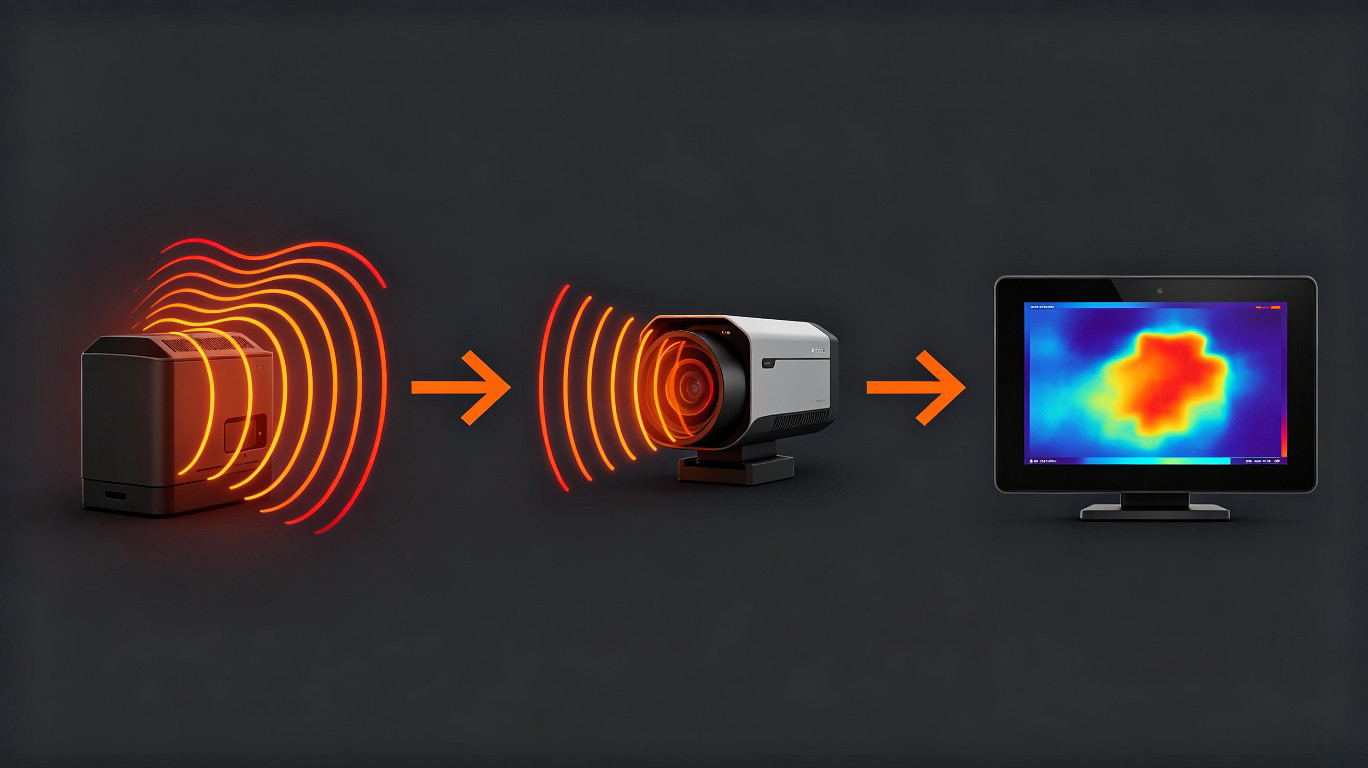
A thermal imaging camera does not "see" visible light like your smartphone or a traditional camera. Instead, it uses a special sensor called a microbolometer to detect the infrared radiation emitted by object surfaces. These sensors convert temperature differences into electrical signals, which are then processed into the colorful or grayscale thermal images you see on screen.
Understanding Thermal Images
In a thermal image, hotter areas appear brighter (or redder/yellow), while cooler areas appear darker (or bluer/purple). This is why a human body glows with a bright outline in a thermal image, while a cold concrete wall fades into the background.
Unlike night vision devices, thermal imaging requires zero ambient light. Whether it is a moonless night, a foggy morning, or a smoke-filled building, as long as there is temperature contrast between objects, a thermal device will produce a clear image.
One key spec to understand is NETD (Noise Equivalent Temperature Difference). The lower the NETD value—such as <20mK—the more sensitive the device. A lower NETD means the camera can distinguish smaller temperature differences, resulting in sharper, more detailed images.
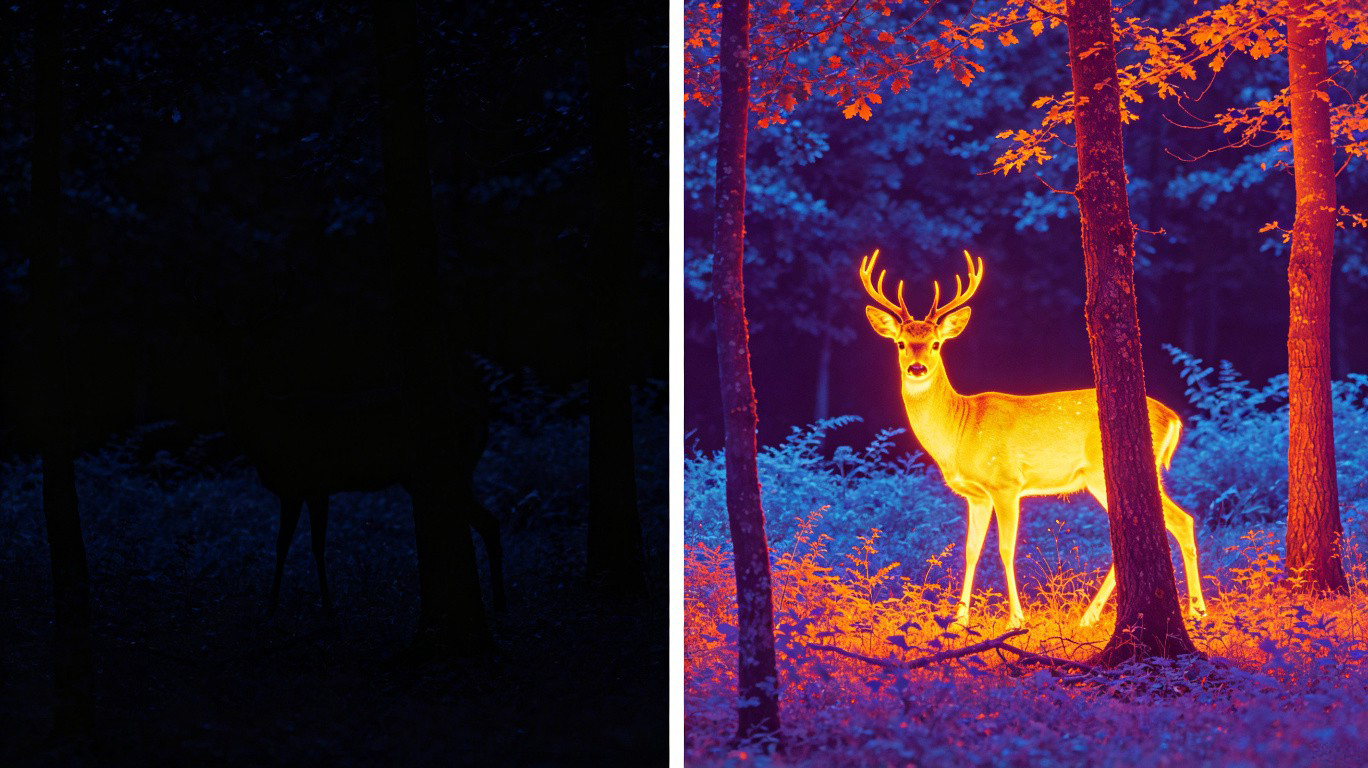
Figure 1: A thermal imaging camera reveals body heat signatures in total darkness, while the cold wall remains invisible in the background.
Can Thermal Imaging See Through Walls? The Short Answer
Here is the definitive answer: No. Thermal imaging cannot see through walls.
This myth has been massively exaggerated by Hollywood. In movies like Mission: Impossible, agents use handheld gadgets to track targets through solid concrete walls. In reality, this is impossible.
The reason is simple: walls are thermal barriers. A thermal imaging camera only detects infrared radiation coming from object surfaces. When a solid wall—whether drywall, brick, or concrete—stands between the camera and a heat source, the wall absorbs and blocks nearly all infrared radiation. The heat behind the wall never reaches the surface, so the camera cannot "see" it.
Even thin materials like wood panels, curtains, or cardboard will block thermal imaging. Glass is another interesting exception: while visible light passes through glass easily, glass is nearly opaque to infrared radiation. So when you point a thermal imaging camera at a window, you do not see what is outside—you see the temperature of the glass surface itself.
Walls
Completely blocks infrared radiation. No see-through capability.
Glass
Nearly opaque to IR. Camera reads glass surface temperature only.
Wood / Cardboard
Thin panels still block thermal imaging completely.
Fog / Smoke
Thermal imaging works through fog and smoke effectively.
So remember: thermal imaging is not X-ray vision. It cannot penetrate solids, it cannot reveal people hiding behind walls, and it will not give you superpowers. But it does offer a far more practical "superpower"—the ability to see temperature.
Why Do Some People Think It Can "See Through" Things?
If thermal imaging cannot penetrate walls, then why do so many people believe it can? The confusion comes from a real phenomenon that looks like "seeing through"—but is actually indirect thermal detection.
Here is what really happens. When a heat source exists behind a wall, the heat does not travel through the wall as infrared radiation. Instead, it travels by thermal conduction. Over time, the heat warms the wall material itself. Eventually, a hot spot appears on the wall's surface. When you point a thermal imaging camera at that spot, you see the temperature difference. You are not seeing through the wall. You are seeing the wall's surface temperature, which has been affected by something behind it.
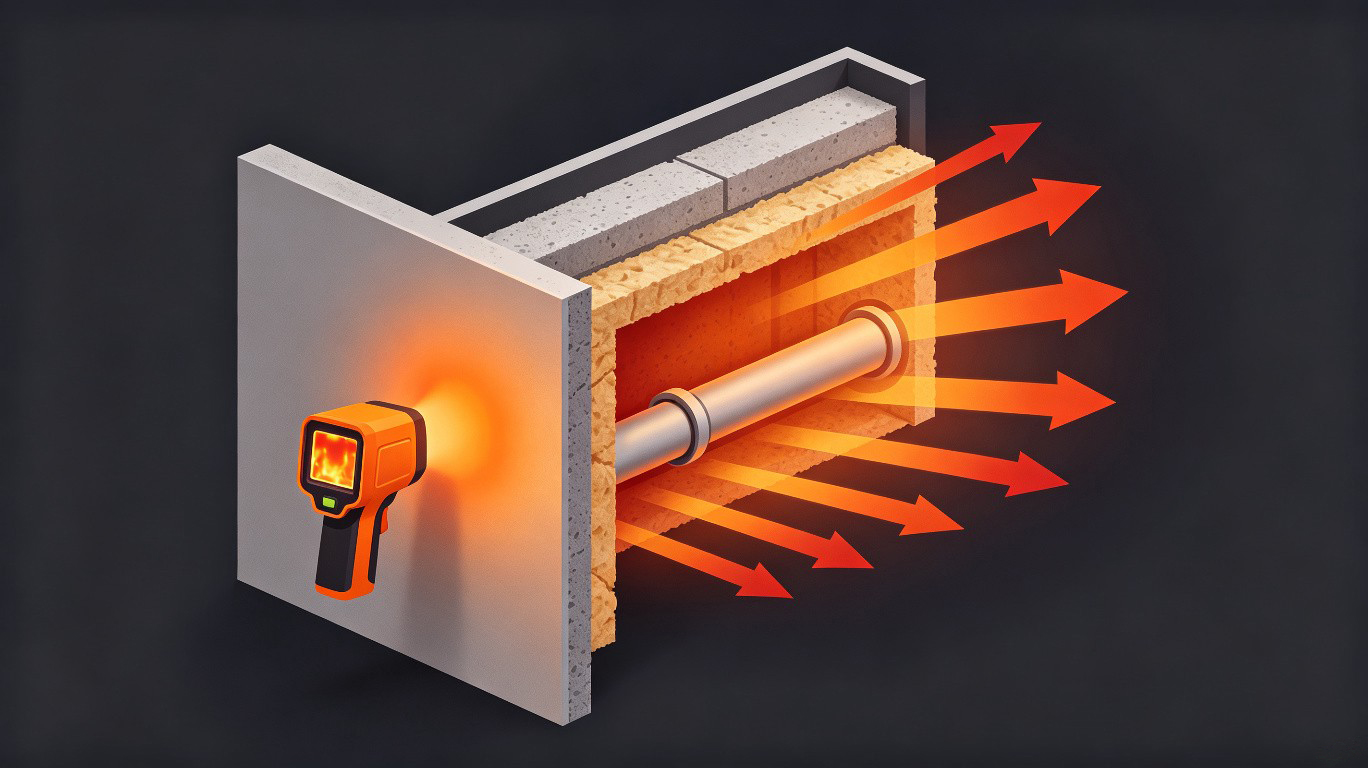
Figure 2: Heat from internal sources conducts through walls, creating surface temperature anomalies that thermal cameras can detect.
This effect is common in several real-world situations:
- Heating pipes running inside walls create warm patches on the surface.
- Electrical wiring with poor connections generates heat, producing localized hot spots.
- Water leaks inside walls cool the surrounding material, creating cold zones.
- Insulation gaps allow indoor heat to escape, leaving telltale temperature patterns.
Professional home inspectors and maintenance teams use this principle daily. A thermal imaging camera for building inspection can reveal hidden problems without tearing down drywall. But make no mistake: the camera is reading surface temperatures, not peering through the material.
What Can Thermal Imaging Really Do? 5 Practical Applications
Just because thermal imaging cannot see through walls does not mean it is not powerful. In fact, its true capabilities are far more useful than any movie fantasy. Here are five real-world applications where a thermal imaging camera delivers exceptional value.
Home Energy Audits
Find hidden heat leaks around windows, doors, and attics to cut energy bills by up to 30%.
Electrical Inspections
Detect overloaded circuits, loose connections, and failing components before they cause fires.
Search & Rescue
Locate missing persons in darkness, fog, and light vegetation when every minute counts.
Security & Surveillance
Detect intruders by body heat alone—regardless of clothing, camouflage, or lighting.
Building Maintenance
Pinpoint hidden water leaks, roof damage, and HVAC ductwork issues without demolition.
1. Home Energy Audits
Every winter, heated air escapes through poorly sealed windows, door frames, and attic gaps. A homeowner in Boston once used a handheld thermal imaging camera to inspect his house and discovered a massive heat leak around an upstairs window frame. After resealing it, his heating bill dropped by over 30%. Thermal imaging turns invisible energy loss into a visible problem you can fix.
2. Electrical Inspections
Overloaded circuits, loose connections, and failing components generate excess heat before they fail completely. Maintenance technicians use thermal imaging for electrical inspection to scan breaker panels, transformers, and power lines. By identifying hot spots early, they prevent costly downtime and reduce fire risks. This is one of the most common industrial applications of thermal imaging.
3. Search and Rescue Operations
When a hiker goes missing at night or a child wanders into the woods, every minute counts. Thermal imaging for search and rescue allows teams to detect body heat through darkness, fog, and light vegetation. Unlike searchlights, thermal devices do not give away the searcher's position and can cover large areas quickly. In cold environments, a human body stands out dramatically against the background.
4. Security and Surveillance
Standard security cameras struggle with darkness, glare, and shadows. A thermal security camera detects intruders based on body heat alone. It does not matter if the trespasser is wearing dark clothing, hiding in bushes, or approaching from a backlit angle. For perimeter protection and border security, thermal imaging provides reliable 24/7 detection regardless of lighting conditions.
5. Building Maintenance and Leak Detection
Water infiltration is one of the most expensive problems a building owner can face. Moisture trapped inside walls changes the thermal properties of the material, creating cooler zones on the surface. A thermal camera for plumbing leak detection can pinpoint the exact location of a hidden leak without drilling holes or removing tiles. The same principle applies to roof inspections and HVAC ductwork analysis.
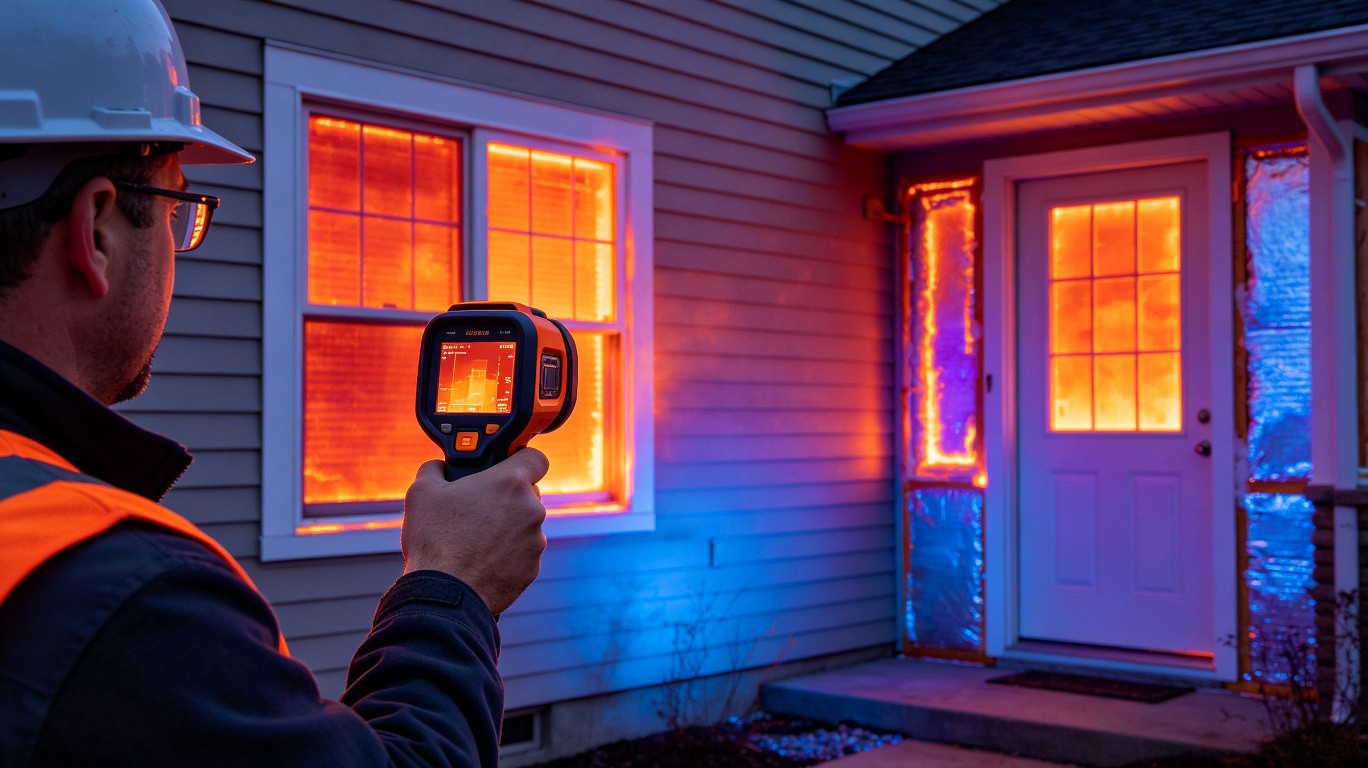
Figure 3: Thermal imaging reveals hidden energy leaks and moisture issues that are invisible to the naked eye.
Thermal Imaging vs Night Vision: What's the Difference?
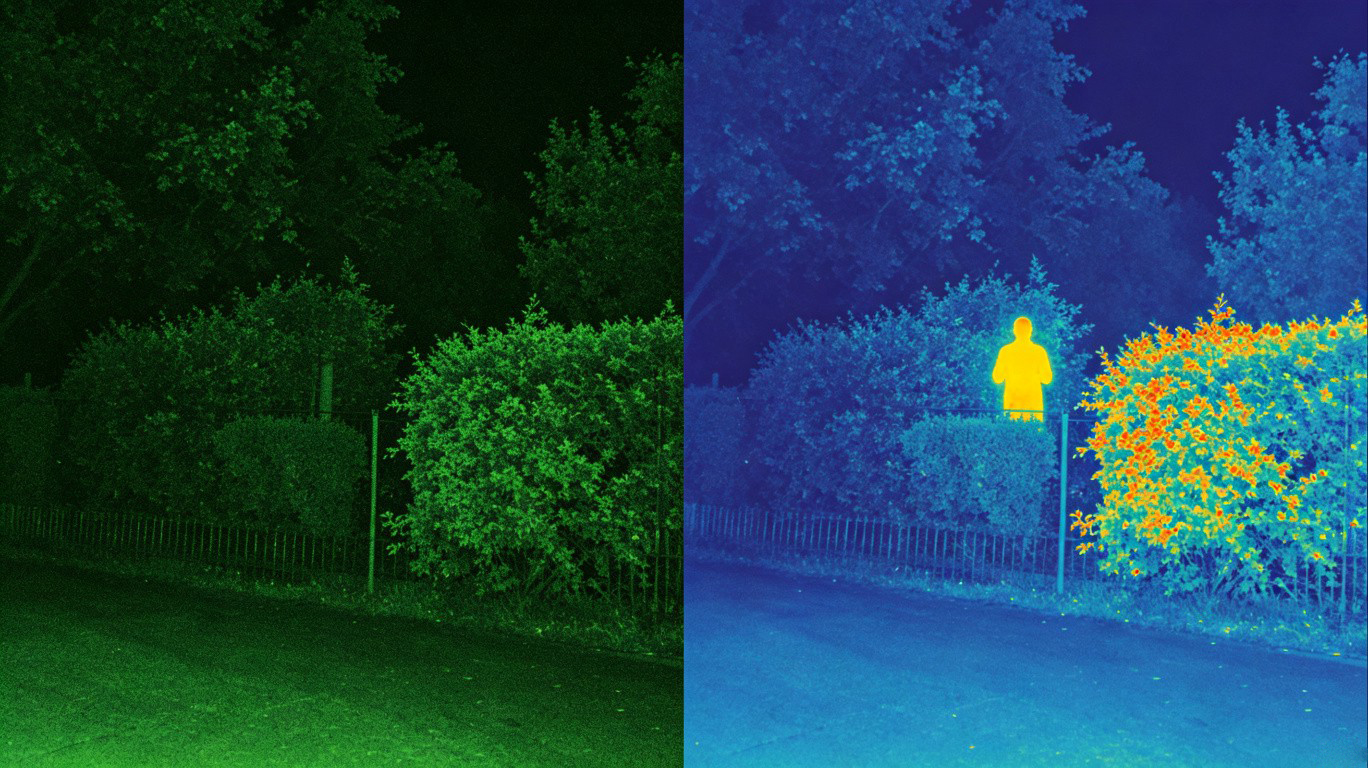
Many beginners confuse thermal imaging with night vision, assuming they are the same technology. While both help you see in the dark, they work on completely different principles and serve different purposes. Here is a clear comparison:
| Feature | Thermal Imaging | Night Vision |
|---|---|---|
| How It Works | Detects heat (infrared radiation) from objects | Amplifies available ambient light (moonlight, starlight, IR illuminator) |
| Requires Light? | No — works in total darkness | Yes — needs some ambient light or IR illuminator |
| Works Through Fog/Smoke? | Yes — heat penetrates light obscurants | No — particles scatter visible light |
| Detects Hidden Targets? | Yes — finds heat behind bushes, camouflage | No — cannot see through concealment |
| Image Quality | Temperature-based colors (heat map) | Green-tinted or grayscale amplified light |
| Detection Range | Longer (detects heat at great distances) | Shorter to medium (depends on light) |
| Price Range | Generally higher | Generally more affordable |
| Best For | Detection, surveillance, inspection | Navigation, observation, recognition |
Which One Do You Need?
Night vision is excellent when you need to recognize details—reading text, identifying faces, or navigating terrain. But when your priority is detecting a target regardless of darkness, fog, or camouflage, a thermal imaging camera wins every time.
For hunters and outdoor enthusiasts who need both capabilities, some modern devices combine both technologies. A thermal scope for hunting with image-enhancement modes gives you the best of both worlds in a single device.
How to Choose Your First Thermal Imaging Device
Choosing your first thermal imaging camera can feel overwhelming with all the technical jargon. Here is a simplified guide to the specs that actually matter for beginners:
Resolution (Pixel Count)
Resolution determines image clarity. The two most common options are:
- 384 x 288 — Great entry-level choice. Offers clear images for short to medium range (up to 300 yards). Ideal for home inspection, farm monitoring, and general outdoor use.
- 640 x 512 — Premium clarity. Sharper detail at longer distances (500+ yards). Best for hunting, professional inspections, and security applications.
NETD (Sensitivity)
As mentioned earlier, NETD measures the smallest temperature difference the sensor can detect. Look for NETD <20mK for reliable performance. Cheaper devices with NETD >50mK will produce noisier, less detailed images.
Refresh Rate (Hz)
The frame rate affects how smoothly the image updates when you move the camera:
- 25 Hz — Standard for most handheld devices. Fine for stationary inspection.
- 50–60 Hz — Smoother motion, essential for scanning while walking, driving, or hunting on the move.
Lens and Field of View
A wider lens covers more area but detects at shorter range. A narrower lens sees further but covers less ground. Choose based on your primary use:
- Wide-angle (25mm lens) — Indoor inspection, close-range security
- Standard (35–50mm lens) — All-purpose outdoor use
- Telephoto (75–100mm lens) — Long-range hunting, surveillance
Form Factor
- Handheld monocular — Lightweight, versatile, great for beginners
- Clip-on attachment — Mounts to your existing day scope for dual-use
- Riflescope — Dedicated hunting scope with built-in reticle and ballistic features
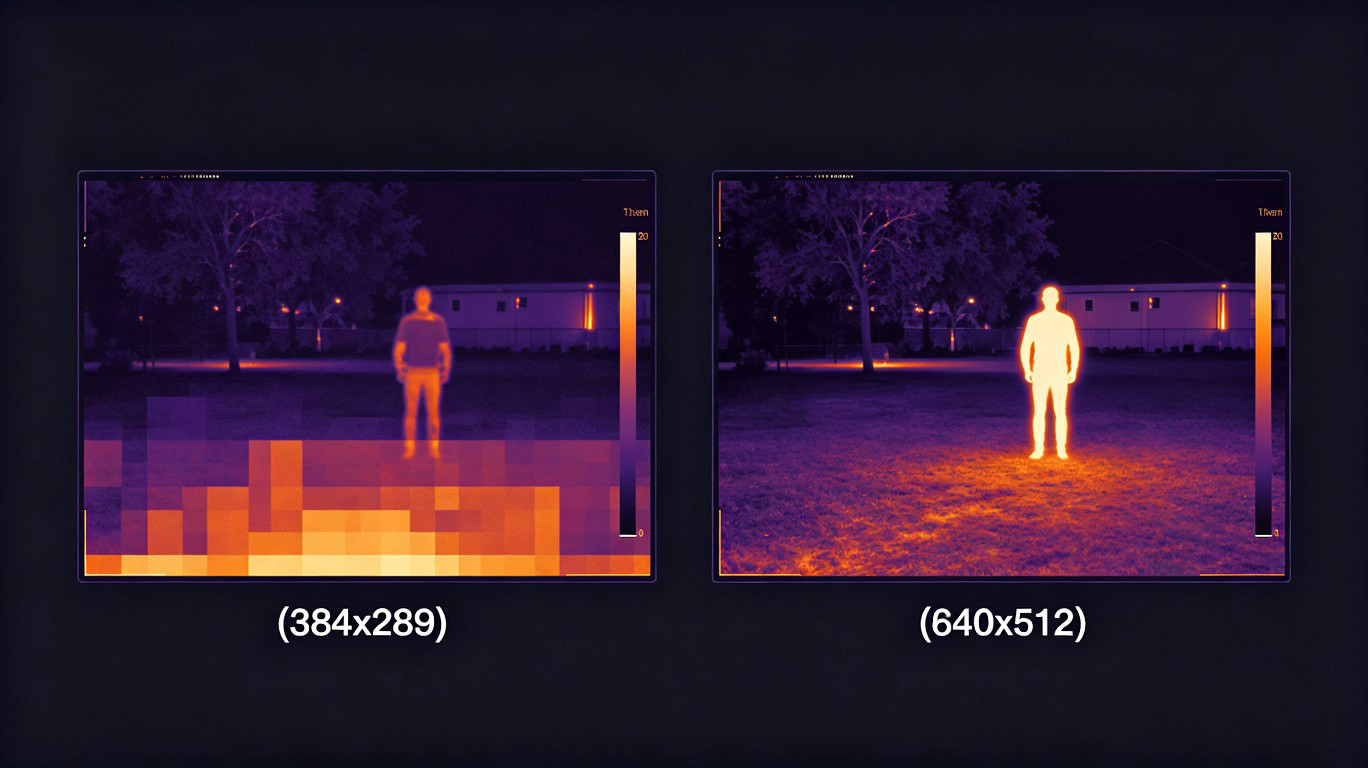
Figure 4: Higher resolution (640x512) delivers sharper target detail at longer distances compared to entry-level 384x288.
Recommended Starting Point: For most beginners, a handheld thermal monocular with 384x288 resolution, NETD <20mK, and a 25mm lens offers the best balance of performance and price. It covers home inspection, outdoor exploration, and basic security monitoring without breaking the bank.
When you are ready to upgrade, Owlshine offers a full range of thermal imaging cameras, thermal scopes, and core modules for every skill level. Whether you need a budget-friendly entry device or a professional-grade system, our product lineup is designed to grow with your needs.
Frequently Asked Questions
No. Most glass is opaque to infrared radiation. When you point a thermal imaging camera at a window, you will see the surface temperature of the glass itself, not anything behind it. This is because glass reflects and absorbs thermal infrared wavelengths rather than letting them pass through. The same applies to many plastics and polished metals.
Yes, in many cases. Hidden cameras—especially pinhole cameras concealed in smoke detectors, wall outlets, or everyday objects—generate a small amount of heat when powered on. A high-sensitivity thermal camera with NETD <20mK can detect this heat signature even through thin coverings. This makes thermal imaging a practical tool for hotel security checks and privacy inspections.
Detection range depends on several factors: sensor resolution, lens focal length, target size, and temperature difference between the target and background. As a general guide:
- 384x288 resolution with 25mm lens: Detects a human-sized target up to 300–400 yards
- 640x512 resolution with 50mm lens: Detects a human-sized target up to 800–1000 yards
- 640x512 resolution with 75mm+ lens: Can detect large targets beyond 1500 yards
Keep in mind that detection (knowing something is there) is different from identification (recognizing what it is).
Yes, completely safe. A thermal imaging camera is a passive device. It only receives infrared radiation naturally emitted by objects—it does not emit any radiation, beams, or signals. There is zero exposure risk to humans, animals, or the environment. You can safely use thermal imaging around people, pets, and in any setting.
The main differences come down to sensor quality, resolution, NETD, refresh rate, and build quality. Budget thermal cameras (under $200) typically use lower-grade sensors with NETD >50mK, lower refresh rates (9–25 Hz), and 160x120 or 256x192 resolution. These produce usable images for basic tasks but struggle in demanding conditions. Premium devices feature NETD <20mK, 60 Hz refresh rates, 640x512 resolution, and rugged housings with IP67 ratings. They deliver professional-grade performance in extreme environments.
Ready to See What You've Been Missing?
A thermal imaging camera is not a magic device from a spy movie—but it is the next best thing. It reveals hidden heat leaks, dangerous electrical hotspots, missing persons in the dark, and unauthorized intruders. Once you experience the power of seeing temperature, you will wonder how you ever managed without it.
Explore Owlshine Thermal Products →