

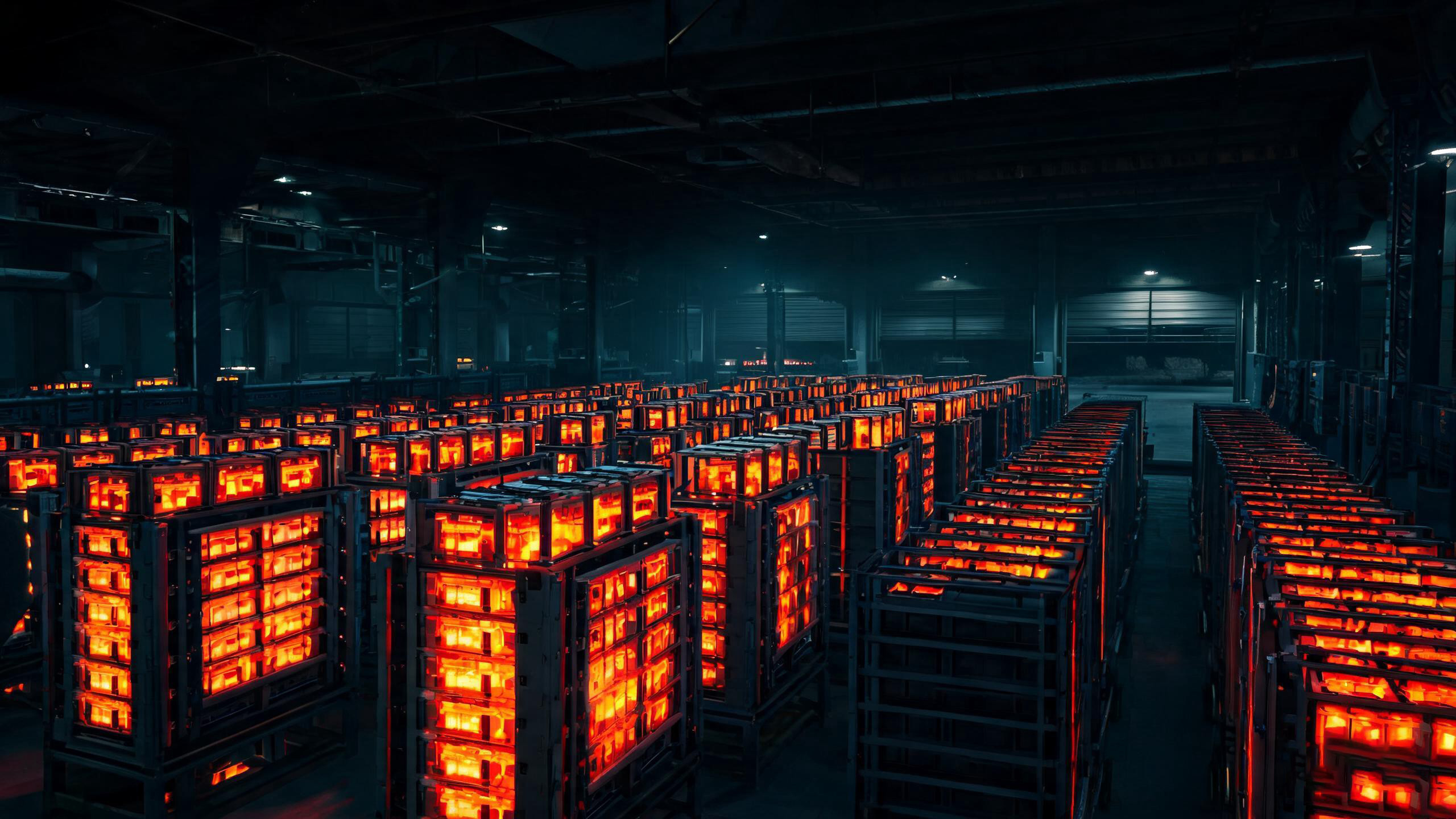
The 2026 Regulatory Shift: Thermal Imaging Becomes Mandatory
If you operate a battery energy storage station, July 2026 changed everything. China's National Development and Reform Commission Order No. 41 officially took effect on July 1, explicitly defining grid-connected electrochemical storage facilities lacking low-voltage ride-through capability as "major accident hazards."
More importantly, the new national standard GB/T 46261-2025 — "General Technical Requirements for Fire Monitoring and Early Warning Systems in Electrochemical Energy Storage Stations" — will be enforced starting September 1, 2026. For the first time, thermal imaging-based panoramic monitoring is effectively becoming a mandatory compliance tool, not an optional upgrade. Owlshine thermal cameras are engineered to meet these exact standards.
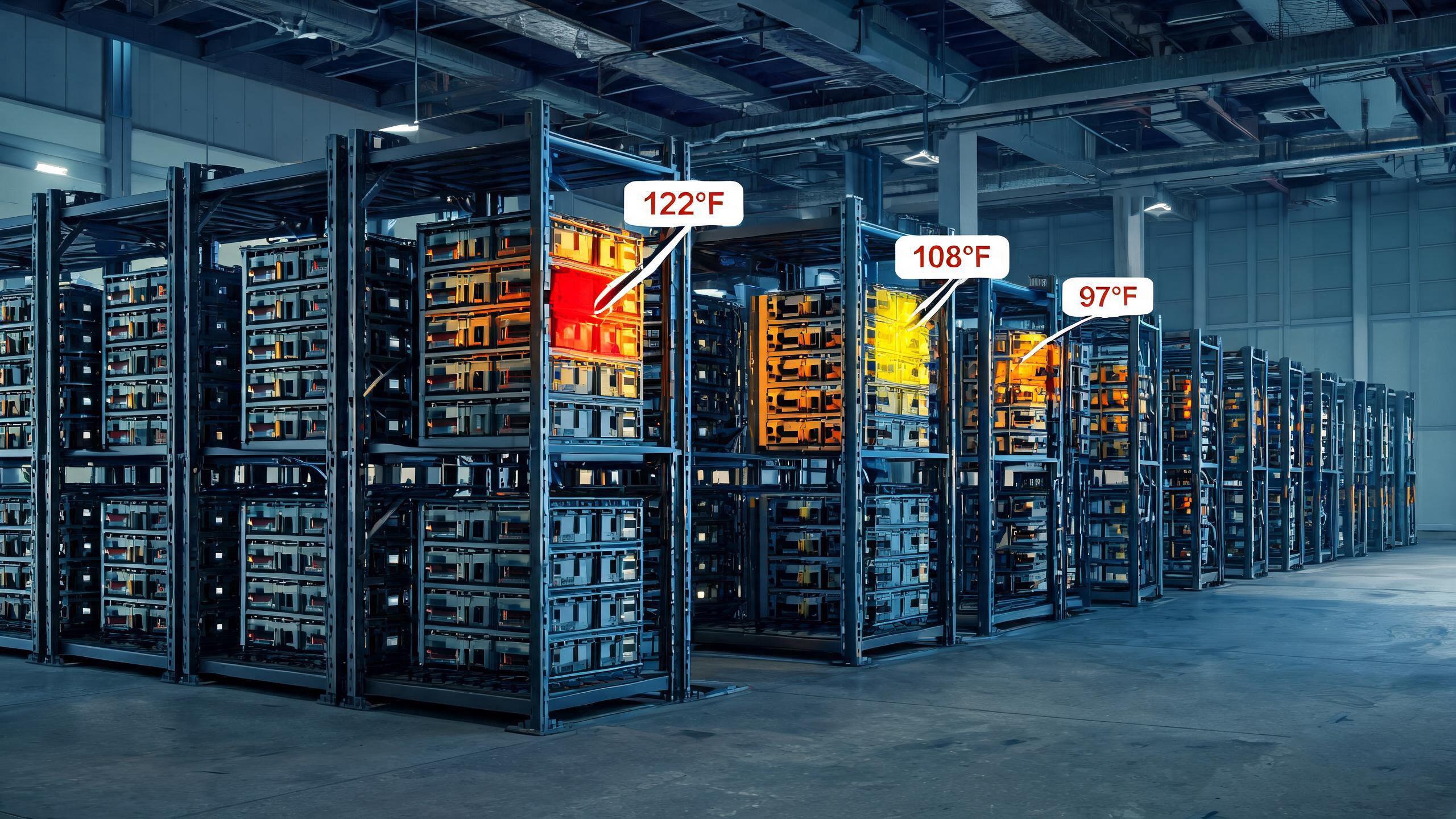
Fig 1: Panoramic thermal imaging captures the full temperature profile of every battery module in real time.
Why Battery Thermal Runaway Is the Energy Storage Industry's Biggest Threat
Lithium-ion batteries are incredible energy reservoirs — until they are not. Under conditions like overcharging, deep discharging, internal short circuits, or physical damage, a single cell can enter thermal runaway. Temperatures spike catastrophically, releasing toxic flammable gases and triggering chain reactions across entire battery racks.
Traditional monitoring has three critical weaknesses:
- Visible light cameras see nothing during the early thermal runaway phase. The battery looks normal while internal temperatures already exceed safe thresholds.
- Smoke and heat detectors react too late. They only trigger after smoke or extreme temperatures are present — by which point thermal runaway has already begun.
- No panoramic situational awareness. Battery compartments are numerous and widely distributed. Conventional point sensors cannot cover every module simultaneously.
This is precisely why thermal imaging cameras have become the new compliance standard.
How Panoramic Thermal Monitoring Detects Thermal Runaway Before Disaster
Every object emits infrared radiation proportional to its temperature. Thermal imaging cameras detect this radiation and convert it into real-time temperature maps — even in complete darkness or dense smoke.
Here's what makes panoramic thermal monitoring the ultimate battery safety solution:
Pre-Event Warning
Thermal cameras continuously monitor every battery module. Abnormal temperature rises trigger instant alerts before thermal runaway escalates.
Full-Area Coverage
A single panoramic camera covers an entire battery compartment. Zero blind spots, zero missed modules.
Second-Level Response
AI-powered hot-spot detection automatically links to fire suppression systems, upgrading from "extinguish after fire" to "prevent before ignition."
24/7 Operation
Infrared sensing works day and night, through smoke and haze, without any external lighting.
Key Features of Thermal Imaging for Battery Storage Safety
Modern industrial thermal cameras designed for energy storage applications offer specialized capabilities that general-purpose cameras cannot match:
| Feature | Benefit for Battery Storage |
|---|---|
| Dual-spectrum fusion | Visible light for identification + thermal for temperature, seamlessly switching between day and night modes |
| 180° panoramic view | One device covers an entire battery cabin, eliminating stitching and blind spots |
| ROI & threshold alarms | Define regions of interest and temperature limits; automatic alerts when exceeded |
| Front-end stitching | On-camera processing outputs panoramic video directly, no extra servers needed |
| IP54+ & 316 stainless | Survives high heat, humidity, vibration, and corrosive environments |
| RTSP / GB/T 28181 | Integrates directly with existing VMS and NVR platforms |
ROI: What Energy Storage Operators Gain from Thermal Camera Investment
Beyond compliance, thermal imaging delivers measurable economic returns. Consider the following comparison:
| Metric | Before Thermal Monitoring | After Thermal Monitoring |
|---|---|---|
| Incident detection speed | Minutes to hours (smoke/heat) | Seconds (temperature anomaly) |
| False alarm rate | High (dust, humidity) | Low (AI-verified thermal signature) |
| Inspection labor cost | Daily manual patrols | Automated 24/7 |
| Insurance & liability | Standard premiums | Potential reductions with certified monitoring |
| Regulatory compliance | At risk (post-2026) | Fully compliant |
The cost of a single thermal imaging system is typically recovered within the first year through prevented downtime, reduced insurance exposure, and eliminated manual inspection labor.
Choosing the Right Thermal Camera for Battery Storage Monitoring
Not all thermal cameras are suitable for energy storage environments. When selecting a thermal imaging camera for battery storage, prioritize these specifications:
- Resolution: 384x288 minimum for cabin-level monitoring; 640x512 recommended for large installations
- NETD: <40mK sensitivity to detect subtle temperature variations before they become dangerous
- Frame rate: 25Hz or higher for real-time alarm triggering
- Temperature range: Must cover -20°C to +150°C with accuracy ±2°C
- On-board analytics: Hot-spot detection, trend analysis, and automatic alarm generation
Owlshine's industrial thermal camera series is specifically calibrated for energy storage safety applications, with pre-configured battery monitoring analytics and compliance-ready reporting.
Frequently Asked Questions
A: China's GB/T 46261-2025 (effective September 1, 2026) and NDRC Order No. 41 (effective July 1, 2026) mandate comprehensive fire monitoring for grid-connected storage. Thermal imaging is the only technology that provides pre-event temperature anomaly detection, making it the de facto compliance standard.
A: Standard thermal cameras cannot see through metal enclosures. They monitor the external surfaces of battery modules and racks, where heat signatures become visible during abnormal conditions. For internal cell monitoring, battery management systems (BMS) are paired with external thermal imaging for comprehensive coverage.
A: Depending on sensor sensitivity (NETD), thermal cameras can detect temperature rises of 0.5°C to 2°C above baseline, typically providing 5 to 30 minutes of warning before visible smoke or fire occurs.
A: Modern thermal cameras support I/O relays, Modbus, and ONVIF alarm outputs. They can directly trigger sprinkler activation, gas suppression, or ventilation systems when temperature thresholds are breached.
Ready to Make Your Battery Storage Facility Compliant?
Explore Owlshine's range of industrial thermal cameras designed for energy storage safety monitoring. From compact fixed cameras to panoramic dual-spectrum systems, we have the solution for every facility size.
Browse Thermal Cameras