

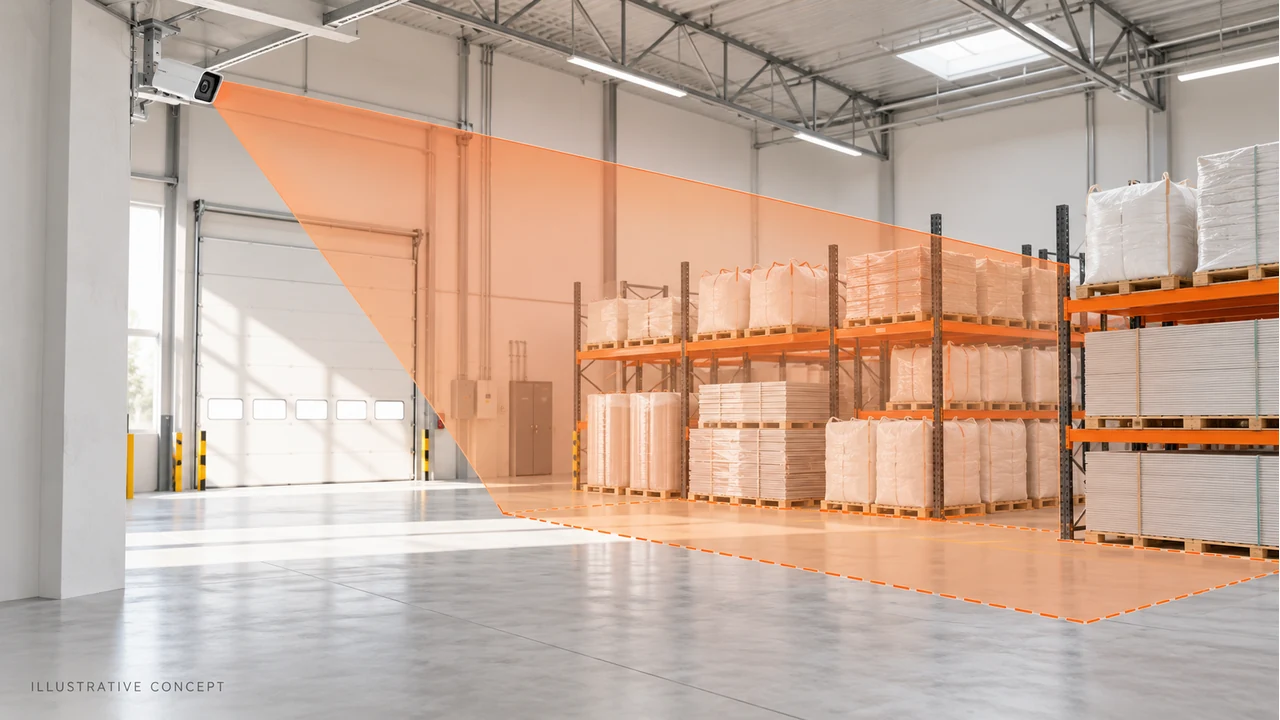
What the Recent FLIR and Everon Announcements Mean

If you are planning thermal imaging for early fire detection, recent announcements offer a useful starting point for evaluating both cameras and system integration.
On September 22, 2026, FLIR announced that its A40, A50, and A70 thermal cameras had achieved UL 2684 listing. According to the company, this enables their use in fire detection systems designed in accordance with NFPA 72, with compatible controls handling alarm events. The announcement concerns identified camera models; it does not establish certification for thermal cameras as a whole. Source: FLIR announcement
An October 16 report subsequently described Everon's collaboration with FLIR to bring a commercial thermal fire detection solution to market. The offering combines FLIR cameras with Everon's integration services, connecting thermal event detection to a fire alarm control panel. Source: Fire and Safety Journal Americas
For industrial buyers, our interpretation is that these developments highlight the importance of evaluating the complete monitoring chain. A purchasing specification should explain which surface must be observed, how an abnormal condition is identified, where the alert is delivered, and who responds. A camera specification alone cannot answer all four questions.
This also helps frame discussions about OEM projects. A thermal imaging module may provide image or temperature data, while the finished system requires additional engineering and verification. Before comparing products, it helps to understand exactly what that thermal data represents.
How Thermal Cameras Detect Abnormal Heat

A thermal monitoring project begins with a practical question: can the camera observe the surface where a meaningful temperature change will appear?
Thermal cameras form images from infrared radiation reaching their detectors. Radiometric models can also estimate surface temperatures using calibration and measurement settings. FLIR describes continuous thermal monitoring as a way to identify developing hot spots and trigger alerts when configured temperature conditions are met. Source: FLIR early fire detection overview
Turning Temperature Data into an Actionable Alert
Consider a proposed monitoring zone over exposed stored material. During project design, the team needs to establish its normal operating temperatures, identify relevant variations, and decide which conditions warrant investigation. These are site-specific design questions, rather than a universal alarm temperature that can be copied between facilities.
Coverage matters as much as the threshold. If stock is moved, a partition is installed, or equipment blocks the view, the monitored surface may change. Include those layout changes in the review process and verify that the intended target remains visible.
The practical value of continuous monitoring depends on connecting a meaningful observation to a defined response. The next step is to examine where that approach can help in warehouses, electrical equipment areas, and industrial material storage.
Where Thermal Monitoring Can Help
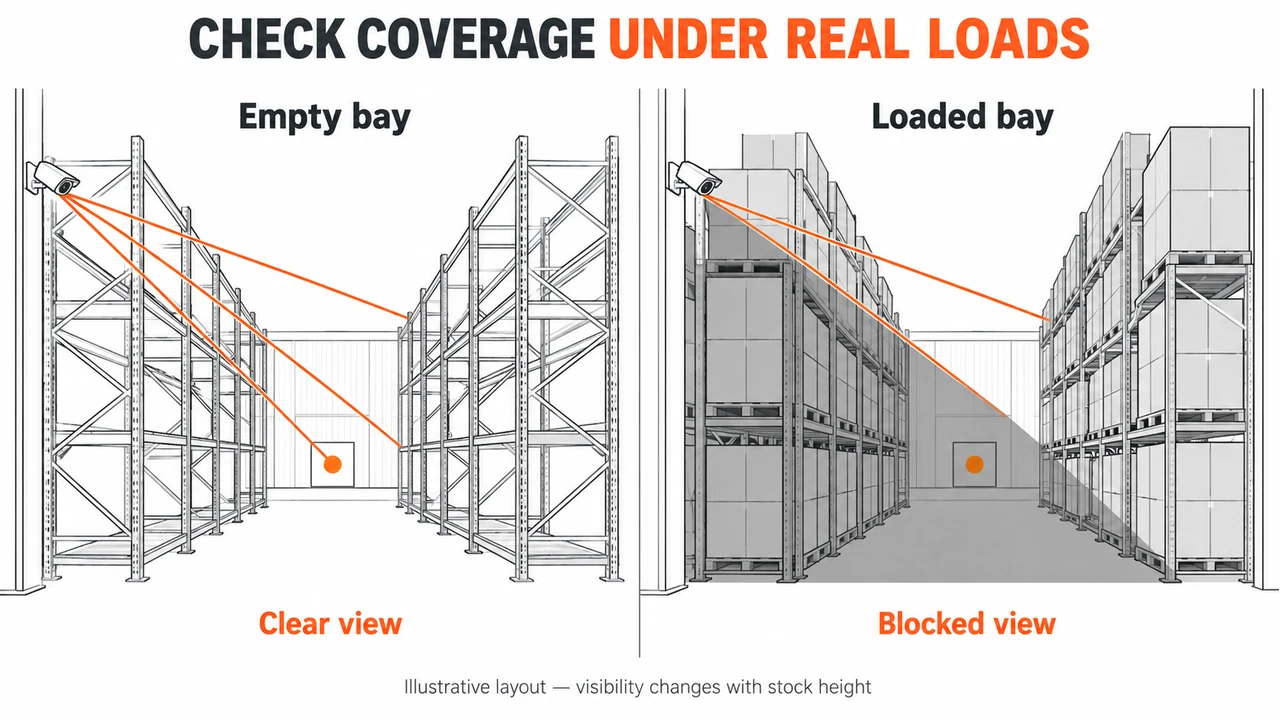
The strongest starting point for industrial thermal monitoring is a clearly defined target, rather than a promise to watch an entire facility with one camera. FLIR identifies warehouses, waste handling, and industrial facilities among the applications for early fire monitoring. The examples below illustrate planning questions for these environments; they are not reports of Owlshine installations. FLIR application overview
Warehouses and Material Storage
For a thermal camera for warehouse monitoring, begin by identifying the exposed surfaces that matter: a designated material storage bay, for example, rather than every pallet in the building. Map the camera's view against normal stock heights and vehicle routes. A clear view during an empty-warehouse demonstration may disappear when the facility reaches normal capacity.
A useful design exercise is to compare the same camera position with the bay empty, normally loaded, and loaded to its permitted maximum. Record which surfaces remain visible in each layout. This turns a general coverage claim into a practical discussion about blind spots and whether additional viewpoints are needed.
Electrical Equipment Areas
Electrical monitoring requires particular attention to access and visibility. A camera aimed at the outside of a closed cabinet observes its enclosure surface, which may not reveal the temperature of a connection inside. Internal components require an appropriate viewing arrangement, such as a suitable infrared inspection window, designed for the equipment and camera wavelength. FLIR camera placement guidance
For project planning, list each intended target separately and ask what the installed camera will actually see. Keep the distinction between detecting a visible surface anomaly and assessing an inaccessible internal component clear in the specification.
Across these applications, coverage and temperature measurement must be evaluated together. That leads directly to the camera and lens requirements.
What to Evaluate When Choosing a Thermal Camera
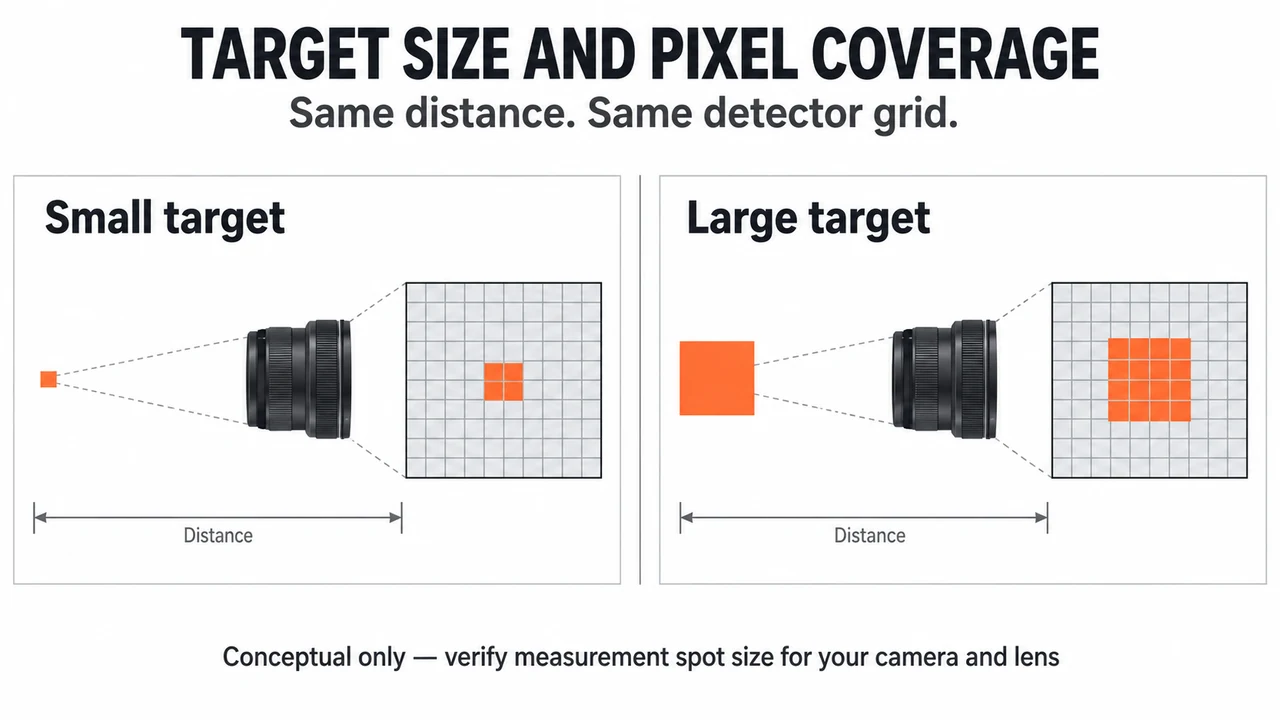
A higher pixel count helps only when the installed camera and lens can resolve the target you need to measure. Before requesting quotations, define the smallest relevant hot spot, its distance from the camera, and the area that must remain in view.
Match Resolution and Field of View to the Target
A wider field of view covers more of a scene, but a small target occupies fewer pixels at a given detector resolution and distance. Seeing a warm object in an image does not establish that its temperature can be measured accurately. Ask suppliers to confirm the measurement spot size for the proposed lens and working distance. FLIR spot size explanation
For example, compare a small exposed connection and a broad storage surface as separate measurement tasks. Even when both fit inside the same image, their measurement requirements can differ. Request a demonstration using representative target sizes rather than relying on a full-screen thermal image.
Check Measurement Conditions and Integration
Confirm that the selected model provides the temperature data your application requires. Thermal sensitivity, often expressed as NETD, describes the ability to distinguish small temperature differences; absolute temperature accuracy is a separate specification. Radiometric capability also varies between products. FLIR OEM selection guide
Temperature readings depend on the observed material and measurement conditions. Emissivity and reflected apparent temperature are especially important settings, so an accuracy claim should be reviewed alongside its stated operating conditions. FLIR measurement guidance
Before selecting a thermal imaging camera, request clear answers to these questions:
- Does the measurement range cover both normal operation and the abnormal conditions being investigated?
- Can separate monitoring regions use appropriate measurement settings and alarm criteria?
- Which interfaces provide temperature values, alarm states, and device status to the receiving system?
- How will the installation identify a power interruption, communication failure, or unavailable camera?
Document these requirements before comparing prices. They provide the basis for deciding whether a finished camera meets the project needs or whether an OEM module requires further integration.
From a Thermal Imaging Module to a Complete Warning System
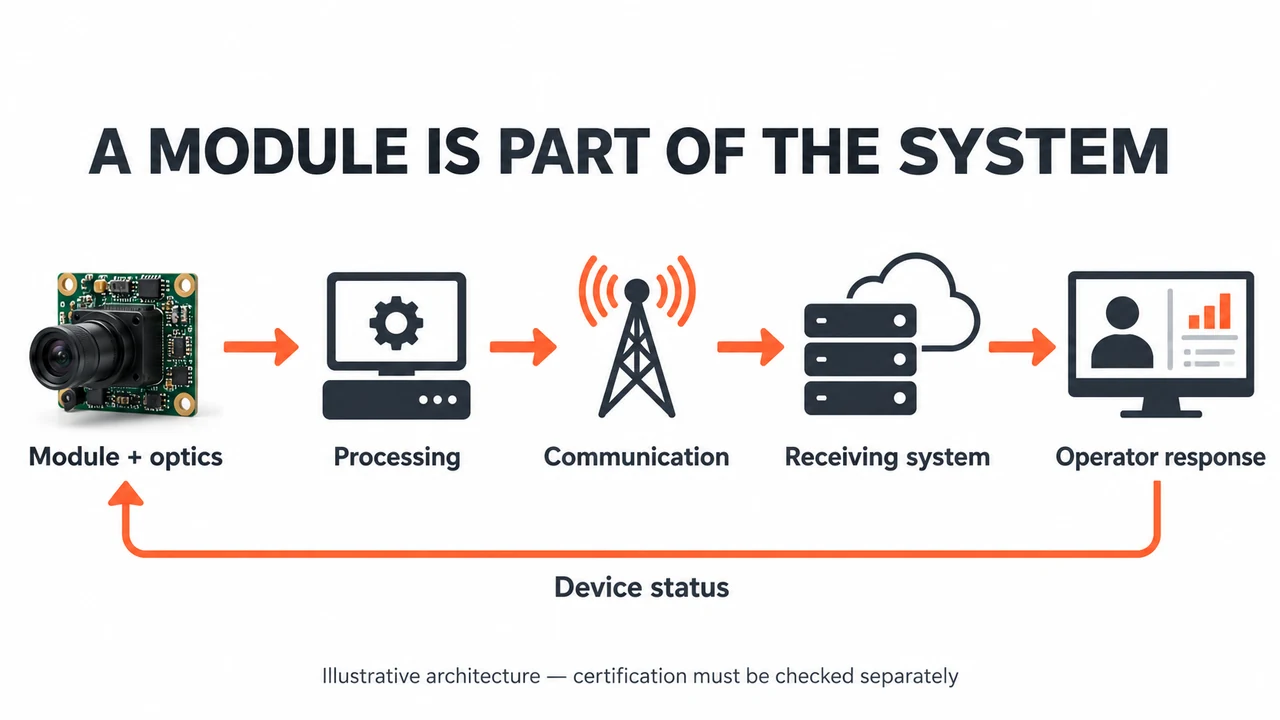
If you are developing your own monitoring device, the thermal imaging module is one part of a larger engineering task. Image output, temperature measurement, event processing, and alarm delivery each need defined requirements and verification.
Start by confirming what the module actually supplies. FLIR's OEM guidance distinguishes imaging-only products from products with different levels of radiometric functionality. For any supplier, establish whether the selected configuration provides calibrated temperature values, which corrections are available, and what conditions apply to the stated accuracy. FLIR OEM selection guide
Define Responsibilities Across the System
A practical way to organize an OEM project is to assign responsibility at each stage:
| System stage | Question to resolve before integration |
|---|---|
| Camera and optics | Can the installed configuration observe and measure the intended target? |
| Processing software | How are monitoring regions, measurement settings, and event rules configured? |
| Communication | What data reaches the receiving system, and how are missing or invalid data identified? |
| Operator workflow | Who receives an alert, reviews the event, and follows the site's response procedure? |
This is a project planning framework, not a description of a certified system architecture. For example, a module may send temperature data successfully while the receiving software fails to distinguish a current reading from an outdated one. Include timestamps, communication interruptions, and recovery behavior in the integration review rather than testing only normal data delivery.
Certification requires a separate review. FLIR's September announcement identifies specific listed camera models and their intended use with compatible control systems. A standalone thermal module, or a new device built around one, does not inherit that listing. Procurement teams should request documentation for the exact product and configuration proposed for their installation. FLIR listing announcement
With those responsibilities established, the next step is to turn the application into a concise brief that suppliers can evaluate.
Planning Your Industrial Thermal Monitoring Project

You will get a more useful supplier response when you describe the monitoring task before requesting a camera resolution or a module price. A short application brief helps reveal whether the main challenge is target visibility, temperature measurement, or integration.
Prepare the following information for the initial discussion:
- Target and layout: The equipment or material to observe, its smallest relevant surface area, and any likely obstructions.
- Installation geometry: Camera-to-target distance, mounting position, required coverage, and expected layout changes.
- Temperature conditions: Normal surface temperatures, expected variations, and the abnormal conditions to investigate.
- Operating environment: Indoor or outdoor location, ambient conditions, dust, moisture, and enclosure requirements.
- Integration needs: Required image and temperature outputs, power supply, receiving software, and event interfaces.
- Project requirements: Intended monitoring role, applicable approval requirements, evaluation quantity, and development schedule.
Before committing to a larger deployment, agree on an evaluation using representative targets and operating conditions. Define what constitutes acceptable coverage, usable temperature data, successful event delivery, and recovery after an interruption. Record the findings so the final product selection follows evidence from the proposed application.
Discuss Your Thermal Monitoring Requirements with Owlshine
Planning thermal imaging for early fire detection? Share your target dimensions, working distance, temperature range, and integration requirements with Owlshine to discuss camera or OEM module options for evaluation. Include any certification requirements in your inquiry so they can be reviewed against the proposed product and configuration.
Frequently Asked Questions
Can thermal cameras detect heat before smoke appears?
Yes, in suitable applications, thermal cameras can identify abnormal surface heating before visible smoke or flames appear. This requires the developing hot spot to be observable and the camera and event settings to suit the target. Early warning is not guaranteed for every fire scenario, especially when the heat source is hidden or produces no detectable surface change.
Can thermal cameras see through walls or packaging?
Thermal cameras generally cannot see through walls or packaging that is opaque to their infrared wavelength band. They observe radiation from the visible surface. A concealed heat source may eventually change that surface temperature, but this does not reveal its internal temperature or guarantee timely detection. Assess the actual packaging and viewing arrangement during project evaluation.
Does every thermal camera measure temperature?
No. Some thermal cameras provide images for observation without calibrated temperature output. Temperature monitoring requires a model with suitable radiometric capability, measurement range, and stated accuracy. Confirm which temperature data are available through the intended interface, together with the calibration conditions and required measurement settings.
Is a thermal imaging module a certified fire detection system?
A thermal imaging module is a component, and its ability to produce thermal images or temperature data does not establish certification as a fire detection system. Check the documentation for the exact product, configuration, intended use, and installation. Building a device around a module does not automatically give the finished device the certifications held by other cameras or systems.
Explore Thermal Imaging Options with Owlshine
Start with your target, distance, temperature range, and integration requirements when evaluating a camera or OEM module.
Browse Thermal Imaging Cameras