

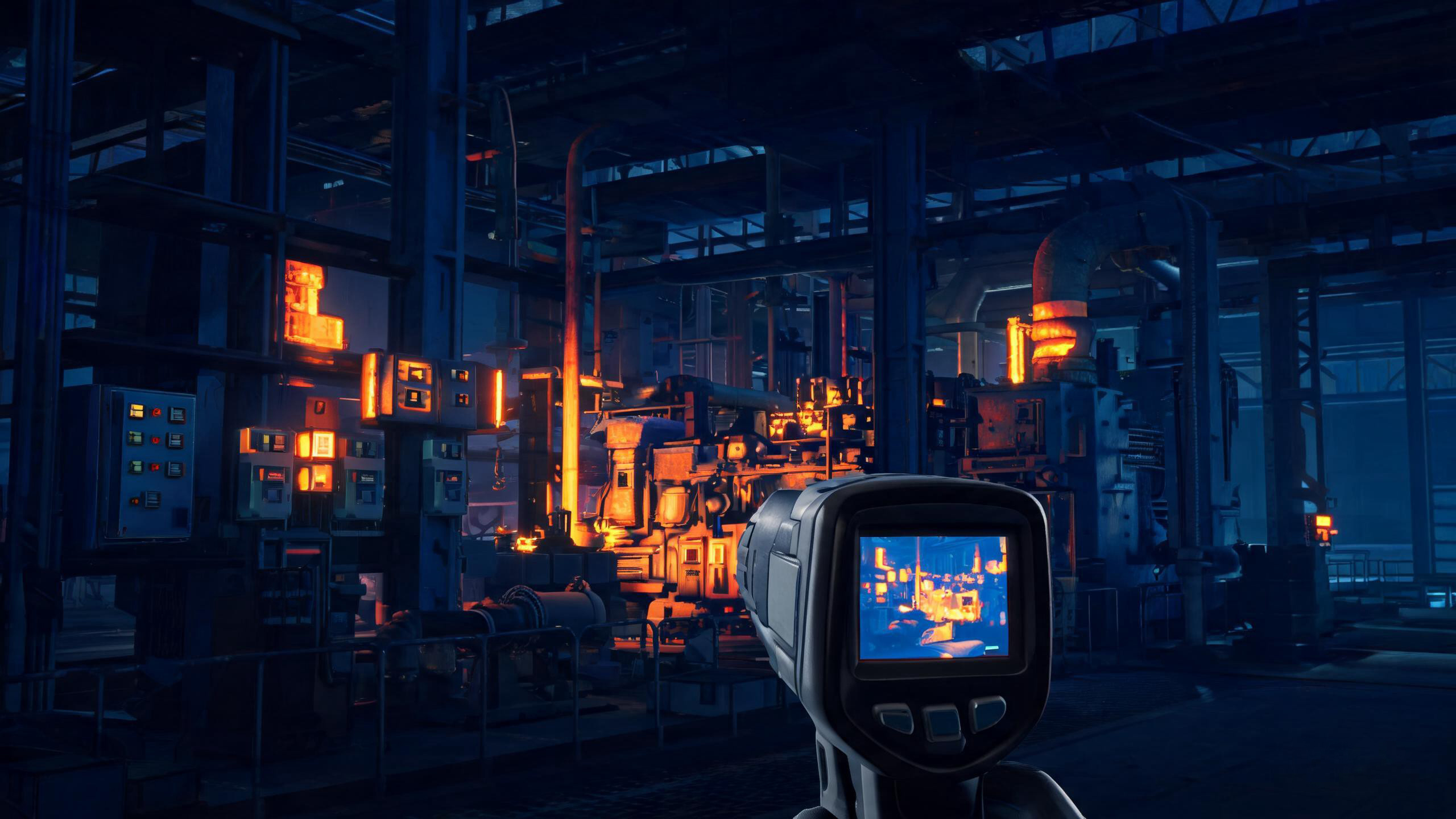
What Is Thermal Imaging and Why Does It Matter?
Every object with a temperature above absolute zero (-273.15 °C or 0 K) emits infrared energy. This energy, often called the object's thermal signature, is invisible to the human eye but carries valuable information about temperature distribution. A thermal imaging camera is essentially a sophisticated heat sensor that detects and captures minute temperature differences across a scene.
The core principle is simple: a thermal imager collects infrared radiation from objects in its field of view, measures the intensity of that radiation, and converts the data into a visual image where different colors or shades represent different temperatures. Because objects rarely share the exact same temperature as their surroundings, the resulting thermal image reveals contrasts that are impossible to see with visible-light cameras.
Unlike traditional cameras that depend on reflected light, thermal imaging works in complete darkness, through light fog, and even in situations where smoke or dust blocks visible light. This makes the technology indispensable across industries ranging from industrial maintenance and electrical inspection to medical screening and night-time observation.
The Physics Behind Thermal Imaging: Infrared Radiation and the Electromagnetic Spectrum
To understand how thermal imaging technology works, it helps to first locate infrared radiation within the broader electromagnetic spectrum. The spectrum spans from low-frequency radio waves to ultra-high-frequency gamma rays. Between visible light and microwaves sits the infrared (IR) band, which thermal imaging systems exploit.
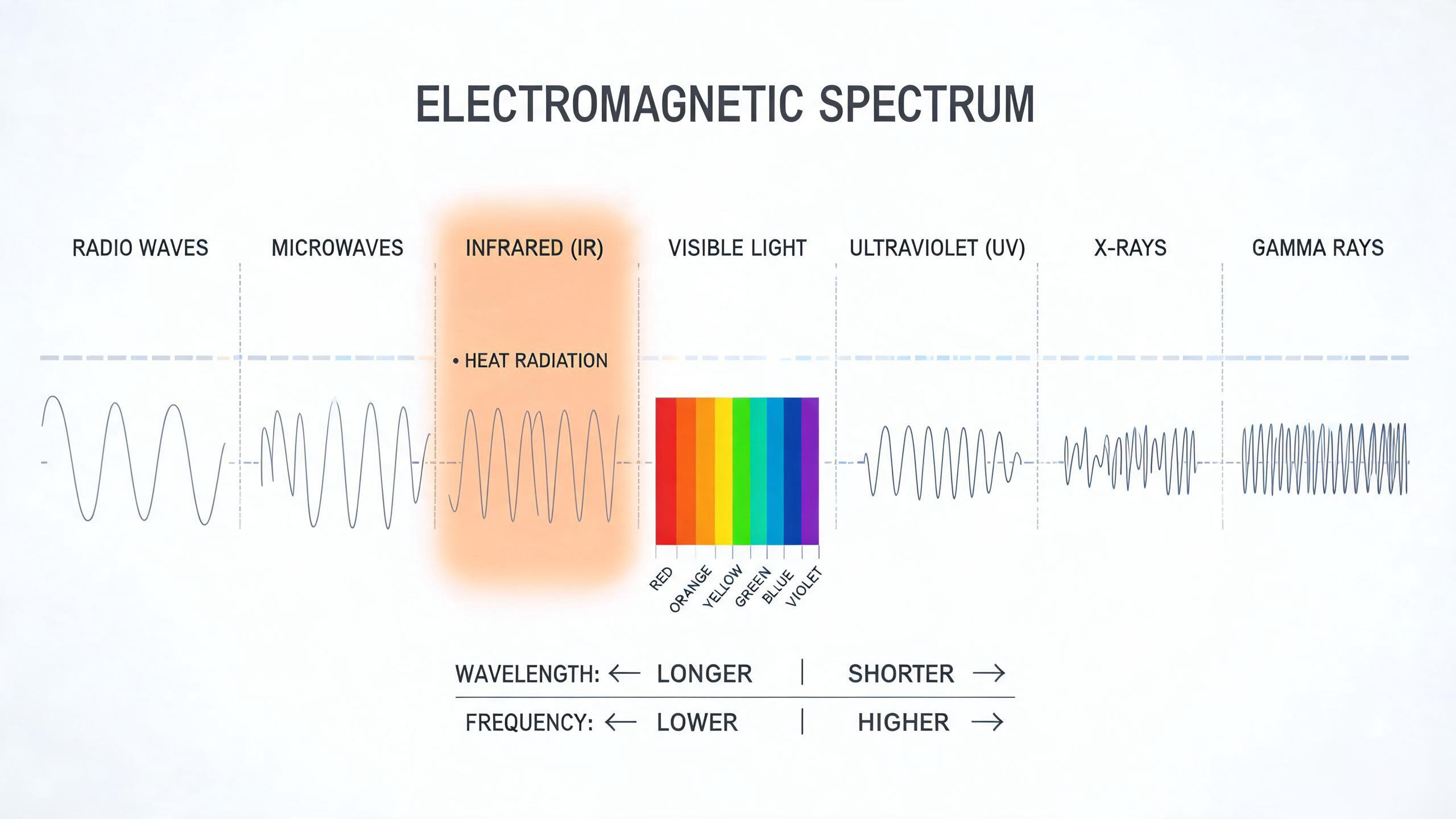
The electromagnetic spectrum and the infrared band used by thermal imaging systems
The historical foundation for infrared technology was laid in the late 19th century when scientists discovered that thermal radiation behaves similarly to other electromagnetic waves. Pioneers such as Kirchhoff, Stefan, Boltzmann, Wien, and Planck established the fundamental radiation laws that still govern thermal imaging design today. By the mid-20th century, intensive military research had produced the first infrared viewers, and by the 1960s the first non-military thermal imaging devices entered industrial and commercial markets.
Modern thermal imaging systems primarily operate in the near-infrared to long-wave infrared (LWIR) range. The near-infrared window used by many sensors spans approximately 750 nm to 2,500 nm, while the most common atmospheric transmission windows for thermal cameras are:
- Short-wave infrared (SWIR): 1.4 – 3 µm
- Mid-wave infrared (MWIR): 3 – 5 µm
- Long-wave infrared (LWIR): 8 – 14 µm
The LWIR band (8 – 14 µm) is particularly important because it experiences less atmospheric attenuation over long distances compared to the MWIR band. This is why many thermal imaging core modules and cameras are optimized for LWIR detection.
Blackbody Radiation Laws: How Temperature Creates Detectable Signals
Real-world objects emit radiation in complex ways. To simplify the physics, scientists use an idealized model called a blackbody. A blackbody is a theoretical object that absorbs all incident radiation and, at any given temperature, emits the maximum possible thermal radiation. While no perfect blackbody exists in nature, the model provides an essential reference for understanding and calibrating thermal imaging cameras.
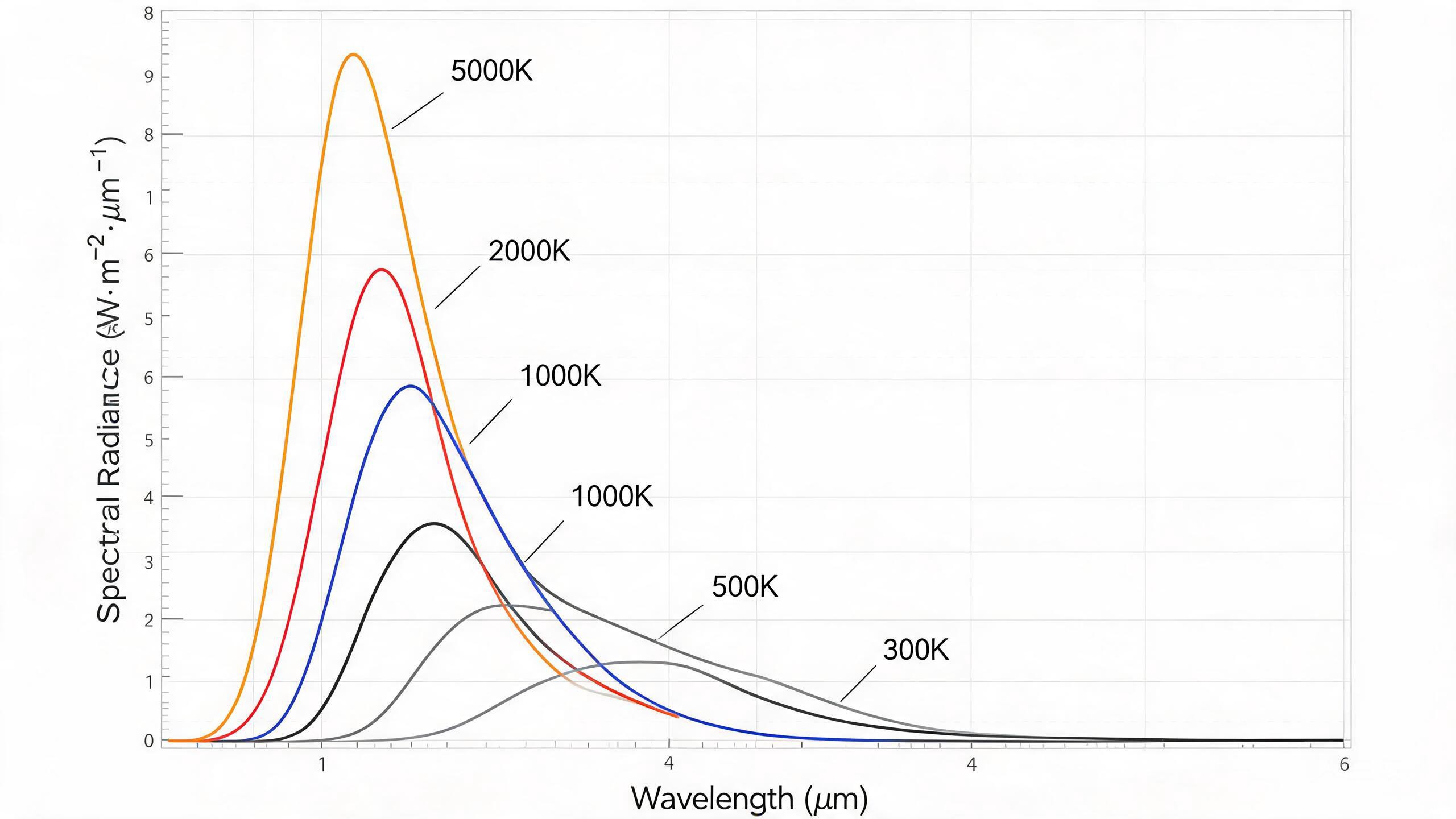
Blackbody radiation curves demonstrate how peak wavelength shifts with temperature (Wien's Displacement Law)
Planck's Law of Radiation
Planck's Law of Radiation describes the spectral distribution of electromagnetic radiation emitted by a blackbody. It states that the intensity of radiation at each wavelength depends solely on the object's temperature. As temperature increases, two things happen: the overall radiation intensity rises, and the peak wavelength shifts toward shorter (higher-energy) regions of the spectrum.
For example, an object heated above 500 °C begins to emit visible light, which is why hot metal glows red. At room temperature (approximately 20 °C), the peak emission lies around 10 µm, deep within the long-wave infrared band. This is precisely the range that uncooled thermal detectors are designed to capture.
Wien's Displacement Law
Derived from Planck's equation, Wien's Displacement Law gives a simple relationship between temperature and peak wavelength. It states that the hotter an object is, the shorter its peak emission wavelength becomes. This principle explains why thermal cameras tuned to different spectral bands are needed for different temperature ranges. For instance, high-temperature industrial processes may be monitored in the MWIR band, while human body temperature screening uses the LWIR band.
Stefan-Boltzmann Law
The Stefan-Boltzmann Law provides another useful simplification. It states that the total power radiated by a blackbody is proportional to the fourth power of its absolute temperature. This means that doubling an object's absolute temperature increases its radiant emission by a factor of sixteen. Engineers use this relationship for rough estimates of heat transfer and total radiated power, particularly when designing thermal imaging core modules for high-temperature monitoring.
Atmospheric Windows
Air is not perfectly transparent to infrared radiation. Certain wavelengths experience high absorption due to water vapor and carbon dioxide, while others pass through with minimal loss. These transparent bands are called atmospheric windows:
- Short-wave window (3 – 5 µm): Usable for shorter distances; measurable atmospheric attenuation begins around ten meters.
- Long-wave window (8 – 14 µm): Maintains high transmittance over much longer distances, making it the preferred band for most thermal imaging cameras and scopes.
Key Factors That Affect Thermal Measurement Accuracy
Real objects are not perfect blackbodies. Their radiation characteristics deviate from the ideal model, and these deviations must be accounted for when performing precise temperature measurements with a thermal camera.
Emissivity: The Critical Parameter
Emissivity (ε) is a dimensionless value between 0 and 1 that quantifies how efficiently a surface emits infrared radiation relative to a blackbody. A true blackbody has an emissivity of 1. Most real materials have emissivity values below 1, meaning they emit less radiation than a blackbody at the same temperature. If a thermal camera assumes an incorrect emissivity value, its temperature readings will be inaccurate.
Many non-metallic materials exhibit high and relatively stable emissivity regardless of surface texture. Examples include:
- Human skin: ε ≈ 0.98
- Water: ε ≈ 0.96
- Most paints and plastics: ε ≈ 0.90 – 0.95
- Wood and concrete: ε ≈ 0.90 – 0.95
In contrast, metals typically have low emissivity that depends heavily on surface condition and generally decreases as wavelength increases. Polished aluminum, for example, may have an emissivity as low as 0.02, while oxidized copper reaches approximately 0.65. This makes metallic targets challenging for non-contact temperature measurement unless the surface is properly prepared or the emissivity value is carefully calibrated.
Other Influencing Factors
Beyond emissivity, several additional parameters influence the radiation characteristics of a measured object:
- Temperature: The object's actual temperature directly determines the intensity and spectral distribution of emitted radiation.
- Material composition: Different substances have inherently different molecular structures, leading to different emission spectra.
- Surface oxidation: Oxidized metal surfaces generally have significantly higher emissivity than polished ones.
- Surface roughness: Rougher surfaces tend to emit more uniformly and have higher effective emissivity than smooth, reflective ones.
- Polarization: At certain angles, reflected radiation can become polarized, affecting the measured signal.
Professional-grade thermal imaging cameras allow users to input custom emissivity values and compensate for reflected background temperature, enabling more accurate measurements across diverse materials and environments.
Inside a Thermal Imaging Camera: From Lens to Real-Time Display
A modern thermal imaging camera is a precision electro-optical instrument. While the underlying physics is complex, the system architecture can be broken down into five core subsystems that work together to convert invisible infrared radiation into a viewable image.
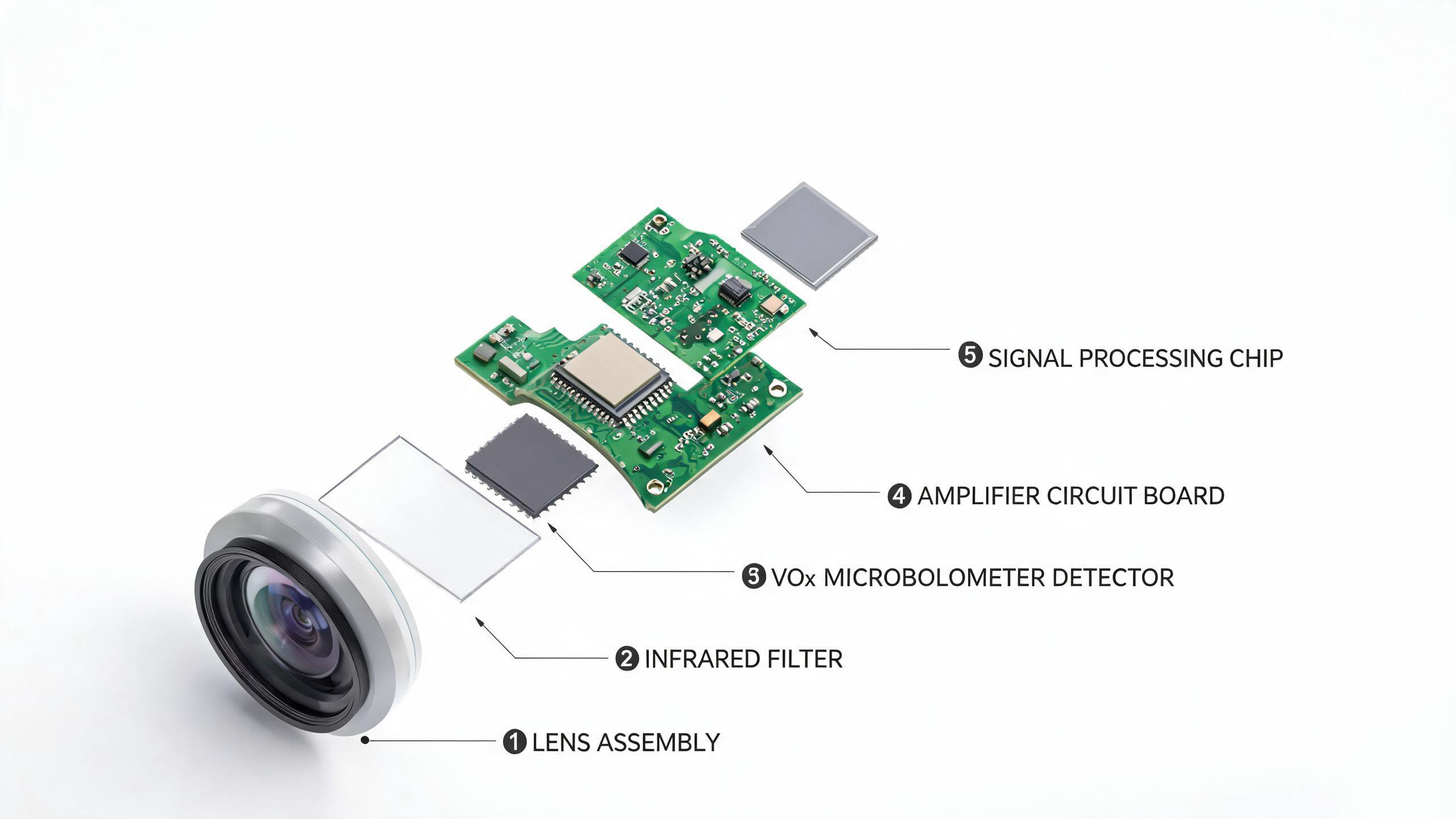
The five core subsystems of a thermal imaging camera: lens, filter, detector, signal processing, and display
1. Optical Lens Assembly
The lens is the camera's first stage. Unlike visible-light lenses made from glass, thermal lenses use specialized materials such as germanium, silicon, or chalcogenide glass because these substances transmit infrared wavelengths efficiently. The lens design determines the field of view (FOV), focal length, and how much infrared energy from the scene reaches the detector. High-performance thermal imaging core modules often feature interchangeable or multi-field-of-view lenses to adapt to different observation distances.
2. Infrared Filter
The filter sits between the lens and the detector. Its purpose is to block unwanted wavelengths outside the target infrared band while allowing the desired spectral range to pass through. This spectral selectivity is essential for reducing noise and ensuring that the detector only responds to radiation relevant to the measurement or imaging task. In LWIR systems, the filter typically passes the 8 – 14 µm atmospheric window.
3. Thermal Detector (Sensor)
The detector is the heart of any thermal imager. It converts incoming infrared photon energy into an electrical signal. Two broad categories of detectors dominate the market:
- Photon detectors (cooled): These require cryogenic cooling (often to 77 K using Stirling engines) to suppress thermal noise. They offer extremely high sensitivity and fast response times, making them suitable for military, scientific, and high-end industrial applications. However, they are expensive, bulky, and have limited operational lifespans due to cooler wear.
- Thermal detectors (uncooled): These operate at ambient temperature and rely on temperature-induced changes in material properties. The most common type is the VOx microbolometer, a tiny resistor array fabricated on a silicon substrate. Each pixel heats up slightly when absorbing infrared radiation, and the resistance change is measured and converted into a temperature value. Uncooled detectors are smaller, lighter, more reliable, and significantly less expensive, which is why they power the vast majority of commercial thermal imaging cameras, handheld imagers, and thermal scopes.
4. Amplifier and Signal Processing
The raw electrical signals from the detector are extremely weak. An amplifier boosts these signals to usable levels, after which an analog-to-digital converter (ADC) transforms them into digital data. Modern cameras apply sophisticated correction algorithms to compensate for detector non-uniformity, temperature drift, and lens transmission variations. This stage also maps the digital temperature data into a color or grayscale palette for human interpretation.
5. Real-Time Display
Finally, the processed image is rendered on a display screen. Users can typically select from multiple color palettes, such as:
- White Hot: Warmer objects appear white; cooler objects appear black.
- Black Hot: The inverse of White Hot; warmer objects appear black.
- Ironbow: A color gradient from black through red, orange, and yellow to white.
- Rainbow: A full-spectrum color map that enhances subtle temperature differences.
Advanced systems also overlay thermal data onto visible-light images, a technique called image fusion, to provide contextual detail alongside thermal contrast.
Real-World Applications of Thermal Imaging Technology
Thermal imaging has evolved from a niche military technology into a versatile tool used across dozens of industries. Below are some of the most impactful application areas.
Medical Screening and Fever Detection
During public health events, thermal cameras have proven invaluable for rapid, non-contact body temperature screening. Because human skin has a high emissivity (approximately 0.98) and a well-defined temperature range, thermal imagers can identify individuals with elevated body temperatures in crowded environments such as airports, hospitals, and office buildings. While thermal screening is not a diagnostic tool, it serves as an efficient first-line filtering method.
Electronics and Product Development
Engineers and product reviewers frequently use handheld thermal cameras to analyze heat dissipation in consumer electronics, batteries, power banks, and circuit boards. Hotspots visible in a thermal image reveal inefficient thermal design, component failures, or overloaded circuits before they cause permanent damage. This accelerates prototyping and quality assurance cycles.
Electrical Inspection and Predictive Maintenance
In the power industry, thermal imaging for electrical inspection has become a standard preventive maintenance practice. Technicians scan switchgear, transformers, distribution panels, and overhead lines to identify abnormal heating caused by loose connections, overloads, or insulation degradation.
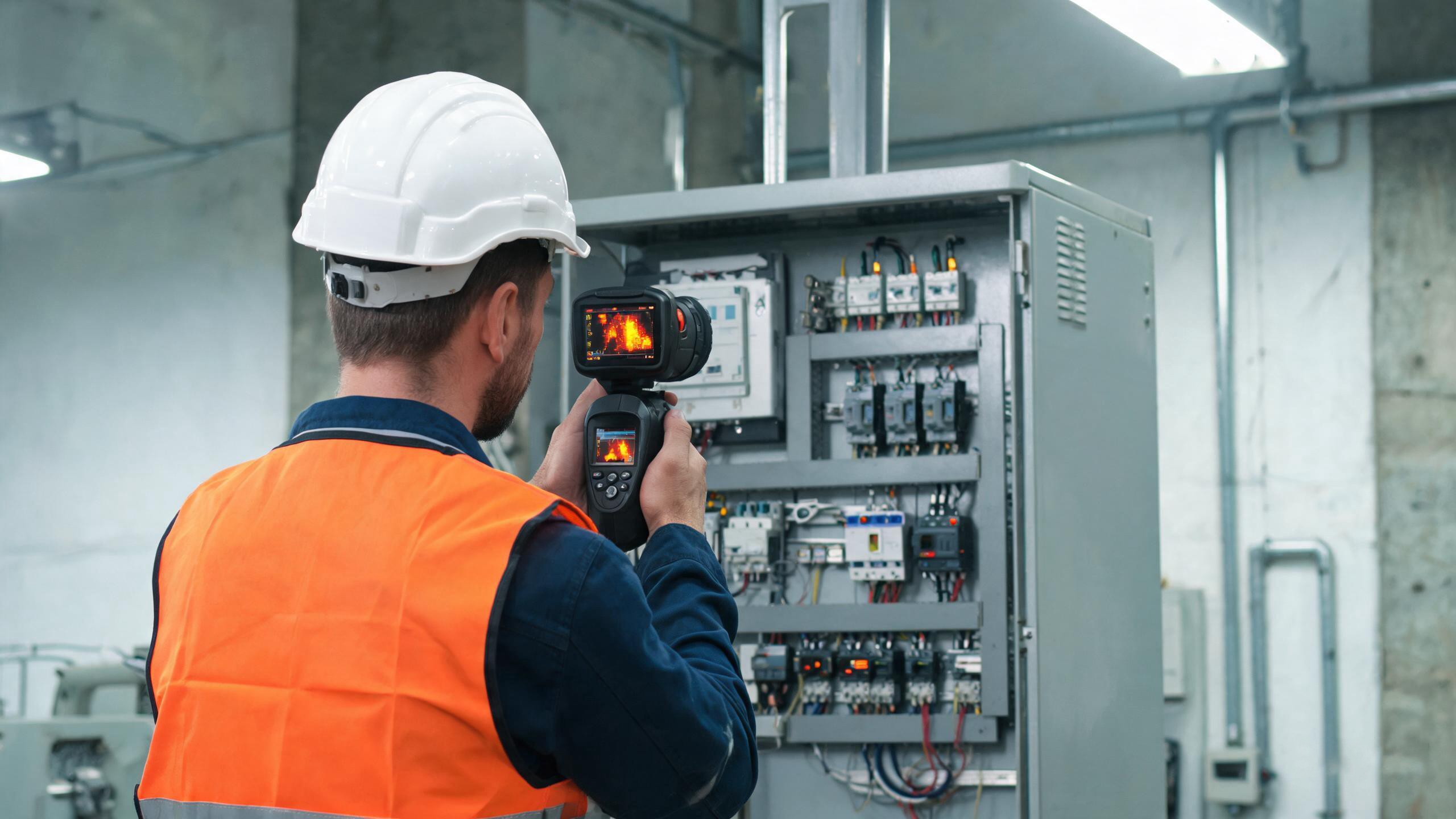
Thermal imaging enables early detection of overheating electrical components during routine inspections
A single overheating contact point can indicate an impending failure that might cost thousands in downtime or pose a fire hazard. By detecting these anomalies early, maintenance teams can schedule repairs during planned outages rather than reacting to unexpected failures. Handheld thermal cameras designed for industrial use often include features such as high-temperature alarms, image annotation, and reporting software to streamline inspection workflows.
Security, Surveillance, and Night Vision
Because thermal imaging does not rely on ambient light, it provides true 24-hour surveillance capability. Security professionals deploy fixed-mount and PTZ thermal cameras for perimeter protection, border monitoring, and critical infrastructure defense. Unlike visible-light or IR-illuminated cameras, thermal systems cannot be blinded by headlights, spotlights, or direct sunlight.
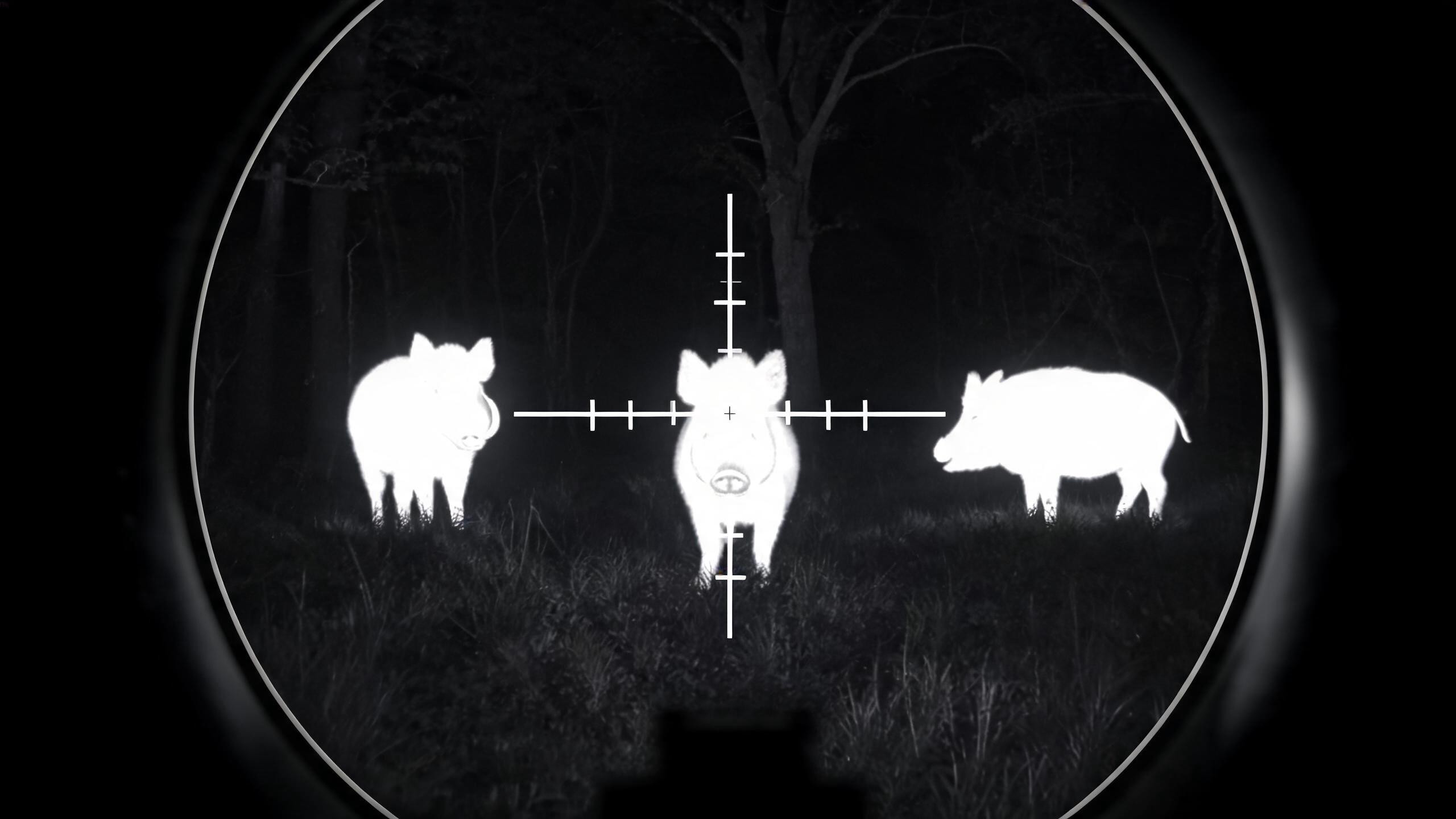
Thermal scopes reveal heat signatures of wildlife in complete darkness, far beyond the reach of the naked eye
In the outdoor and hunting market, thermal scopes and monoculars allow users to detect game, track movement, and navigate terrain in total darkness. Whether the application is predator control, wildlife observation, or search-and-rescue, thermal imaging extends human vision into conditions where other technologies fail.
Firefighting and Search-and-Rescue
Firefighters use thermal imagers to see through smoke, locate trapped individuals, and identify hidden fire sources within walls or ceilings. In search-and-rescue operations, thermal drones and handheld devices can detect human heat signatures across vast wilderness areas, significantly reducing search times and improving survival rates.
How to Choose a Thermal Imaging Camera: A Practical Guide for Engineers
Selecting the right thermal imaging camera or core module depends on matching technical specifications to your specific application requirements. Here are the key parameters to evaluate.
Resolution
Detector resolution, expressed in pixels, determines the level of detail in the thermal image. Common configurations include:
- 384 x 288: Suitable for short-to-mid-range detection and general-purpose monitoring. Offers a good balance of performance and cost.
- 640 x 512: Provides significantly sharper images and enables accurate identification at longer distances. Ideal for professional inspection, security, and hunting applications.
- 1024 x 768 and above: High-end formats for demanding military, aerospace, and research use cases where fine detail is critical.
Detector Type: Cooled vs Uncooled
Uncooled detectors dominate the commercial market due to their lower cost, smaller size, and maintenance-free operation. They are the right choice for most industrial, security, and outdoor applications. Cooled detectors are reserved for scenarios requiring maximum sensitivity, such as long-range surveillance, scientific research, or detection of very faint heat signatures.
NETD (Noise Equivalent Temperature Difference)
NETD measures the smallest temperature difference a camera can detect. It is expressed in millikelvin (mK). A lower NETD value indicates higher sensitivity. Entry-level cameras typically offer NETD around 50 mK, while high-performance models achieve <30 mK. For predictive maintenance and medical screening, lower NETD translates directly to earlier detection of subtle anomalies.
Pixel Pitch
Pixel pitch is the physical distance between adjacent detector pixels, measured in micrometers (µm). Smaller pixel pitches allow for more compact optics and lighter systems without sacrificing resolution. The industry has moved from 25 µm to 17 µm and now toward 12 µm pixel pitches, enabling smaller, more portable thermal cameras and scope systems.
Frame Rate
Frame rate, measured in Hertz (Hz), determines how smoothly motion appears in the thermal image. Standard rates include 25 Hz, 30 Hz, 50 Hz, and 60 Hz. Higher frame rates are essential for tracking fast-moving targets, such as in hunting or drone-based surveillance. Note that some regions restrict the export of thermal cameras with frame rates above 9 Hz due to dual-use regulations.
Budget and Total Cost of Ownership
While cooled systems can cost tens of thousands of dollars, modern uncooled thermal imaging modules have driven prices down significantly. Entry-level handheld thermal cameras are now available for under $1,000, making the technology accessible to small businesses, independent contractors, and hobbyists. When evaluating cost, consider not only the purchase price but also calibration requirements, software licenses, and accessory compatibility.
For OEMs and system integrators, partnering with a reliable thermal imaging module manufacturer ensures consistent supply, technical support, and customization options such as private-label firmware, specialized lens integrations, and interface adaptations.
Frequently Asked Questions
No. Thermal cameras cannot see through solid walls. They detect surface temperatures, so what you observe is the heat pattern on the wall's surface, not objects behind it. However, thermal imaging can reveal temperature differences caused by insulation gaps, moisture intrusion, or structural defects within walls.
Thermal imaging detects infrared radiation (heat) emitted by objects and works in complete darkness, fog, and smoke. Night vision (image intensification) amplifies tiny amounts of visible light and requires some ambient light to function. Thermal cameras can detect concealed or camouflaged targets that night vision would miss, but night vision typically provides more recognizable visual detail.
With proper calibration and correct emissivity settings, industrial thermal cameras typically achieve temperature measurement accuracy of ±2 °C or ±2% of the reading. Accuracy depends on factors including emissivity, distance, atmospheric conditions, and the camera's own temperature stability. Medical screening systems are calibrated to a tighter tolerance for human body temperature detection.
Emissivity is a material's ability to emit infrared radiation. It ranges from 0 to 1, with 1 representing a perfect blackbody. If a thermal camera assumes the wrong emissivity value, temperature readings will be incorrect. Non-metallic materials like skin, water, and paint have high emissivity and are easy to measure. Metals, especially polished ones, have low emissivity and require careful setup or surface treatment for accurate results.
Thermal cameras can operate in light rain, fog, and snow, but performance degrades as precipitation increases. Water droplets scatter and absorb infrared radiation, reducing image contrast and effective range. Unlike night vision, which can be severely impaired by precipitation, thermal imaging still provides usable imagery in conditions where visible-light systems fail completely. For the best results in harsh weather, choose a camera with high sensitivity (low NETD) and a suitable lens configuration.
Ready to Explore Thermal Imaging Solutions?
Understanding how thermal imaging works is the first step toward selecting the right equipment for your project or operation. Whether you need a compact thermal imaging core module for OEM integration, a rugged handheld thermal camera for field inspections, or a precision thermal scope for night operations, the technology continues to become more capable, more affordable, and more accessible.
At Owlshine, we design and manufacture LWIR thermal imaging modules, cameras, and scopes built on advanced uncooled VOx microbolometer technology. to discuss custom OEM solutions tailored to your exact requirements.
Browse Thermal Cameras