

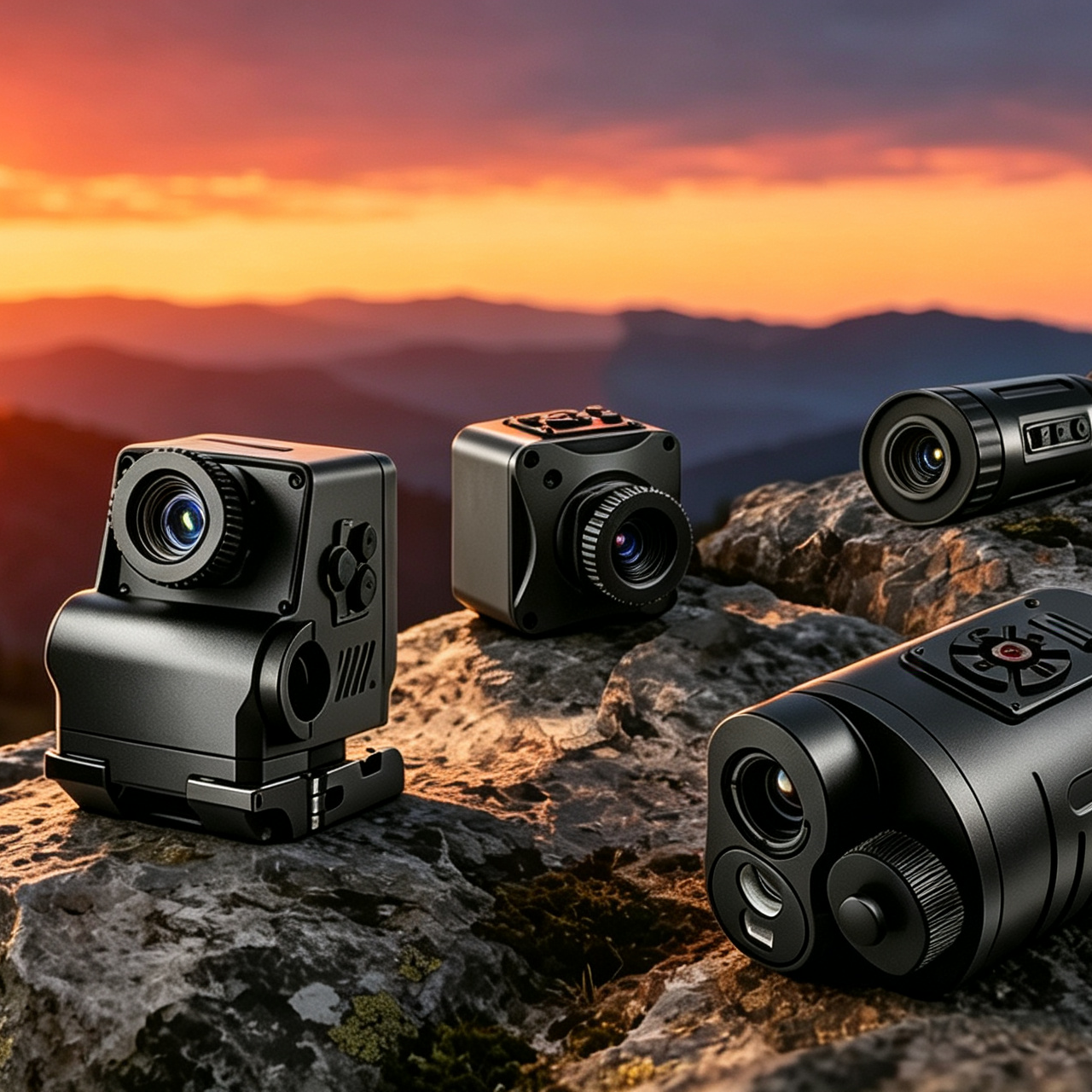
A thermal imaging camera is one of the most powerful tools for seeing in complete darkness, fog, smoke, and low-light conditions. Whether you are a hunter tracking game at night, a security professional monitoring perimeters, or an industrial technician inspecting equipment, choosing the right thermal camera can dramatically improve your effectiveness. In this guide, we break down the key specifications you need to understand — resolution, refresh rate, NETD, and lens options — and recommend the best compact thermal imaging camera for the money in 2026.
What Is a Thermal Imaging Camera?
A thermal imaging camera detects infrared radiation (heat) emitted by objects and converts it into a visible image. Unlike traditional night vision devices that amplify ambient light, thermal cameras work entirely without light, making them effective in pitch-black environments, through light fog, and even in areas with smoke.
Thermal imaging technology has advanced rapidly. Today's compact thermal imaging cameras deliver professional-grade performance in pocket-sized packages. Modern uncooled thermal detectors eliminate the need for cryogenic cooling, reducing cost and maintenance while improving reliability in the field.
Key Specifications to Look For in a Thermal Imaging Camera
When shopping for a thermal imaging camera, four technical specifications determine image quality, usability, and value. Understanding these will help you avoid overpaying for features you do not need — or underspending and getting poor performance.
1. Thermal Resolution (Detector Size)
Thermal resolution, measured in pixels, determines how much detail you can see. Common resolutions include:
- 320×240 — The standard for compact and entry-level thermal imaging cameras. Provides clear target identification at moderate distances. Ideal for hunting, security, and general outdoor use.
- 384×288 — A step up from 320×240, offering slightly sharper images without a significant price increase.
- 640×480 — Professional-grade resolution. Excellent for long-range detection and detailed industrial inspection. Typically found in higher-end units.
For most hunters, outdoor enthusiasts, and security users, a 320×240 thermal imaging camera strikes the best balance between performance and affordability. It delivers crisp imaging for accurate target identification without the premium price of 640-resolution systems.
2. Refresh Rate (Frame Rate)
Refresh rate, measured in Hertz (Hz), determines how smoothly the thermal image updates. This matters significantly when tracking moving targets:
- 9Hz — Budget thermal cameras often use this rate. Choppy video makes tracking moving animals or people difficult.
- 30Hz — Smooth enough for most applications. A solid mid-range option.
- 50Hz or 60Hz — Professional-grade smoothness. No motion blur when tracking fast-moving targets. Essential for hunting, tactical use, and dynamic surveillance.
If you plan to use your thermal imaging camera for hunting or any application involving movement, prioritize a 50Hz refresh rate or higher. The difference between 9Hz and 50Hz is dramatic when tracking a running coyote or scanning a perimeter on patrol.
3. NETD (Thermal Sensitivity)
NETD stands for Noise Equivalent Temperature Difference. It measures the smallest temperature difference a thermal camera can detect. Lower NETD values mean better sensitivity:
- NETD ≤ 50 mK — Good sensitivity. Suitable for general outdoor and security applications.
- NETD ≤ 40 mK — Excellent sensitivity. Detects subtle temperature differences, improving image clarity and target detection in challenging conditions.
- NETD ≤ 30 mK — Professional-grade. Premium price point.
A thermal imaging camera with NETD ≤ 40 mK offers outstanding performance for the price. It can distinguish a warm animal from cool background vegetation even in light rain or humidity — conditions where less sensitive cameras struggle.
4. Lens Size and Field of View
Lens focal length affects both magnification and field of view (FOV):
- Shorter lenses (9–13mm) — Wider FOV. Better for scanning large areas, close-quarters observation, and tactical mounting.
- Longer lenses (19–35mm) — Narrower FOV with more magnification. Better for long-range detection but harder to acquire targets quickly.
For versatile outdoor and tactical use, a 9.7mm lens provides an ideal balance — wide enough for situational awareness while still delivering enough detail for positive identification at common engagement distances.
Best Compact Thermal Imaging Camera Under $500 in 2026
After evaluating dozens of models across resolution, refresh rate, NETD, build quality, and price, one compact thermal imaging camera stands out for 2026: the Owlshine OWS-300.
OWS-300 Compact Thermal Imaging Camera — Professional Grade at a Budget Price
The OWS-300 delivers features typically found in thermal cameras costing $1,000 or more — at a fraction of the price. Currently available at $330.00 USD (down from $660.00), it represents exceptional value.
| Specification | OWS-300 | Typical Competitor ($300–$500) |
|---|---|---|
| Thermal Resolution | 320×240 | 160×120 or 320×240 |
| Refresh Rate | 50 Hz | 9–30 Hz |
| NETD (Sensitivity) | ≤ 40 mK | ≤ 50–60 mK |
| Lens | 9.7 mm | 7–13 mm |
| Mounting | Picatinny Rail | Basic bracket or none |
| Price | $330.00 | $350–$500 |
Why the OWS-300 Wins
- 50Hz refresh rate — Most competitors in this price range offer only 9Hz or 30Hz. The OWS-300's 50Hz delivers buttery-smooth tracking of moving targets with zero motion blur.
- NETD ≤ 40 mK — Ultra-high thermal sensitivity picks up subtle heat signatures competitors miss. Critical for predator hunting and low-contrast conditions.
- Picatinny rail compatibility — Mount directly to rifles, helmets, or gear. No adapters needed. Deploy in seconds, not minutes.
- Compact and rugged — Lightweight design built for real outdoor conditions. Rain, dust, and recoil will not phase it.
Top Applications for Your Thermal Imaging Camera
A quality thermal imaging camera serves multiple roles. Here are the most popular use cases:
Night Hunting and Wildlife Observation
Thermal imaging has revolutionized predator and varmint hunting. Unlike night vision, thermal cameras reveal animals hidden in brush, behind light cover, or at distances beyond what ambient light allows. Hog hunting and coyote hunting at night are the two most popular applications in North America. A compact thermal imaging camera with 50Hz refresh rate ensures you never lose track of a running target.
Security and Property Surveillance
Thermal cameras detect intruders day or night, regardless of lighting conditions. They are immune to shadows, camouflage, and darkness. Mount a thermal imaging camera on a Picatinny-compatible tripod or helmet for mobile patrol, or integrate it into a fixed surveillance setup for perimeter monitoring.
Search and Rescue Operations
Search and rescue teams rely on thermal imaging to locate missing persons in wilderness, disaster zones, or low-visibility conditions. A human body stands out clearly against cool ground or water, even in complete darkness. The compact size of the OWS-300 makes it ideal for field teams who need to move fast and travel light.
Industrial Thermal Inspection
Electrical technicians and maintenance professionals use thermal cameras to detect overheating components, poor connections, and insulation failures before they cause downtime or fires. A thermal imaging camera with good NETD sensitivity identifies small temperature anomalies that indicate developing problems.
Thermal Imaging Camera vs Night Vision: Which Is Better?
Many buyers wonder whether to choose a thermal imaging camera or a night vision scope. Here is the breakdown:
| Feature | Thermal Imaging Camera | Night Vision Scope |
|---|---|---|
| Works in total darkness | Yes — no light needed | No — requires some ambient light |
| Detects through fog/smoke | Yes — limited penetration | No — light scatters |
| Detects hidden targets | Yes — sees heat through light cover | No — blocked by visual obstructions |
| Image detail | Heat-based, less facial detail | Light-based, more visual detail |
| Price for quality unit | $330–$800 (entry to mid) | $400–$1,000+ |
Verdict: For hunting, security, search and rescue, and any application where detecting heat signatures matters more than visual identification, a thermal imaging camera is the superior choice. Night vision remains useful for navigation and scenarios where recognizing faces matters, but thermal wins for detection and tracking.
Frequently Asked Questions
The Owlshine OWS-300 is the best thermal imaging camera under $500 for hunting in 2026. It offers 320×240 resolution, 50Hz refresh rate, NETD ≤ 40 mK sensitivity, and Picatinny rail mounting — specifications typically found in cameras costing twice the price.
Yes. A 320×240 thermal imaging camera provides more than enough detail for hunting, security, and most industrial applications out to 200+ yards. Higher resolutions like 640×480 are beneficial for long-range detection and professional inspection but come at a significant cost premium.
NETD (Noise Equivalent Temperature Difference) measures thermal sensitivity. It indicates the smallest temperature difference a camera can detect. A lower NETD means better sensitivity. NETD ≤ 40 mK is considered excellent for compact thermal imaging cameras and delivers crisp, detailed images even in challenging weather.
Yes, if the camera supports Picatinny rail mounting. The OWS-300 features built-in Picatinny compatibility, allowing direct attachment to rifles, scopes, helmets, and tactical gear without additional adapters.
Yes. Thermal imaging cameras work equally well in daylight and darkness because they detect heat rather than light. However, direct sunlight can sometimes heat surfaces uniformly, slightly reducing contrast. For most applications, thermal cameras perform reliably 24/7.
Final Thoughts: Invest in the Right Thermal Imaging Camera
Choosing the right thermal imaging camera comes down to understanding your needs and prioritizing the specifications that matter. For hunters, security professionals, and outdoor enthusiasts, focus on refresh rate (50Hz), thermal sensitivity (NETD ≤ 40 mK), and mounting flexibility. Resolution of 320×240 is more than sufficient for most real-world scenarios.
The Owlshine OWS-300 checks every box at a price point that undercuts most competitors by 30–50%. With free worldwide shipping, free returns, and professional-grade specs in a compact package, it is the smartest investment you can make in thermal vision for 2026.
Ready to Upgrade Your Night Vision?
Get the OWS-300 Compact Thermal Imaging Camera today — professional-grade performance at an unbeatable price. Free shipping worldwide.
Shop OWS-300 Now →Related Articles:
Thermal vs Night Vision: Which Is Better for Hunting?
How to Zero a Thermal Scope: Step-by-Step Guide
Best Budget Thermal Scope for Coyote Hunting in 2026