

The Challenge: Why Maritime Operations Demand Better Vision at Sea
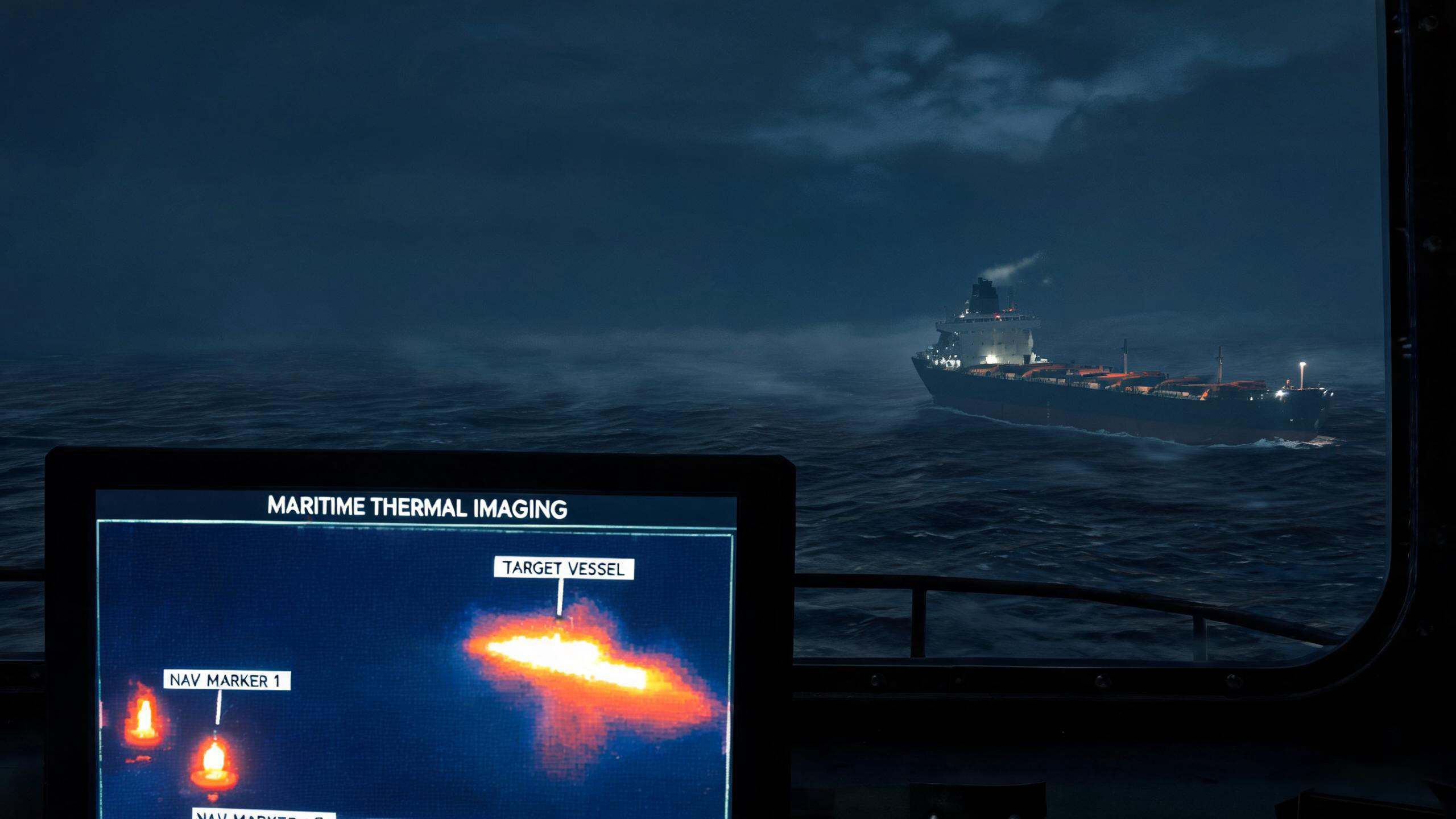
Maritime operations unfold in some of the most visually demanding environments on Earth. A ship's bridge officer must constantly monitor the surrounding waters for other vessels, navigational markers, floating debris, and ice — tasks that become extraordinarily difficult after sunset, in dense fog, or during heavy rain. The International Maritime Organization (IMO) has long recognized that restricted visibility is a leading contributing factor in maritime collisions and grounding incidents, and its Collision Regulations (COLREGs) explicitly require vessels to proceed at safe speeds when visibility is limited.
Traditional bridge surveillance tools each carry inherent limitations. Marine radar excels at detecting large metal targets at distance but struggles with small wooden or fiberglass boats, floating debris, and persons in the water. Visible-light cameras — including low-light and starlight sensors — depend on at least minimal ambient illumination and are easily degraded by fog, sea spray, and precipitation. Human visual watchkeeping, while mandatory, is subjective and prone to fatigue during long night passages.
These gaps carry real operational and financial consequences. A vessel involved in a collision faces repair costs, cargo loss, charter delays, potential environmental liability, and in severe cases, loss of life. For port operators, undetected intrusions after dark create security incidents and regulatory exposure. For search and rescue (SAR) coordinators, every minute of delayed detection in cold water reduces survivability — hypothermia can become life-threatening in water temperatures below 15°C within an hour. The maritime industry therefore needs a detection technology that operates independently of visible light and cuts through the atmospheric conditions that defeat conventional sensors.
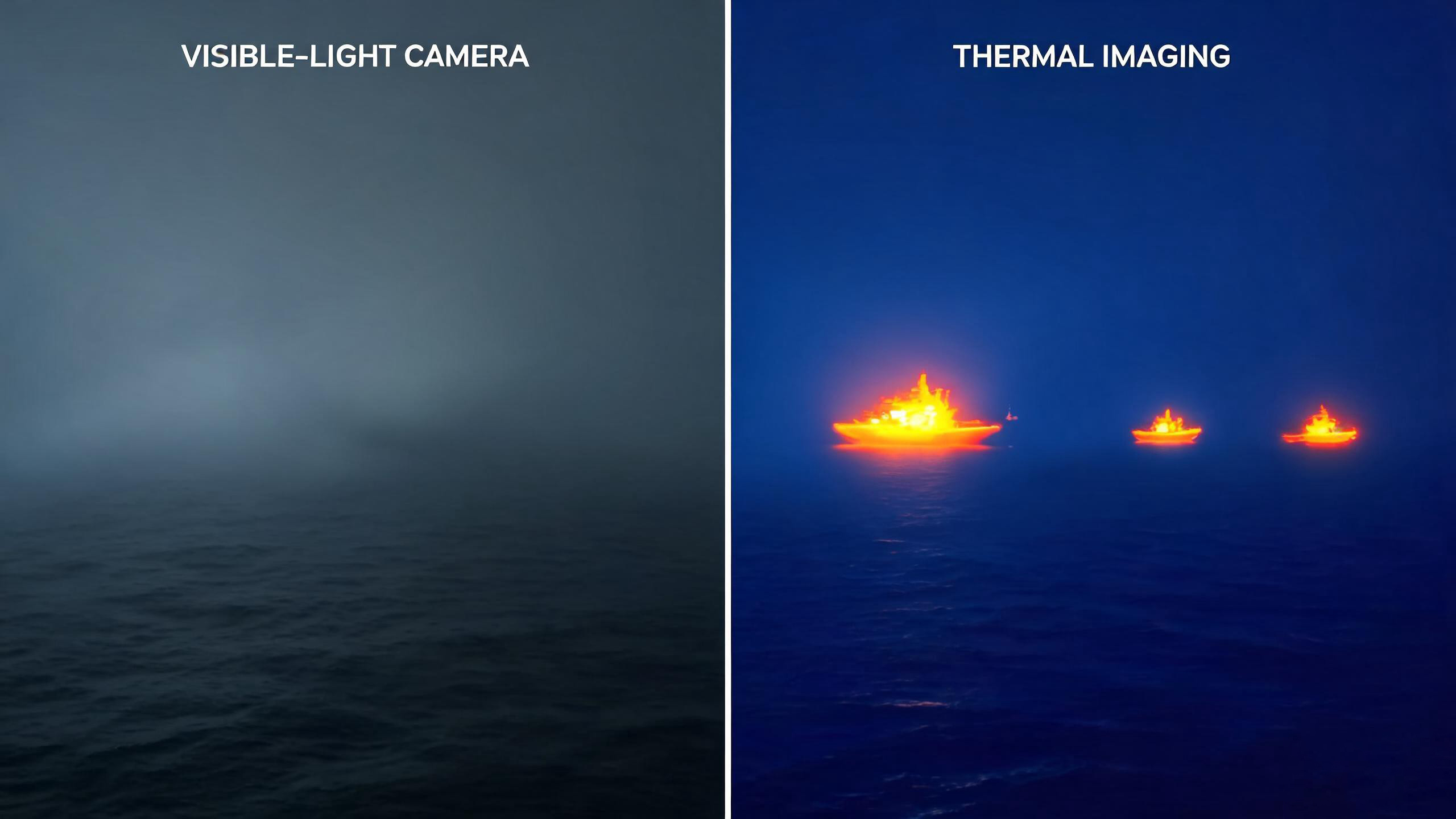
Visible-light cameras (left) fail to penetrate fog and darkness, while thermal imaging (right) reveals vessel traffic clearly.
How Thermal Imaging Technology Works on the Water
Thermal imaging operates on a fundamentally different principle than visible-light cameras or radar. Every object with a temperature above absolute zero emits infrared radiation, and the concentration of this emission shifts toward shorter wavelengths as an object gets hotter. Long-wave infrared (LWIR) detectors — typically based on vanadium oxide (VOx) microbolometer technology — capture this radiation in the 8–14 µm band and convert it into a visible image that represents temperature differences across the scene. No external light source is required.
This capability translates into several practical advantages for maritime environments:
- Day and night operation: Unlike visible-light cameras, a thermal imaging module produces the same image quality at 2 a.m. as at noon, because it relies on thermal contrast rather than reflected light.
- Atmospheric penetration: LWIR radiation transmits through fog, haze, and light rain more effectively than visible light, extending detection range in precisely the conditions that degrade conventional cameras.
- High contrast on water: Water has a high and relatively uniform thermal mass, so it tends to maintain a stable temperature. Objects such as vessels, buoys, debris, ice, and human bodies typically differ from the water surface by several degrees, producing strong thermal contrast.
- Passive sensing: Thermal imaging emits no energy, so it does not interfere with other bridge electronics and cannot be detected by opposing vessels — a consideration for naval and coast guard applications.
For system integrators and marine equipment manufacturers, the thermal imaging module is the building block that makes these capabilities deployable. A compact module — comprising the infrared detector, lens, image processing board, and output interface — can be embedded into a fixed mount thermal camera for the bridge, a pan-tilt surveillance unit for port perimeters, or a lightweight payload for unmanned aerial vehicles (UAVs) used in offshore patrol and SAR missions. Module-level integration gives OEMs the flexibility to design marine-specific enclosures, stabilization platforms, and data pipelines without redesigning the core thermal engine.
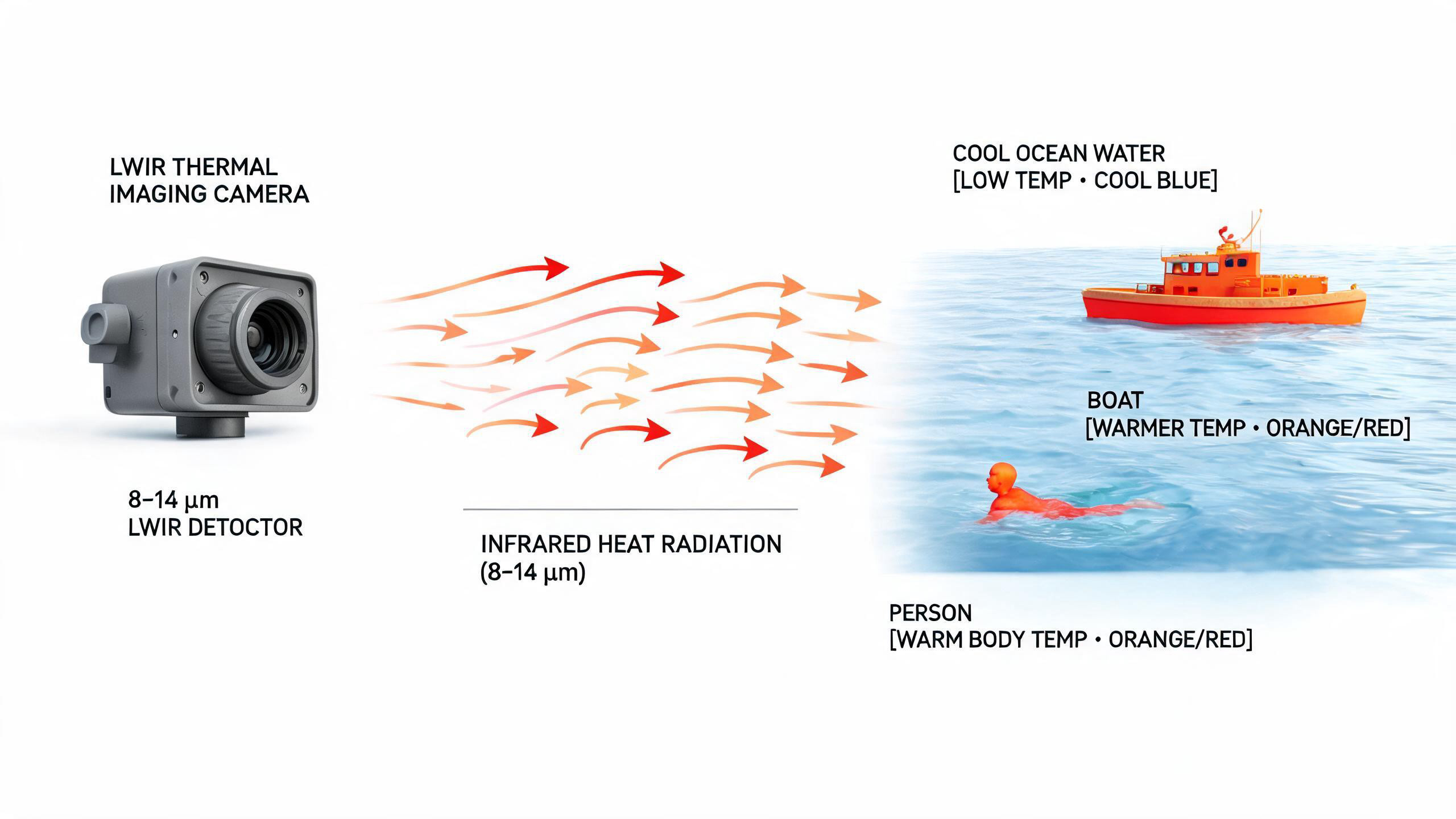
LWIR detectors capture the 8–14 µm infrared band, producing images based on temperature differences between targets and the water surface.
Key Maritime Applications of Thermal Imaging Modules
The versatility of LWIR detection makes thermal imaging suitable for a broad range of maritime tasks. The following four applications represent the most common integration scenarios for OEMs and marine equipment manufacturers.
Safe Navigation and Collision Avoidance
On a ship's bridge, situational awareness is the single most important factor in preventing collisions and groundings. A thermal imaging module integrated into a fixed or pan-tilt camera provides the officer on watch with a real-time thermal picture of the waters ahead, supplementing radar with visual confirmation that radar alone cannot provide.
In practical terms, this means:
- Vessel detection: Other ships — whether steel-hulled cargo vessels or small fiberglass fishing boats — appear as high-contrast thermal targets against the cooler water surface, even in total darkness or thick fog.
- Small target visibility: Radar often misses or filters out small craft, floating containers, and logs. Thermal imaging detects these hazards based on their temperature difference from the water, giving the bridge crew time to alter course.
- Ice and iceberg detection: In polar and sub-polar routes, thermal cameras help identify growlers and bergy bits that can damage hulls, supplementing ice radar with visual detail.
- Navigational aid verification: Buoys, lighthouses, and beacons that may be obscured by fog or spray in visible light remain identifiable in thermal imagery, particularly if they carry solar-powered LED lights that generate slight heat.
For integrators building bridge surveillance systems, a 640×512 resolution module such as the MINI640-UC thermal imaging module offers the pixel density needed to classify targets at meaningful ranges, while a compact 384×288 module may suffice for close-quarters maneuvering in harbors.
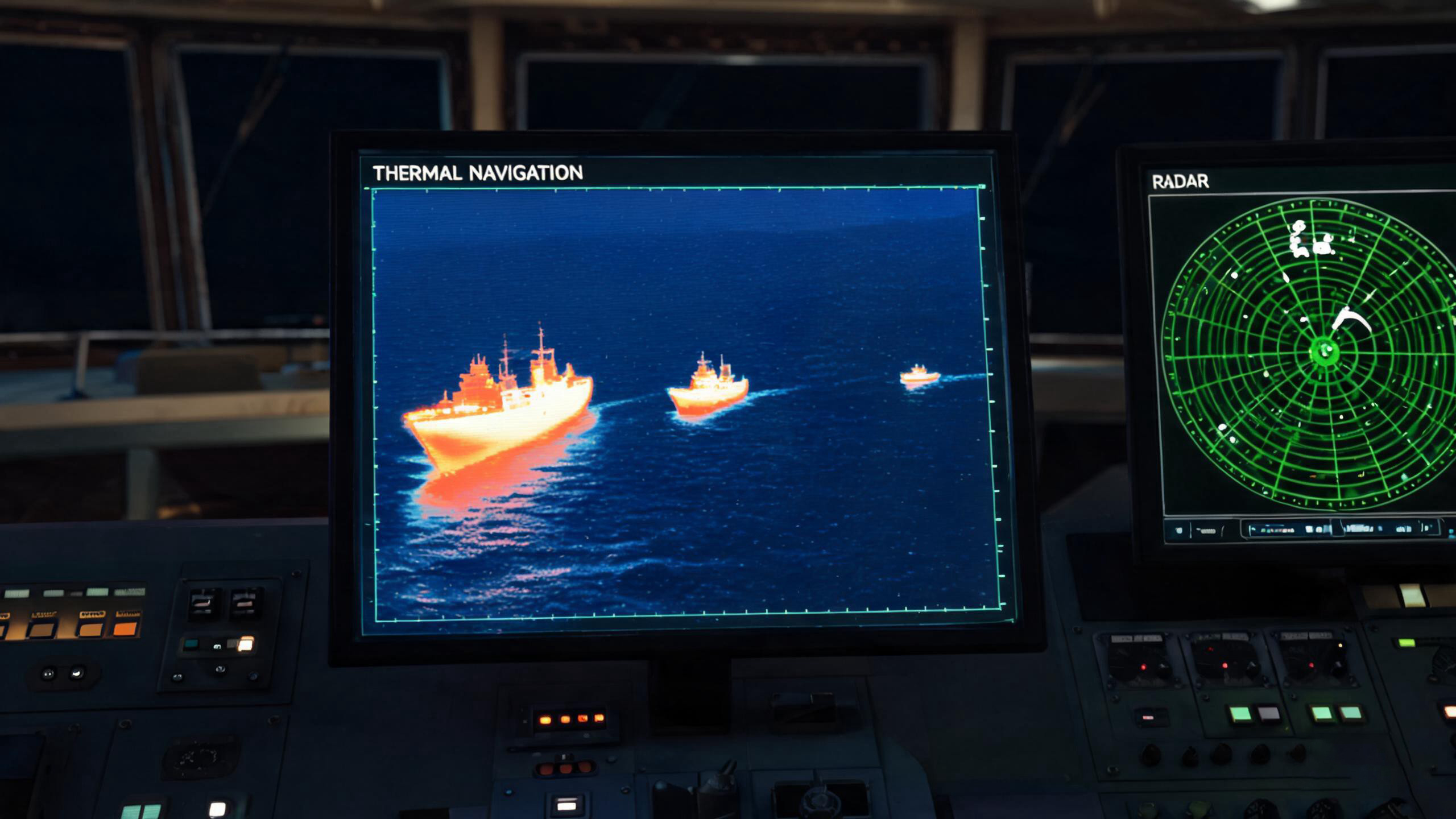
A thermal imaging feed on the bridge reveals vessel traffic that would be invisible to the naked eye or visible-light cameras at night.
Search and Rescue (SAR) Operations
Finding a person in the water is one of the most difficult and time-critical tasks in maritime operations. The human head — the body part typically above the surface — has a surface temperature around 30–34°C, while ocean temperatures in many regions range from 5°C to 20°C. This temperature differential makes a person in the water a strong thermal target, even in darkness and moderate sea states.
Thermal imaging modules are integrated into SAR systems in several configurations:
- Helicopter and fixed-wing UAV payloads: A lightweight thermal core mounted on a drone or helicopter gimbal can scan square kilometers of ocean in minutes, far faster than a vessel conducting a visual search pattern. The FPV drone thermal camera module with CVBS interface is designed for exactly this type of airborne integration, offering 256, 384, and 640 resolution options to balance detection range against payload weight.
- Vessel-mounted SAR cameras: A pan-tilt thermal camera on the rescue vessel's mast provides a 360° thermal horizon scan, helping the crew spot survivors as they approach the search area.
- Lifeboat and survival craft equipment: Compact thermal modules can be integrated into survival craft equipment to help rescuers locate the craft and for the craft itself to signal its position.
For SAR applications, a module with high thermal sensitivity (NETD ≤50 mK) is preferred, because it can resolve the subtle temperature difference between a partially submerged person and the surrounding water even in warm sea conditions where the contrast is reduced.
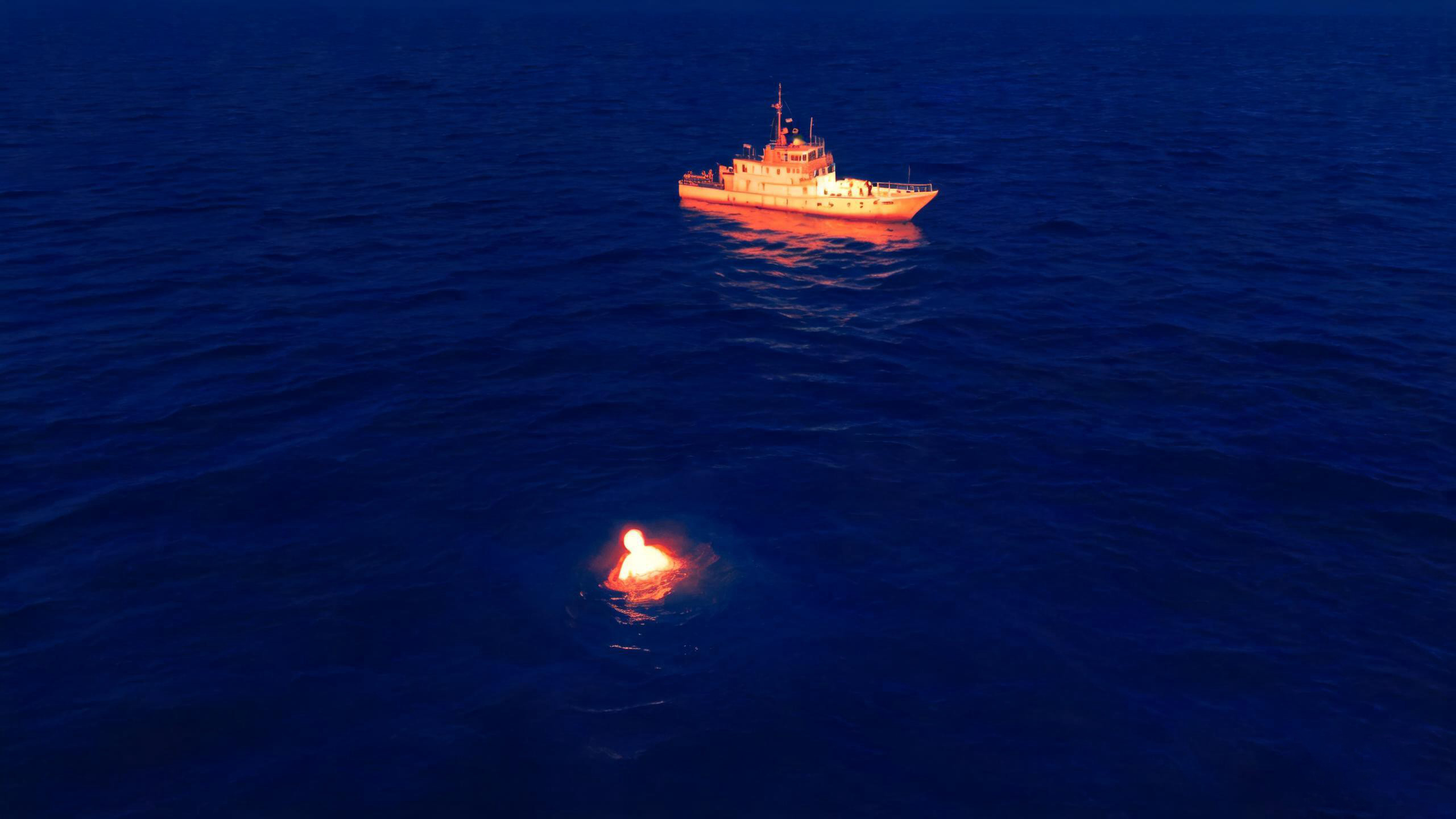
A UAV-mounted thermal module scans the ocean surface, detecting a person in the water by their thermal signature against the cooler sea.
Oil Spill Detection and Environmental Monitoring
Oil spills pose severe ecological and economic threats to marine environments, and rapid detection is critical for containment. Thermal imaging contributes to environmental monitoring in two distinct ways.
First, oil on the water surface has a different thermal behavior than the surrounding seawater. Oil absorbs solar radiation during the day and releases it at a different rate than water, creating a measurable temperature difference that a thermal camera can detect — particularly at night or during the early morning thermal transition period. This allows response teams to map the extent and movement of a spill far more effectively than visual observation alone, and to do so in conditions where visible-light surveillance is impossible.
Second, thermal imaging modules support broader marine environmental monitoring:
- Ocean surface temperature mapping: Mounted on research vessels, buoys, or satellites, thermal sensors measure sea surface temperature (SST) to support climate research, fisheries management, and weather forecasting.
- Thermal plume detection: Industrial and power plant discharges into coastal waters create thermal plumes that can be tracked to verify compliance with environmental permits.
- Marine wildlife monitoring: Marine mammals such as whales and dolphins generate visible thermal signatures when they surface, helping vessel operators avoid collisions and supporting population surveys.
For integrators building environmental monitoring platforms, a module with radiometric output — where each pixel carries an absolute temperature value — adds quantitative capability beyond simple thermal imaging. This allows the system not just to detect anomalies but to measure and log them for regulatory reporting.
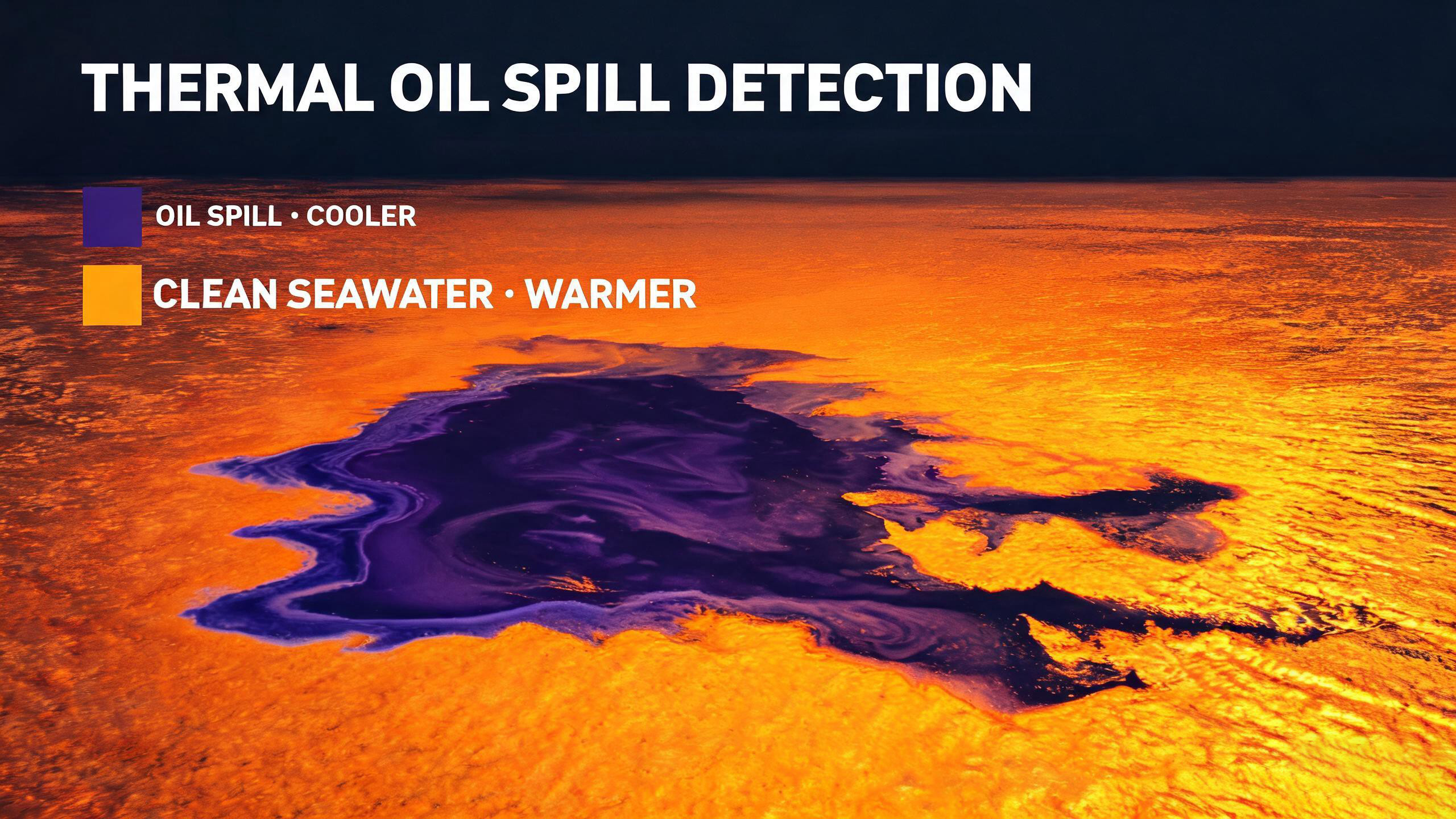
Thermal imaging reveals oil spill extent on the water surface through temperature differences invisible to the naked eye.
Port and Coastal Security Surveillance
Ports, harbors, and coastal facilities operate around the clock and require continuous surveillance to protect assets, manage traffic, and prevent unauthorized access. Thermal imaging modules embedded in fixed and pan-tilt-zoom (PTZ) security cameras provide several advantages over visible-light CCTV systems in these environments.
- 24/7 perimeter monitoring: A thermal camera detects intruders approaching by water or land regardless of lighting conditions, eliminating the blind spots that conventional cameras develop at night or in adverse weather.
- Vessel traffic monitoring: Port control authorities use thermal imaging to track vessel movements in and out of harbors, supporting traffic management and verifying that ships follow designated channels.
- Swimmer and small craft detection: Security threats such as unauthorized divers or small fast boats are difficult to detect with radar but produce clear thermal signatures against the water, making thermal imaging a key layer in waterside security.
- Berthing and docking assistance: Thermal cameras help crews monitor the approach of tugs and pilot boats during night berthing operations, improving safety during maneuvering.
For large-scale port deployments, a combination of wide-field-of-view fixed thermal cameras for perimeter coverage and PTZ thermal cameras for target investigation provides layered coverage. The JS-56-UVC thermal imaging module, with its UVC interface for direct USB integration, is well suited for networked security systems where multiple camera streams are managed through a centralized video management system (VMS).
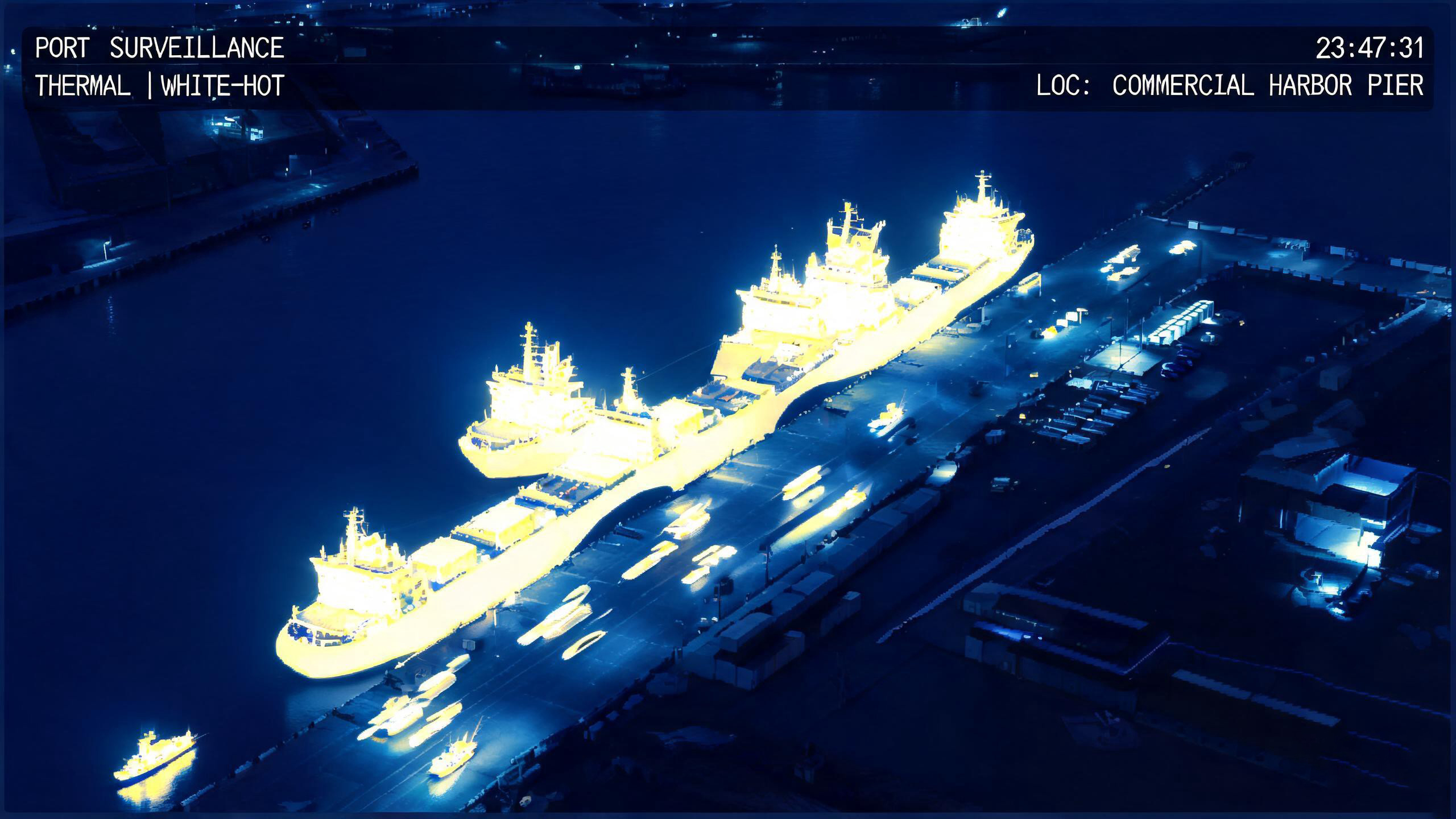
Port security thermal surveillance provides clear visibility of vessel traffic, vehicles, and personnel after dark.
Choosing the Right Thermal Module for Maritime Integration
Selecting a thermal imaging module for a marine application requires balancing performance, size, interface, and environmental robustness. Unlike consumer thermal cameras, marine-grade integrations must withstand salt spray, humidity, vibration, and wide temperature swings while delivering consistent image quality over long operating hours. The following criteria should guide the selection process.
Resolution
Resolution determines how many pixels cover the target scene, which directly affects the distance at which a target can be detected, recognized, and identified.
| Resolution | Typical Application | Detection Range (vessel-sized target) | Integration Profile |
|---|---|---|---|
| 256×192 | Close-range docking, small drone payloads, compact port cameras | 300–600 m | Ultra-compact, low power |
| 384×288 | General navigation, mid-range surveillance, UAV SAR | 600–1,200 m | Balanced size and performance |
| 640×512 | Long-range navigation, port PTZ, helicopter SAR, ice detection | 1,200–2,500 m+ | Larger aperture, higher detail |
A practical guideline: for a vessel that needs to identify a small craft at 1 nautical mile (≈1,850 m) in darkness, a 640×512 module with a narrow field-of-view lens is typically required. For harbor maneuvering where targets are within 500 m, a 256×192 or 384×288 module is sufficient and allows a more compact enclosure.
Thermal Sensitivity (NETD)
Noise Equivalent Temperature Difference (NETD) measures the smallest temperature difference the sensor can resolve. A lower NETD value means better sensitivity. For maritime applications where the temperature contrast between a target and the water surface can be small — particularly in tropical waters where sea temperature approaches human body temperature — a module with NETD ≤50 mK is recommended. In colder waters where contrast is high, a NETD of 60–80 mK may be acceptable and allows a more cost-effective module choice.
Output Interface
The interface determines how the module connects to the broader marine system:
- CVBS (analog video): Simple, widely compatible with legacy marine displays and video distribution systems. Suitable for direct-to-screen bridge installations where no digital processing is required. The JS-MINI-CVBS thermal imaging module is an example of a compact CVBS-output core designed for straightforward analog integration.
- UVC (USB Video Class): Digital interface that connects directly to PCs, embedded systems, and network video servers. Ideal for IP-based surveillance systems, VMS integration, and applications requiring image processing or AI analytics. The JS-56-UVC thermal imaging module serves this use case.
- LVDS / parallel / GigE: Used in high-performance systems where raw frame data must be streamed to a custom processing board for real-time analytics, stabilization, or multi-sensor fusion.
Environmental Considerations
The module itself is typically an indoor-rated component; the marine environmental protection is handled at the enclosure level. Integrators should ensure that the finished housing meets at least IP66 for above-deck installations, uses marine-grade aluminum or 316 stainless steel, and incorporates anti-corrosion coatings on internal electronics. For below-deck or sheltered installations, the environmental requirements are less demanding.
Lens Selection
Lens focal length trades field of view for detection range. A wide-angle lens (e.g., 9 mm on a 640×512 detector) is suitable for close-range awareness and drone payloads where situational awareness matters more than magnification. A narrow-angle or zoom lens is needed for long-range navigation and SAR, where the ability to identify a distant target is critical.
Getting Started: Integrating Thermal Modules into Marine Systems
For OEMs and system integrators approaching a maritime thermal imaging project for the first time, a structured integration process helps reduce development risk and accelerate time to market.
Define the Operational Requirement
Start with the end scenario — is the module for bridge navigation, port surveillance, drone-borne SAR, or environmental monitoring? Specify the minimum target size, required detection range, operating conditions (night, fog, sea state), and whether the system needs to operate autonomously or with an operator in the loop.
Select the Module Specification
Based on the operational requirement, determine the required resolution, NETD, lens field of view, and output interface. Refer to the selection criteria above and match them against the available thermal imaging module options.
Design the Mechanical Housing
Develop a marine-grade enclosure that provides environmental protection, thermal management, and appropriate mounting interfaces. Consider window material — germanium is standard for LWIR lenses — and anti-reflective coatings that maintain image quality in wet conditions.
Integrate with the Host System
Connect the module output to the bridge display, VMS, or embedded processing platform. If the application requires AI-based detection (e.g., automatic man-overboard alerts), plan the software pipeline for image capture, preprocessing, and inference.
Test in Real Maritime Conditions
Field testing is essential. Verify detection performance across day and night cycles, in fog and rain, and across the expected sea state range. Validate that the enclosure maintains sealing and that vibration does not degrade image stability.
Certification and Compliance
Depending on the market and vessel class, the finished system may need type approval from a classification society (e.g., DNV, ABS, LR) or compliance with IMO performance standards. Engage with the certifying body early to understand documentation and test witness requirements.
Owlshine supplies thermal imaging modules to integrators and manufacturers worldwide, with core options spanning 256, 384, and 640 resolutions and CVBS, UVC, and digital interfaces. If you are developing a marine thermal imaging system and need module specifications, datasheets, or integration support, explore the thermal imaging module collection or contact our technical team to discuss your application requirements.
Frequently Asked Questions
For close-range harbor maneuvering and docking, a 256×192 or 384×288 resolution module is typically sufficient. For open-water navigation where you need to detect and identify vessels at ranges of 1 nautical mile or more, a 640×512 resolution module with a narrow field-of-view lens is recommended. The higher pixel count provides the detail needed to classify targets — for example, distinguishing a fishing boat from a cargo ship — at operationally meaningful distances.
Yes, with important caveats. A person in the water produces a strong thermal signature — the head and exposed skin typically register 30–34°C against water that is often 10–20°C cooler. In moderate sea states, a thermal camera on a vessel mast or a drone can detect this signature. In rough seas, wave crests and foam can intermittently obscure the target, so continuous scanning from an elevated platform (helicopter or UAV) and a module with high thermal sensitivity (NETD ≤50 mK) improve detection reliability. Thermal imaging is most effective as part of a layered SAR system that includes radar and AIS.
The two technologies are complementary. Radar measures distance and bearing using radio wave reflection, making it effective for tracking large metal vessels at long range regardless of weather. However, radar struggles with small fiberglass or wooden boats, floating debris, and persons in the water. Thermal imaging detects objects based on temperature difference, so it can see the targets radar misses. Conversely, radar provides precise range measurement that thermal imaging cannot. SOLAS-regulated vessels carry both, and the IMO encourages the use of all available means to maintain a proper lookout.
Three interfaces are commonly used. CVBS (analog video) connects directly to legacy marine displays and video distribution systems — simple and reliable for direct-to-screen bridge installations. UVC (USB Video Class) provides a digital connection to PCs, embedded systems, and IP-based video management systems, supporting AI analytics and network streaming. For high-performance custom systems, LVDS or GigE interfaces stream raw frame data to dedicated processing boards for real-time stabilization, fusion, or automated detection. The choice depends on whether the integration is a standalone camera or part of a networked vessel management system.
Yes. Oil on the water surface absorbs and releases heat at a different rate than seawater, creating a temperature difference that a thermal camera can detect. This thermal contrast is often most pronounced during the night and early morning, when the thermal transition between oil and water is at its peak — precisely when visible-light surveillance is ineffective. Thermal imaging allows response teams to map spill extent and track movement in darkness, supporting faster containment decisions.
Requirements vary by vessel class and flag state. For SOLAS-classed ships, bridge navigation equipment typically needs type approval from a recognized classification society such as DNV, ABS, Bureau Veritas, or Lloyd's Register, and must comply with relevant IMO performance standards (e.g., IMO Resolution MSC.128(75) for night vision equipment). For non-SOLAS vessels, port security systems, and UAV payloads, certification requirements are less prescriptive but may still need to meet local maritime authority standards. Integrators should confirm requirements with the target vessel's flag state and class society early in the development cycle.
Building a Marine Thermal Imaging System?
Explore Owlshine's thermal imaging modules — 256, 384, and 640 resolutions with CVBS, UVC, and digital interfaces for OEM marine integration.
Browse Thermal Imaging Modules